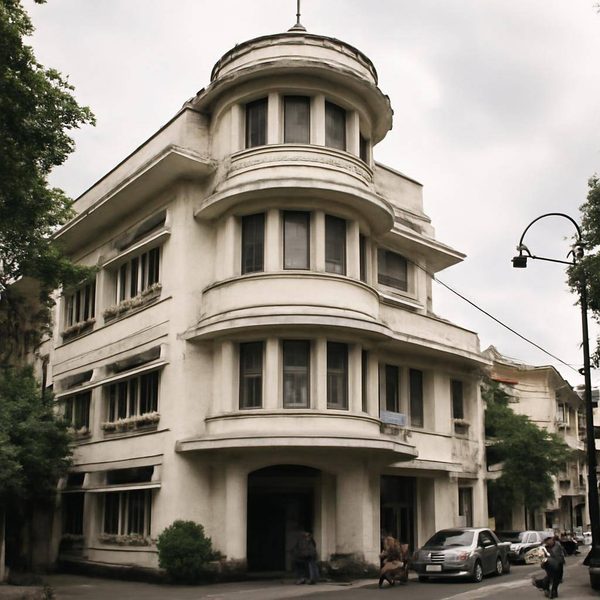
Bandung holds one of Southeast Asia's most significant collections of Art Deco and early modernist architecture, a legacy of the city's status as a planned highland capital during the Dutch colonial period. Between 1920 and 1940, architects and urban planners transformed Bandung from a modest garrison town into what was marketed as "the Paris of Java," creating a built environment that blended European modernist principles with tropical adaptation and, occasionally, local architectural motifs. Many of these structures survive today, scattered across the city centre and northern residential areas, though they vary considerably in condition and public accessibility.
Gedung Sate: The Iconic Governor's Office
The most famous example of Bandung's colonial architecture is Gedung Sate, completed in 1920 and designed by Dutch architect J. Gerber. The building now serves as the office of the Governor of West Java. The name "Gedung Sate" (Satay Building) derives from the ornamental skewers atop its central tower, which locals compared to the bamboo skewers used for the popular grilled meat dish. The structure combines multiple architectural influences: Italianate Renaissance proportions, Balinese decorative elements, and early Art Deco geometric patterns. The result is a distinctive hybrid that reflected the colonial administration's ambitions for the city. The building sits prominently on Jalan Diponegoro and remains a functioning government office, though its exterior and grounds are accessible for viewing and photographs.
Villa Isola and Residential Modernism
Villa Isola, now known as Bumi Siliwangi, represents the residential face of Bandung's architectural heritage. Built in the late 1920s in the northern hills, the villa exemplified tropical modernist design—large windows for ventilation, wide verandas, and horizontal lines that emphasised the building's integration with its hillside setting. The structure now functions as part of a university campus, which limits casual visitor access but does not diminish its architectural significance. Villa Isola and similar buildings in the Dago Atas (Upper Dago) area demonstrate how Bandung's wealthy residents and colonial elite adapted European modernism to Java's climate and topography.
Braga Street and the Commercial District
Braga Street (Jalan Braga) was the commercial and social heart of colonial Bandung, lined with Art Deco shophouses, cafés, and cinemas that catered to the city's European population. The street's architecture features decorative façades, curved corners, geometric reliefs, and large street-facing windows typical of 1920s and 1930s commercial design. While many buildings have been modified or repurposed over the decades, the street retains its historic character. Several heritage cafés and art galleries now occupy the old structures, and Braga City Walk provides a pedestrian-friendly area for exploring the district. The condition of buildings varies—some have been carefully restored, while others show signs of weathering and deferred maintenance.
Practical Considerations for Architecture Enthusiasts
Bandung's Art Deco heritage is dispersed across the city rather than concentrated in a single heritage district. Gedung Sate and Braga Street are the most accessible starting points for visitors interested in this architectural legacy. The northern residential areas, including parts of Dago and Ciumbuleuit, contain additional examples but are primarily private properties or institutional buildings with limited public access. Visitors should not expect museum-level interpretation or guided tours at most sites—this is a working city where historic buildings continue to serve contemporary functions. Photography from public streets is generally acceptable, but entry to government buildings and private properties requires permission. The best printed resource on Bandung's architectural heritage remains limited, though local architecture faculties at Institut Teknologi Bandung occasionally offer walks or lectures on the subject.
Sources: Bandung Art Deco – umien moritz tours • Bandung moderne: Indonesia Art Deco | Plus Ultra • 10 Best Architectural Buildings in Bandung, Indonesia