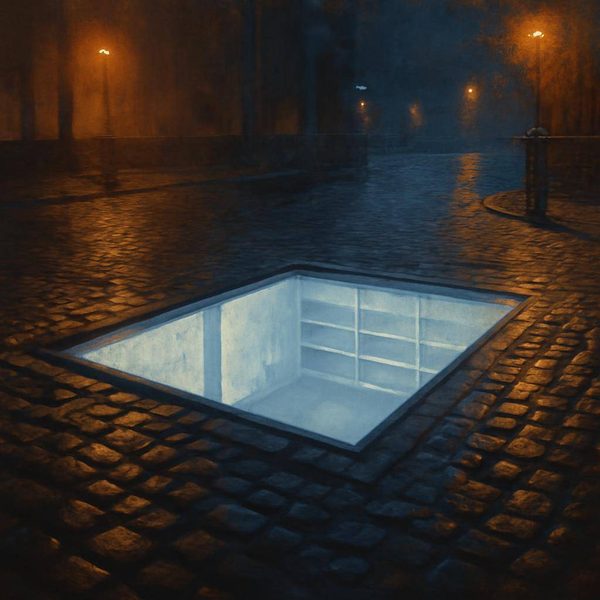
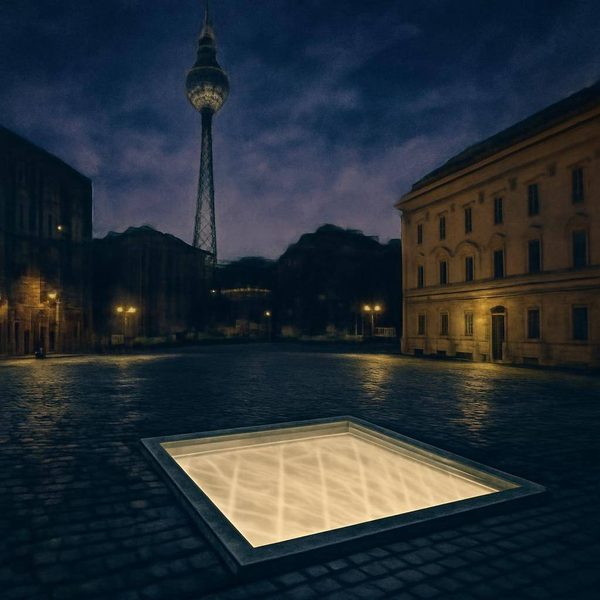
She arrived at Bebelplatz on a Tuesday evening in October, when the light was going and the square was nearly empty. She had read about the monument before she came — the glass plate flush with the cobblestones, the white shelves beneath, empty enough to have held twenty thousand books — and she had thought she understood it. She didn't, not until she almost walked over it without seeing it.
That was the design, of course. Micha Ullmann had intended exactly that: the loss visible only if you looked down, which most people didn't. She stood over it for a long time. The date — 10 May 1933 — felt closer in the fading October light than it had when she'd read it at home.
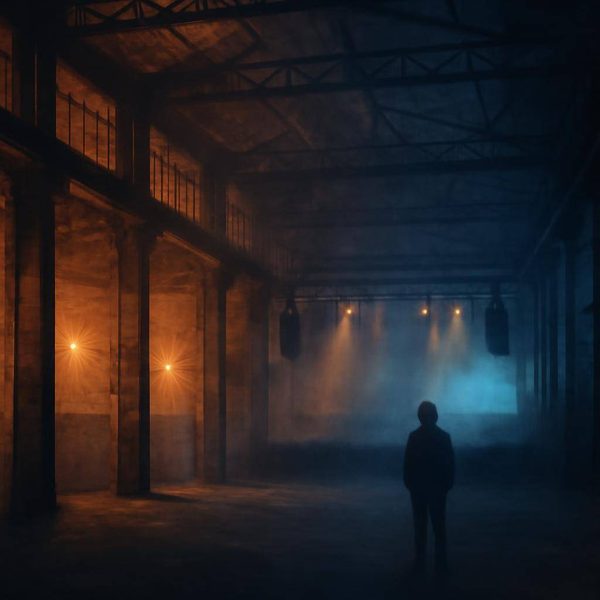
She walked south through Mitte, the Spree somewhere to the right, the light properly gone now. The street she wanted was Leipziger Strasse, and she found it without difficulty. There was nothing to mark the spot where the vault had been. The building that once held Tresor's original room — the former bank, the reinforced steel doors, the safe-deposit alcoves repurposed as the infrastructure of a new kind of music — was gone, redeveloped in 2005 like so much of this part of the city. She had known it would be gone. She had come anyway.
The music that started in that vault in March 1991 had travelled a long way before it got here. It came from Detroit first — from Juan Atkins and Derrick May and Kevin Saunderson, from machines and a particular kind of industrial grief — and it found in Berlin a city that had its own reasons to be up at four in the morning with the volume turned up. The Wall had been down for barely a year. The empty buildings were everywhere. Dimitri Hegemann opened the doors of the vault and something happened that three decades of music writing has not entirely explained.
She took the U-Bahn south to Kreuzberg, where Curry 36 was still operating under its fluorescent lights. She ate standing at the counter — currywurst, paper plate, curry powder, the whole argument about whether it was Herta Heuwer's invention in Charlottenburg in 1949 or something else entirely from Hamburg — and found that the food didn't need the argument to be good.
Later, she took the S-Bahn east along the Spree. At one of the bridges she could see a fragment of the Wall still standing, the murals of the East Side Gallery lit by streetlight from the embankment. 1.3 kilometres of painted concrete, intact since the international artists came in the months after reunification. She didn't get off. She'd seen it that afternoon, in daylight, and some things don't need to be seen twice in the same day to stay with you.
She found Tresor eventually, at its current address inside the Kraftwerk complex — the former power station in Mitte that now housed the club, a concert venue, a series of other things. The queue was real. The door policy was also real. She waited and was admitted, which is not guaranteed, and the room was exactly what the source material had described: loud, dark, purposeful, still carrying something of the city that made it.
On the U-Bahn back to her hotel, she thought about the empty shelves under the cobblestones in Bebelplatz, and the vault that wasn't there anymore on Leipziger Strasse, and the murals on the Wall by the river. Berlin keeps its absences visible. That is not a comfortable quality, but it is an honest one.
Frequently Asked Questions
What practical route does this Berlin story follow?
It follows source-backed places and route anchors from the guide, giving orientation and atmosphere while leaving live transport and opening details to the linked sources.
Which live details should I check before using this Berlin route?
Check current transport, access, opening and weather information from the linked official or operator sources before travelling.
What does this route help visitors understand about Berlin?
It turns source-backed places, route anchors and local context into a readable visitor route, so the story supports the main guide rather than replacing practical planning.
This is a fictional visitor story generated from source-backed place facts, image evidence and visitor-feel signals. It is not a first-hand WorldTownGuide visit. Named places, routes and historical references are source-backed; the visitor character and narrative events are invented.
Sources: 30 years of legendary Berlin club Tresor - The Guardian • How Berlin's techno scene transformed the city and gained Unesco status - BBC Travel • The Empty Library - Wikipedia • Tresor Club - Kraftwerk Berlin - visitBerlin.de • 27 Famous Landmarks in Berlin - Berlin Travel Tips