In This Guide
Bradford is a working city in West Yorkshire that has reinvented itself several times over. It built its fortunes on wool, was transformed by South Asian migration from the mid-twentieth century, and in 2009 became the world's first UNESCO City of Film — a designation that reflects both the city's connection to the National Science and Media Museum and its broader cultural ambitions. The city's 2021 census population of 352,317 makes it the second-largest subdivision of the West Yorkshire Built-up Area after Leeds, around nine miles to the east. Visitors will find Victorian civic architecture, one of England's more varied food cultures, and a concentration of free cultural institutions that is unusual for a city of this size.
Setting and First Impressions
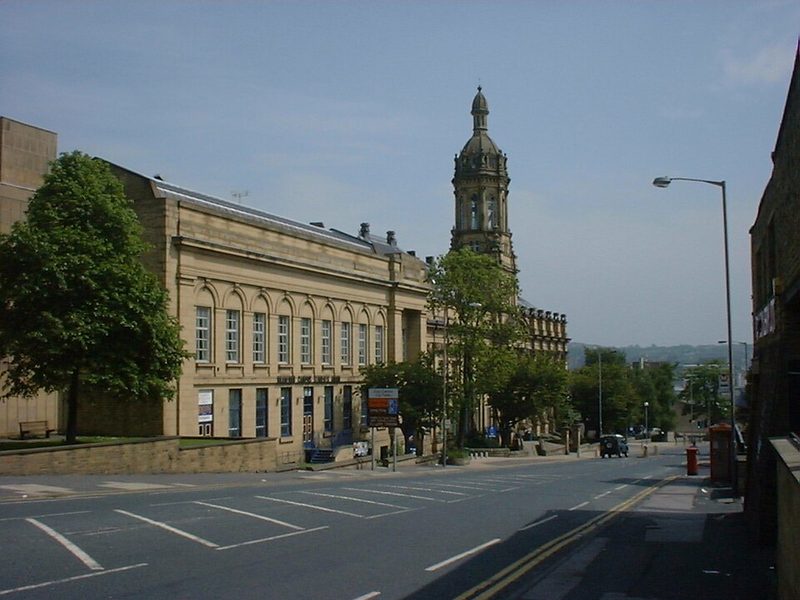
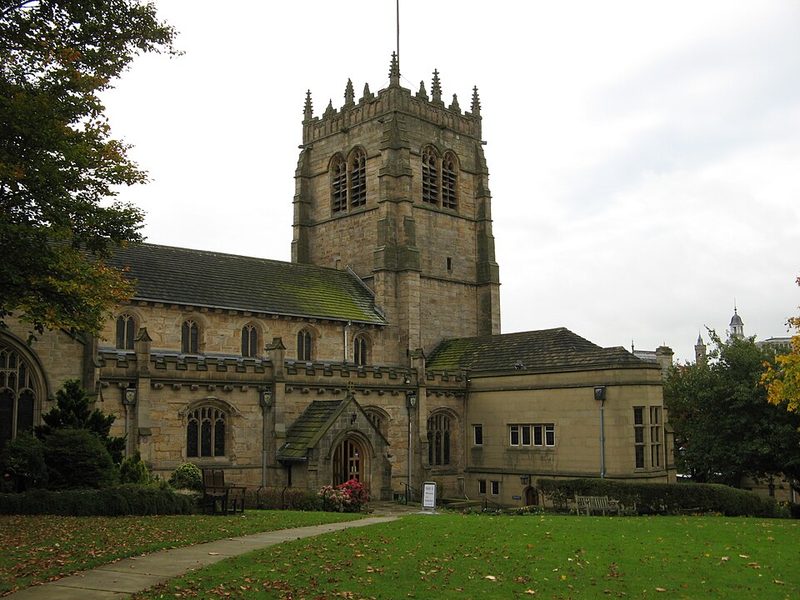
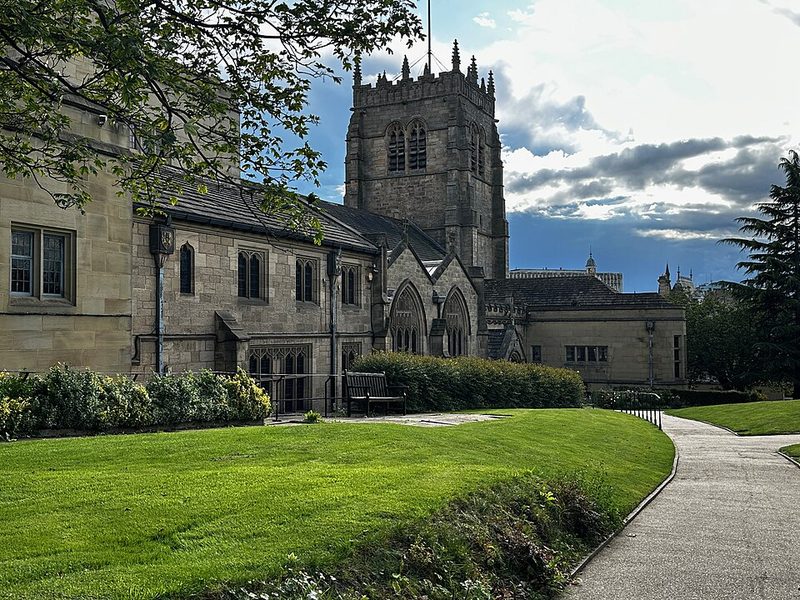
Bradford sits in a natural hollow rimmed by moorland ridges at the eastern edge of the Pennines. Approaching from almost any direction means descending into the city, and the surrounding landscape is unmistakably northern English: gritstone walls, steep terraced streets, and open sky pressing in from the Pennine edge. The Victorian centre still carries the bones of a city that once regarded itself as a world capital of the wool trade — imposing civic buildings, ornate warehouses, and occasional Gothic ambition in the stonework are all visible. The district of Little Germany, a compact area of elaborately decorated nineteenth-century merchant warehouses near the centre, is among the most architecturally distinctive streetscapes in the north of England. Bradford Cathedral and Undercliffe Cemetery are further reference points for visitors interested in the Victorian built environment.
The UNESCO City of Film
Bradford was designated the world's first UNESCO City of Film in 2009, a recognition tied to its history of film production, its cinematic culture, and the presence of the National Science and Media Museum. The museum, part of the Science Museum Group, holds collections covering photography, film, television, radio and the web, and admission to the museum itself is free, though tickets for cinema screenings require booking. The museum's IMAX screen is one of the largest in the UK. An annual Widescreen Weekend event, focused on widescreen and large-format cinema, draws specialist audiences to the museum. Visitors with an interest in film, broadcasting or photography will find the museum a substantial half-day or full-day destination in its own right.
History and Identity
Bradford's rise was built on wool. Through the eighteenth and nineteenth centuries it became one of the most important textile production centres in the world, growing from a modest market town into a major industrial city at extraordinary speed. It became a municipal borough in 1847 and received a city charter in 1897. The wealth that industry generated is still legible in the architecture of the centre, even if the mills themselves are mostly quiet or repurposed now.
The city also carries older history in its surroundings. Just to the east of Bradford, the Battle of Adwalton Moor was fought in June 1643 during the First English Civil War. Royalist forces led by the Earl of Newcastle defeated the Parliamentarian army commanded by Lord Fairfax in an engagement that shifted the balance of power in Yorkshire during the conflict.
Bradford City Association Football Club, founded in 1903, adds another thread to the city's identity. The club was elected into the Football League before playing a competitive match. In 1911 it won the FA Cup, defeating Newcastle United in a final replay — a result that remains the club's only major honour and is still a point of reference for supporters.
South Asian Culture and Food
Bradford has a notably diverse population, shaped by successive waves of migration from South Asia from the mid-twentieth century onward. The city is widely known in England as a centre of South Asian cuisine, and the density and variety of curry restaurants — particularly along and around Manningham Lane and in the city centre — has earned it an informal reputation as the UK's curry capital. The annual World Curry Festival, which in 2025 ran as part of the Bradford City of Culture programme, brings together dining events, theatre and talks rooted in this culinary heritage. Visitors looking for South Asian food will find Bradford one of the more reliable destinations in the north of England for this.
Arts and Culture
Cartwright Hall Art Gallery, set in Lister Park, holds the city's permanent art collection and includes a gallery dedicated to Bradford-born artist David Hockney, displaying his early work and his connections to Yorkshire. Hockney was born in Bradford on 9 July 1937 and studied at Bradford School of Art from 1953 to 1957. The Alhambra Theatre, built in 1913 and opened in March 1914 at a cost of twenty thousand pounds, is the city's principal venue for large-scale touring theatre; its main auditorium seats over 1,400 people. The building was designated a Grade II listed structure in 1974 and underwent major refurbishment in 1986. St George's Hall, a Victorian concert venue, also operates in the city centre.
Bradford held UK City of Culture status in 2025. The year-long programme, which attracted approximately three million visitors according to BBC reporting, included the Turner Prize at Cartwright Hall Art Gallery, a stage production of the Railway Children performed inside an engine shed, and events celebrating local brass bands. The writer Andrea Dunbar, who was born in Bradford and is best known for the play Rita, Sue and Bob Too, was the subject of a dedicated season of performances during the year.
Getting There and Around
Bradford sits within the West Yorkshire transport network. Leeds, approximately nine miles to the east, is the dominant regional hub, and the two cities are closely linked by rail and road. Bradford has two city-centre train stations — Bradford Forster Square and Bradford Interchange — serving routes across the region. Bus services connect it to surrounding towns and villages across West Yorkshire. Current timetables and services are best confirmed through local transport providers before travelling.
Practical Notes
The standard timezone is Europe/London: Greenwich Mean Time in winter and British Summer Time from late March to late October. The climate is typical for northern England — cool, often overcast, with rainfall spread across the year. Visitors from outside the United Kingdom should check current entry requirements before travelling. The US State Department currently places the United Kingdom at Level 1, recommending normal precautions, with no elevated security concerns. The UK FCDO publishes its own guidance at gov.uk/foreign-travel-advice.
National Science and Media Museum
The National Science and Media Museum is Bradford's most prominent visitor attraction and one of the most-visited free museums in the north of England. Opened in June 1983 as the National Museum of Photography, Film and Television, the building occupies eight floors in the city centre and houses three cinemas, including what the museum describes as Europe's first purpose-built IMAX screen. Entry to the permanent galleries is free, though cinema screenings and some temporary exhibitions are ticketed. Advance booking is recommended even for free entry.
The permanent collection spans over 325,000 objects covering photography, cinema, television and video games. A major gallery development project — Sound and Vision — is under way to add two new permanent galleries. The museum sits at the heart of Bradford's UNESCO City of Film designation, the first such designation awarded anywhere in the world, and it hosts annual festivals covering widescreen film and other media themes. Bradford city centre's two main rail stations, Bradford Forster Square and Bradford Interchange, are both within walking distance.
Read the full National Science and Media Museum guide
Sources: National Science and Media Museum - Wikipedia • National Science and Media Museum - official website • Visit the National Science and Media Museum - official visitor page • About us - National Science and Media Museum • National Science and Media Museum - Visit Bradford
Little Germany and Bradford's Victorian Architecture
Little Germany is the most coherent surviving example of Bradford's Victorian commercial wealth: a compact district of warehouses and offices in the city centre that still reads, in its stonework and scale, as a record of the wool trade at its peak. The area takes its name from the German and German-Jewish merchants who financed and occupied many of its buildings during the second half of the nineteenth century, when Bradford was one of the most important textile trading centres in the world.
Sources: Little Germany Conservation Area - Bradford Council • Little Germany, Bradford - Wikipedia • The Story of Little Germany, Bradford - CityRise • Little Germany Heritage Walking Tour - Bradford Literature Festival • Undercliffe Cemetery - Visit Bradford
Bradford City of Culture 2025
Bradford held the title of UK City of Culture 2025, a year-long programme of arts and cultural events that ran through the calendar year and drew what organisers reported as approximately three million visits. The designation marked a significant moment for a city that had historically received less arts infrastructure investment than comparable urban centres, and the programme used it to bring large-scale national events to Bradford for the first time.
Opening and Scale
The opening ceremony took place on 10 January 2025 with an outdoor performance in freezing temperatures featuring the Bradford-born magician Steven Frayne — known professionally as Dynamo — alongside poets, singers and dancers from the city. The BBC reported after the year concluded that the programme had attracted around three million people and cost approximately £51 million. The year was delivered by the Bradford Culture Company and the Bradford 2025 organisation.
Turner Prize at Cartwright Hall
The centrepiece of the visual arts programme was the Turner Prize 2025, held at Cartwright Hall Art Gallery. The Turner Prize moves outside London every other year and the Bradford edition was co-produced by Tate, Bradford 2025 and Yorkshire Contemporary. The shortlisted artists — Nnena Kalu, Rene Matić, Mohammed Sami and Zadie Xa — were announced on 23 April 2025, the 250th anniversary of JMW Turner's birth. Nnena Kalu was announced as the winner of the £25,000 prize at a ceremony at Bradford Grammar School in December 2025. The Turner Prize exhibition at Cartwright Hall received more than 36,000 visitors by the end of the year, according to the Museums Association.
Other Programme Highlights
The BBC's summary of the year identified several other headline events: a stage production of The Railway Children performed inside an engine shed; a recreation of David Hockney's work using drones; and celebrations of local brass band culture. The programme also included a season of performances celebrating the life of Bradford-born playwright Andrea Dunbar, and a performance by Asian Dub Foundation. The World Curry Festival returned to Bradford as part of the City of Culture programme, running from 15 to 29 September 2025.
Legacy and Ongoing Activity
Following the conclusion of the 2025 programme, Bradford 2025's Our Patch initiative continued to fund community-led cultural activity across the district. The Bradford Culture Company's venue in the city centre was noted as reopening in May 2026, with a pop-up venue expected to return in summer 2026. Visitors arriving in 2026 and beyond should check the Bradford Culture Company and Visit Bradford websites for current programming, as the legacy activity evolves. The City of Culture year is expected to have lasting effects on Bradford's arts infrastructure and national profile, though the scale of any permanent change will become clearer over time.
Sources: Bradford 2025 culture year cost 51m and attracted three million people - BBC News • Bradford UK City of Culture 2025 - Wikipedia • Turner Prize 2025 - Cartwright Hall Art Gallery - Tate • Nnena Kalu wins Turner Prize 2025 - Bradford 2025 • Bradford shares UK City of Culture achievements - Museums Association • World Curry Festival - Bradford 2025