

What Brooklyn is known for
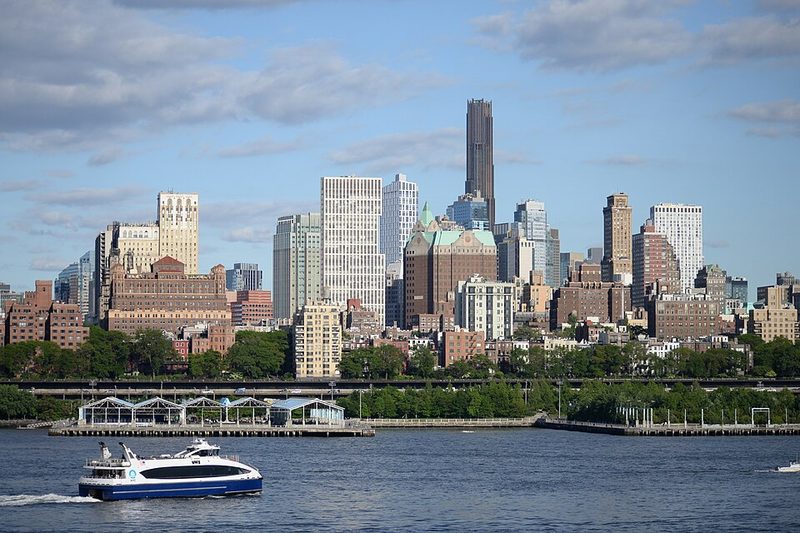
Brooklyn, with a population of 2.7 million, ranks as New York City's most populous borough and would stand as one of America's largest cities if independent. The borough occupies the western end of Long Island, connected to Manhattan by multiple bridges including the architecturally significant Brooklyn Bridge, and extends east to Queens. The waterfront character dominates: historic industrial zones along the East River have transitioned to mixed-use development, whilst neighbourhoods inland maintain distinct identities shaped by successive waves of immigration and settlement since Dutch colonial times.
Arrival and Geography
The borough sits at low elevation on Long Island's western tip, with the East River separating it from Manhattan to the west and a land border with Queens to the east. The Verrazzano–Narrows Bridge connects Brooklyn to Staten Island across New York Harbor. The Brooklyn Bridge, completed in 1883, provides pedestrian, bicycle, and vehicular access to Manhattan and serves as both a practical crossing and a landmark visible from many vantage points across the borough. Water shapes movement and orientation throughout: riverfront access, bridge connections, and the historic relationship between working port and residential neighbourhoods define the borough's character.
Public transport operates as part of New York City's integrated network, with multiple subway lines serving the borough. Visitors should consult current transit maps and schedules with local authorities for specific routing. The scale of Brooklyn—both population and geographic area—means that orientation to particular neighbourhoods proves more practical than attempting comprehensive coverage.
Historical Background
Dutch settlers established Brooklyn in 1634, naming it after Breukelen in the Netherlands. The settlement passed through periods under New Netherland and the Province of New York, with residents participating in the Revolutionary War. The 14th Regiment New York State Militia, formed from Brooklyn, served as a volunteer unit during the American Civil War from 1861 to 1864. Brooklyn developed as an independent city and industrial centre before the 1898 consolidation into Greater New York City, a merger that transformed governance but left neighbourhood identities substantially intact.
The borough's historic role as a major point of entry and settlement for immigrant communities continues to shape its character: estimates suggest that as many as one in seven Americans can trace ancestry through Brooklyn.
Neighbourhoods and Population
Brooklyn's population includes extraordinarily diverse communities: Jewish American, Chinese American, African American, Caribbean American, Hispanic American, Russian, Ukrainian, Polish, Italian, Arab, Muslim, Irish, South Asian, and Greek populations, among many others. This diversity shapes neighbourhood character, food culture, religious and cultural institutions, and daily life. Flatbush, for example, maintains strong cultural identity and local food traditions that reflect its community heritage.
Neighbourhoods vary significantly in density, character, and amenities. Williamsburg and Greenpoint are noted for restaurants, bars, and vintage shops. Bushwick has developed as an arts-focused neighbourhood. Brooklyn Heights, Cobble Hill, Carroll Gardens, and Boerum Hill feature historic residential streets. Each neighbourhood rewards exploration on foot, with corner bodegas, commercial strips, and street life that shifts by area and time of day.
Parks and Cultural Venues
Prospect Park, designed by the Olmsted Brothers, serves as a major green space for the borough. The Brooklyn Botanic Garden, adjacent to the Brooklyn Museum, holds over 14,000 taxa of plants and receives over 800,000 visitors annually. The garden includes the Japanese Hill-and-Pond Garden, noted as the first Japanese-inspired garden built in the United States, and the Shakespeare Garden featuring plants mentioned in the playwright's works. Three entrances provide access: 150 Eastern Parkway, 455 Flatbush Avenue, and 990 Washington Avenue. Nearest subway stops include Prospect Park Station (B, Q, S lines) and Eastern Parkway–Brooklyn Museum (2, 3 lines).
The Brooklyn Museum and the Brooklyn Academy of Music serve as key cultural venues. Grand Army Plaza functions as a notable public landmark and gathering point.
Coney Island
Coney Island, located in southwestern Brooklyn, developed between 1880 and World War II as the largest amusement area in the United States, attracting several million visitors annually. Three legendary amusement parks—Steeplechase Park, Luna Park, and Dreamland—operated during the late 1800s Golden Age. The Cyclone roller coaster and Wonder Wheel remain iconic attractions. The beach and boardwalk provide free access, whilst rides and attractions operate seasonally with separate costs. The Brooklyn Cyclones, a minor-league baseball team, play at a stadium in Coney Island.
Economy and Development
Brooklyn has shifted from its historic manufacturing and industrial base towards a mixed economy. Industry City in Sunset Park exemplifies this transition: a historic intermodal shipping, warehousing, and manufacturing complex on the Upper New York Bay waterfront, now redeveloped to host over 650 office, industrial, creative, and manufacturing tenants across six million square feet. The Brooklyn Economic Development Corporation works on regional development initiatives.
A structural disparity affects resource allocation: despite housing more than 30 per cent of New York City's total population, Brooklyn receives approximately 7.6 per cent of the city's charitable revenue, a factor that shapes neighbourhood investment and community resources.
Festivals and Events
The borough hosts numerous annual festivals and cultural celebrations. BRIC Celebrate Brooklyn! operates as New York City's longest-running free outdoor performing arts festival, taking place each summer at the Lena Horne Bandshell in Prospect Park with diverse creative programming. The Brooklyn Kite Festival and Atlantic Antic are annual outdoor events. The West Indian American parade and Puerto Rican Parade and Festival in Sunset Park celebrate specific cultural communities. The Brooklyn Greek Festival in Brooklyn Heights features Greek cuisine, live music, and folk dancing.
Practical Considerations
Brooklyn maintains a distinct identity despite being a borough within New York City. The scale and diversity of neighbourhoods means that visitors benefit from focusing on particular areas rather than attempting comprehensive coverage. Local venues for comedy shows and podcast tapings operate regularly at spaces including Union Hall, the Bell House, and Littlefield. The borough's food culture reflects its diverse communities, with options ranging from established neighbourhood spots to newer establishments.
Visitors should verify current opening hours, admission fees, and transport schedules locally, as these change seasonally and over time.