In This Guide
A Capital Built by Design
Canberra is Australia's capital city and its largest inland urban centre, home to around 368,000 people within the Australian Capital Territory. It occupies a broad valley flanked by the Brindabella Ranges to the south and west, and its entire urban form was the product of deliberate planning rather than organic growth. The result is a city of wide avenues, generous parklands and a large artificial lake — Lake Burley Griffin — at its geographic and symbolic centre. Visitors arriving from Sydney or Melbourne typically notice the space first: between buildings, around the lake, and in the corridors of land that separate the city's precincts.
Canberra is primarily worth visiting for its concentration of national institutions. Parliament House, the Australian War Memorial, the National Gallery of Australia, the National Museum of Australia and several other federally funded attractions are all free to enter and within reasonable distance of one another. No other Australian city has this density of nationally significant sites in a single compact area. For travellers interested in Australian history, politics or culture, the city provides a coherent and unhurried experience that is genuinely difficult to replicate elsewhere.
The city has a more continental climate than Australia's coastal capitals — winters are cold and can include frost, summers are warm and dry, and the elevation keeps the air noticeably crisp year-round. Spring (September to October) brings the Floriade flower festival, widely regarded as the ACT's most significant tourism event. Autumn sees the Enlighten Festival, which lights up national buildings after dark.
How Canberra Came to Exist
When Australia's colonies federated in 1901, both Sydney and Melbourne wanted the new national capital. The compromise reached was written into the constitution: the capital would be sited in New South Wales but at least 100 miles from Sydney. A territory was excised from New South Wales for this purpose, an international design competition was held, and American architects Walter Burley Griffin and Marion Mahony Griffin won with a plan that worked with the valley's natural topography and arranged civic spaces around geometric axes.
The city was officially named in 1913. Parliament transferred from Melbourne to Canberra in 1927, and the long process of building a functioning capital from former sheep-grazing land began in earnest. The name Canberra is widely believed to derive from an Aboriginal word for the area, though its precise meaning remains debated. The Ngunnawal people are recognised as the traditional custodians of the land on which the ACT sits.
That history of deliberate creation — with its accompanying arguments, delays and political compromises — gives the city a self-aware quality. Canberra knows it was made on purpose, and the monumental geometry of its civic core, with Parliament House and the Australian War Memorial anchoring opposite ends of Anzac Parade, makes that intention legible to any visitor walking the precinct.
The National Institutions
The concentration of national cultural institutions is the primary reason most visitors come to Canberra, and most charge no entry fee. The Australian War Memorial on Anzac Parade functions simultaneously as a shrine, museum and archive. Its galleries are organised by conflict and the institution describes its collection as including more than 7,000 objects. Entry is free and the memorial is open daily except Christmas Day.
The National Gallery of Australia, also free to enter, holds what is described as the largest collection of Aboriginal and Torres Strait Islander art in the country, alongside international and Australian works across other periods and traditions. The National Museum of Australia, the National Portrait Gallery, the National Library of Australia and the National Film and Sound Archive each hold collections of national significance and are within the same general precinct or close to it.
Parliament House, opened in 1988 and built into Capital Hill, is open to the public on most days. Old Parliament House — where Australia's parliament sat from 1927 to 1988 — now houses the Museum of Australian Democracy and is open to visitors. Together they give a clear picture of how Australian federal government has evolved.
Opposite the War Memorial at the far end of Anzac Parade stands the Kemal Atatürk Memorial, a gesture of reconciliation between Australia and Turkey rooted in the shared experience of Gallipoli. The memorials along Anzac Parade form part of the city's principal ceremonial axis.
Visitors should verify current opening arrangements, temporary closure periods and any booking requirements with each institution before visiting, as these can change.
Festivals and Seasonal Events
Floriade, held from mid-September to mid-October each year, is the ACT's most significant annual tourism event. It draws visitors from across Australia and from overseas and is centred on large-scale spring flower displays. The festival also includes live music and family activities. A shuttle bus service connects the city centre to the festival site during the event.
The Enlighten Festival, held in autumn, projects light installations onto national buildings after dark and includes performances and other programming. The National Multicultural Festival, usually held in summer, brings food and cultural expression from a wide range of communities. The Summernats car festival and the Canberra Balloon Spectacular are two further annual events regularly cited by the city's official tourism bodies.
Visitors planning a trip around a specific festival should confirm dates with official ACT tourism sources, as programming and timing vary year to year.
The Surrounding Landscape
Canberra's setting in a valley bounded by the Brindabella Ranges gives it a different character from Australia's coastal cities. The surrounding bushland is genuinely close to the urban edge: kangaroos are a common sight on the city's outer fringes, and the natural environment is woven into daily life rather than being a distant excursion destination. The mountains to the south and west include the northern section of the Australian Alps and provide access to hiking in warmer months.
The Tidbinbilla Nature Reserve, approximately 40 minutes' drive south-west of the city centre, offers wildlife and bushland access within a day trip from central Canberra. Lake Burley Griffin, the artificial lake at the city's centre, is walkable and cyclable around its central basin — a circuit of roughly five kilometres — and gives access to the parliamentary triangle, the Carillon and Kingston Foreshore.
The Canberra Glassworks, situated near the foreshore, is a working studio where visitors can watch glass artists and visit exhibitions. It appears regularly in local recommendations as a distinctive urban attraction.
Getting There and Getting Around
Canberra Airport offers domestic services to Sydney, Melbourne, Brisbane and other Australian cities, as well as some international routes. By road, Canberra is roughly three hours south of Sydney and around six and a half hours from Melbourne via the main highways. Coach services connect the city with surrounding towns and capital cities.
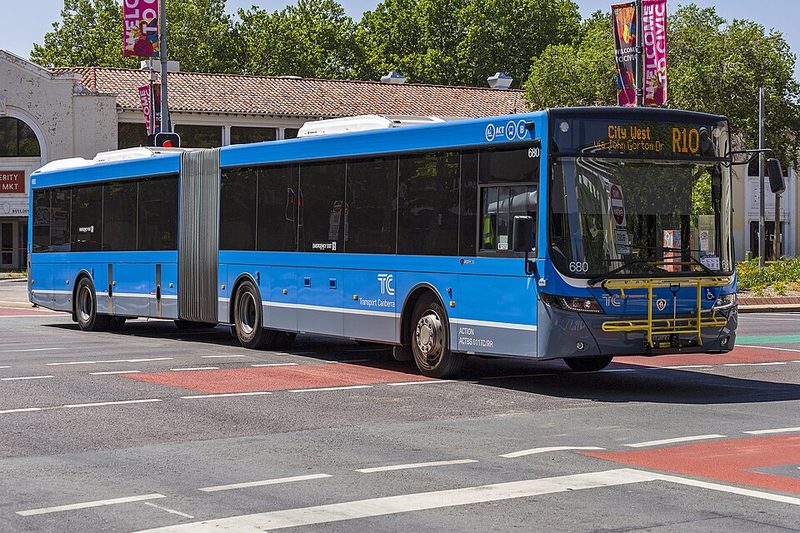
Within the city, a light rail line runs between the city centre and the northern suburb of Gungahlin. A bus network covers other parts of the urban area. The city's planned layout means distances between major landmarks can be larger than they appear on a map — the walk from the War Memorial to Parliament House along Anzac Parade is substantial — and having access to a vehicle or using public transport is worth factoring into plans. Bicycles can be hired and the lake loop is a practical and pleasant way to cover several landmarks in a single outing.
Where to Stay
Accommodation in Canberra is concentrated in and around the city centre, Braddon and the areas near the parliamentary precinct. Staying centrally places visitors within reasonable reach of the major national institutions on foot or a short bus journey. The light rail corridor north towards Gungahlin offers further options for those travelling in that direction. Visitors should book well ahead during Floriade (mid-September to mid-October) and other major festival periods, when demand is significantly higher.
Safety and Travel Advice
Both the UK Foreign, Commonwealth and Development Office and the US State Department currently rate Australia at their lowest advisory levels, recommending normal precautions. There are no regional restrictions that affect Canberra specifically. The main seasonal risk relevant to Canberra and the surrounding ACT region is bushfire, which is more prevalent during spring and summer (October to February). Visitors planning to travel through or near bushland during these months should monitor updates from the ACT Rural Fire Service and follow any emergency guidance issued. Travellers should check current official advice from the UK FCDO or US State Department before departure.
Australian War Memorial
The Australian War Memorial at the northern end of Anzac Parade is one of Australia's most significant public sites — a national shrine, museum and archive combined. Entry is free and the Memorial is open daily except Christmas Day. Its galleries cover conflicts from the First World War through to recent peacekeeping operations, with the Aircraft Hall, Hall of Valour and Cold War Galleries among the permanent exhibits. Each afternoon, a free Last Post Ceremony is held in the Memorial's outdoor commemorative spaces.
The Memorial is currently undergoing a major redevelopment — the 'Our Continuing Story' project — with a reported budget of around $500 million and an expected completion date of 2028. Some galleries are closed during this period; the Memorial's official website carries current information on what is accessible. The Memorial sits on the city's principal ceremonial axis, aligned directly with Parliament House across Lake Burley Griffin, an arrangement central to Walter Burley Griffin's original city plan.
Read the full Australian War Memorial guide
Sources: Australian War Memorial - official site • Plan your visit - Australian War Memorial • Galleries - Australian War Memorial • Aircraft Hall - Australian War Memorial • Our Continuing Story redevelopment - Australian War Memorial • Australian War Memorial - Wikipedia
National Gallery of Australia
The National Gallery of Australia (NGA) on Parkes Place, beside Lake Burley Griffin, holds the most valuable art collection in Australia and the largest collection of Aboriginal and Torres Strait Islander art in the world. Entry to the permanent collection is free, and the Gallery is open daily except Christmas Day.
Lake Burley Griffin and the Parliamentary Triangle
Lake Burley Griffin and the Parliamentary Triangle form the geographic and ceremonial heart of Canberra. The lake — an artificial body of water created by damming the Molonglo River — sits at the centre of the city Walter Burley Griffin and Marion Mahony Griffin designed after winning the 1911 international design competition for Australia's new capital. The lake was named after the designer himself, and its creation was central to the plan: Griffin organised the city around two geometric axes, and the water axis runs along the length of the lake.
Sources: Captain James Cook Memorial - Wikipedia • Parliamentary Triangle, Canberra - Wikipedia
Enlighten Festival
Enlighten is Canberra's annual late-summer festival, held across 11 nights in late February and early March. Its centrepiece is large-scale animated light projections onto the facades of the national institutions in the Parliamentary Triangle, transforming buildings that visitors see by day into illuminated canvases after dark.
What the Festival Involves
Each evening during Enlighten, Canberra's major national buildings are lit with dynamic architectural projections created by Australian artists. The buildings that have featured in the illuminations include Old Parliament House, Parliament House, the National Library of Australia, the Museum of Australian Democracy, the National Portrait Gallery, the National Gallery of Australia and Questacon. The projections run nightly across the 11-day festival period; check current schedules on the official Enlighten website as start times and specific building lineups can change each year.
Beyond the light projections, the festival programme typically includes open-air cinema, live performances, food events and cultural activities. The National Capital Authority describes the festival as an opportunity to experience the National Triangle and the surrounding area in a different light — both literally and in terms of access to institutions and events that take on a different character after dark.
Origins
Enlighten launched as a festival in the early 2010s. Its first edition drew modest attendance — the inaugural festival attracted around 8,600 visitors overall, including roughly 2,400 who came to Canberra specifically for the event — but it has grown considerably since then and is now one of the events cited by the official Visit Canberra calendar as an annual highlight.
Practical Notes
The light projections on the Parliamentary Triangle buildings are viewable from public areas and do not require a ticket. Some specific events within the festival programme — performances, cinema sessions, curated experiences — may carry separate charges. The festival runs for 11 nights in late February to early March each year; confirm exact dates for the current edition on the official Enlighten website before planning a visit. The Parliamentary Triangle is accessible on foot from the city centre and by public transport.
Sources: Enlighten Festival - official website • Enlighten Canberra - Wikipedia • 72 Hours in Canberra - Enlighten Festival Weekend - VisitCanberra