
The Australian War Memorial stands at the northern end of Anzac Parade, at the foot of Mount Ainslie, and is one of the most significant memorial sites in Australia. It functions simultaneously as a national shrine, a museum and an archive, and that combination gives it a weight that distinguishes it from conventional war museums. Entry is free and the Memorial is open daily except Christmas Day, with galleries open from 10 am.
Origins and Design
The idea for a national memorial to commemorate Australians killed in the First World War came largely from Charles Bean, Australia's official war historian. Bean's proposal was approved in 1917, and the foundation stone was laid on Anzac Day 1929. The building opened to the public in 1941. The Memorial is positioned along Canberra's principal ceremonial axis — the land axis designed by Walter Burley Griffin — which runs from Mount Ainslie through the Memorial's entrance, across Lake Burley Griffin and up to Parliament House on Capital Hill. This deliberate alignment means that looking south from the Memorial's forecourt gives a direct line of sight to the parliament building, an arrangement that carries considerable symbolic intent.
What the Memorial Contains
The Memorial holds a national collection featuring more than 7,000 objects, alongside artworks, large technology exhibits and personal records. Its galleries are organised largely by conflict: visitors can move through First World War and Second World War galleries as well as the Cold War Galleries, which cover the Korean War, the Vietnam War, the Malayan Emergency and the Indonesian Confrontation. The reopened Aircraft Hall on Level 2 displays aircraft from the First World War, Second World War and Korean War as a permanent gallery. The Hall of Valour, located below the Hall of Memory, honours the Australians who have received the Victoria Cross and George Cross.
A Major Redevelopment in Progress
The Memorial is currently partway through a significant redevelopment known as 'Our Continuing Story', a project with a reported cost of around $500 million that is set for completion in 2028. The project is modernising and expanding gallery space to tell the stories of more than 100,000 Australians who have served in war, conflict and peacekeeping operations since the mid-20th century. Visitors should be aware that some galleries and displays are closed during this period while works proceed. The Memorial's official website carries current information on which galleries are open.
The Last Post Ceremony
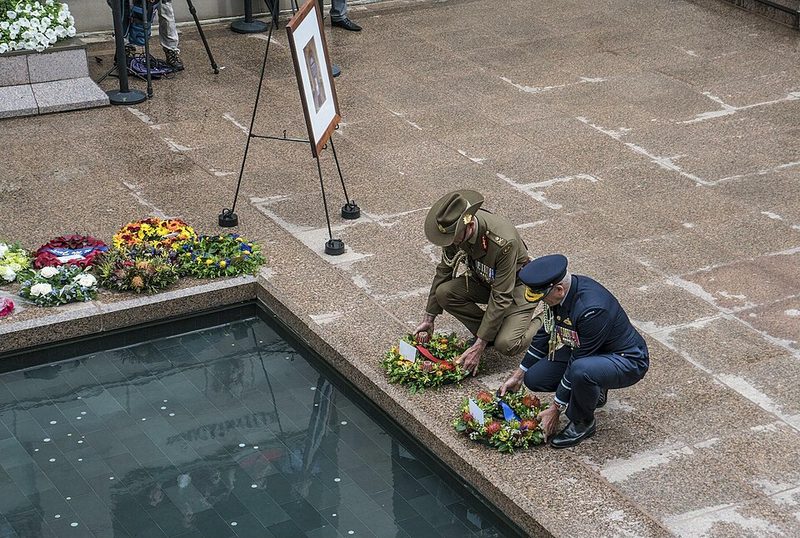
Each afternoon the Memorial hosts a Last Post Ceremony — a daily act of remembrance combining music, stories and reflection. The ceremony is free to attend and takes place in the Memorial's outdoor commemorative spaces. It draws a mix of locals, tourists and school groups and is widely regarded as one of the more affecting visitor experiences in Canberra. Check current ceremony times on the Memorial's website before visiting, as times can vary by season.
Anzac Parade and the Surrounding Context
Anzac Parade, the broad ceremonial avenue that connects the Memorial to the lake, is lined with memorials to specific conflicts and units. Across the city, opposite the Memorial, the Kemal Ataturk Memorial stands as a gesture of reconciliation between Australia and Turkey rooted in the shared experience of Gallipoli — an unusual pairing that says something about how Canberra approaches national memory. Together, the Memorial and the parade form a concentrated ceremonial landscape that visitors encounter within a short walk of the city centre.
Practical Notes
Entry to the Australian War Memorial is free. It is open daily except Christmas Day, with galleries progressively closing from 4 pm and the building open until 5 pm. The Memorial is located at the northern end of Anzac Parade in Campbell, a short drive or bus ride from the city centre. Free parking is available. Guided tours are offered; check current tour availability on the official website. The redevelopment means the visitor experience will continue to change through to 2028, and confirming open galleries before a visit is advisable.
Sources: Australian War Memorial - official site • Plan your visit - Australian War Memorial • Galleries - Australian War Memorial • Aircraft Hall - Australian War Memorial • Our Continuing Story redevelopment - Australian War Memorial • Australian War Memorial - Wikipedia