In This Guide
Read the guide as a story
The River That Caught Fire: An October Walk in Cleveland
Cleveland, Ohio
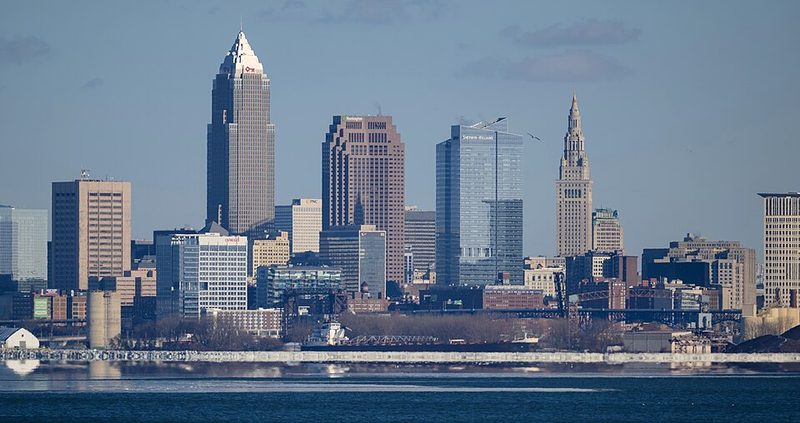
Cleveland sits on the southern shore of Lake Erie, the most populous city on that lake and the second-largest in Ohio, with around 365,000 people in the city proper and a wider metropolitan area of more than two million. For visitors who arrive with expectations shaped by old headlines about industrial decline, the city tends to reframe those expectations quickly. Its lakefront, civic architecture, cultural institutions and working neighbourhoods each carry a distinct character that rewards direct investigation rather than assumption.
First Impressions and Setting
Coming into central Cleveland, the scale of the public spaces at the city's core is one of the first things to register. The Mall — a formal civic green stretching near the downtown core — and the surrounding monumental architecture give the centre a confident, planned quality that reflects an era when Cleveland was among the most powerful industrial cities in the United States. The Cuyahoga River runs through the city before emptying into Lake Erie, and the relationship between river, lake and urban grid gives Cleveland a geographic identity that is hard to miss. The lake horizon opens to the north in a way that feels almost oceanic for a freshwater setting. Green spaces are woven closer to the urban centre than in many comparable American cities, and hills and parkland are accessible within a short distance.
History, Identity and Local Stories
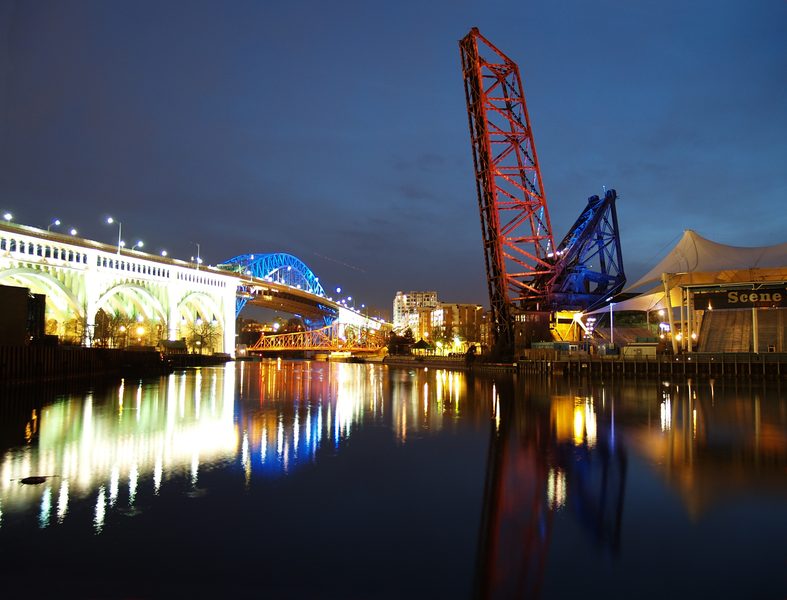
Cleveland was built on industrial muscle. The Cuyahoga River corridor became one of the most significant industrial waterways in North America during the nineteenth and early twentieth centuries, and the city grew on steel, oil refining and manufacturing. That heritage is visible in the bones of the built environment: warehouse districts, Cuyahoga bridges, and the civic monuments that industrial wealth funded. The river gained a particular notoriety in the late 1960s when pollution caused it to catch fire — an event that helped catalyse the American environmental movement. The city has worked to reclaim and restore the riverfront in the decades since, and a stretch of the river has received national trail designation.
At the heart of downtown, Public Square has functioned as the city's civic anchor since its founding. Within the square stands the Soldiers and Sailors Monument, a substantial Victorian-era memorial commemorating Cuyahoga County's Civil War dead — a physical reminder that Cleveland raised and equipped significant numbers of troops during that conflict, including units that fought at Gettysburg. The nearby Old Stone Church is one of the oldest surviving buildings in the city centre. Fort Huntington Park, close to the downtown core, marks ground connected to Cleveland's earliest period as a military and supply point, including its role as a base during the War of 1812.
The Rock and Roll Hall of Fame
The Rock and Roll Hall of Fame stands on the lakefront and is Cleveland's single most visited cultural destination. The city's claim to the institution rests on its historically strong connection to early rock and roll radio culture. Cleveland is also recognised as part of a city that hosts one of the United States' "Big Five" orchestras and the second-largest theatre district in the country, with Playhouse Square providing a concentrated performing-arts hub a short distance from the central mall. The Rock and Roll Hall of Fame is served by GCRTA bus and rail options from the downtown core; visitors should check current schedules at riderta.com.
West Side Market and Ohio City
West Side Market, on the near west side in the Ohio City neighbourhood, has been a fixture of Cleveland commercial and community life since the early twentieth century — the current market building opened in 1912. It operates as a genuine working market rather than a sanitised tourist attraction, with a mix of produce, meat, bakery and prepared-food vendors. The Encyclopedia of Cleveland History at Case Western Reserve University documents its place as a centre of immigrant commercial life across successive waves of new arrivals to the city. The surrounding Ohio City streets contain cafes, breweries and independent businesses that extend a visit beyond the market hall itself. Visitors should check current market operating days directly with West Side Market before travelling, as hours vary by day and vendor.
University Circle and Cultural Institutions
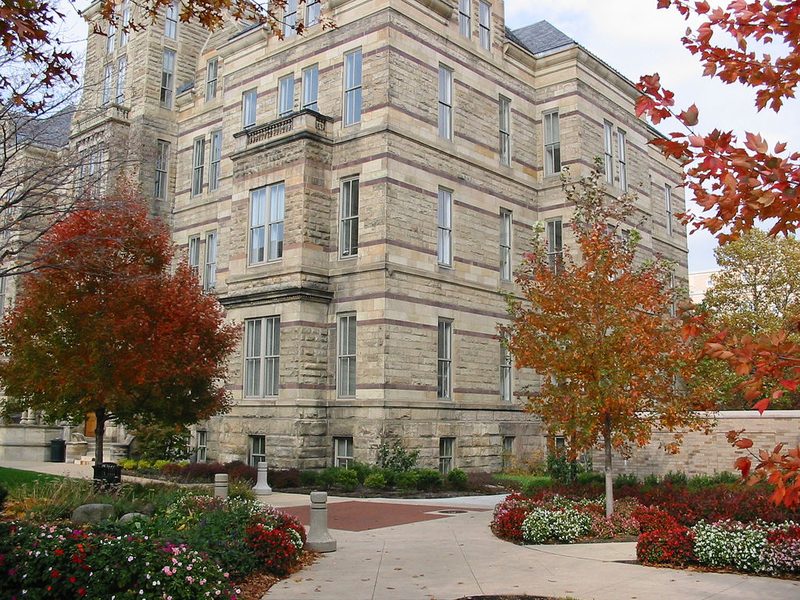
University Circle, on the city's east side, is home to a cluster of educational and cultural institutions that give that part of the city a distinct energy. Case Western Reserve University anchors the neighbourhood; its Adelbert Hall is listed on the National Register of Historic Places. The Cleveland Museum of Art is located in University Circle and offers free general admission to its permanent collection. Reaching University Circle from the downtown lakefront is straightforward on the GCRTA Red Line rapid transit service.
What Visitors Notice on Foot
Walking through the East Fourth Street Historic District, visitors find a concentrated stretch of restored late nineteenth and early twentieth-century commercial buildings that has become one of the livelier parts of downtown, particularly for dining and evening activity. The adjacent Mall provides open space and clear sightlines toward some of the city's grandest civic buildings. A slow walk from Public Square toward the lakefront takes in the Soldiers and Sailors Monument, the civic green, and then the Rock and Roll Hall of Fame building on the water's edge.
For those who want to move beyond the urban core, the Rocky River and Cuyahoga Valley offer accessible natural terrain within a reasonable drive. Brandywine Falls, within the Cuyahoga Valley National Park area to the south of the city, is among the most visited natural features in the broader Cleveland region. The AllTrails database lists the Ohio and Erie Canal and Garfield Park Loop as one of the longest walking routes accessible from the city.
Getting There and Around
Cleveland Hopkins International Airport, on the city's west side, is the main air gateway. The GCRTA Red Line rapid transit connects the airport directly to downtown, making a car unnecessary for visitors staying in the central area. The wider GCRTA network includes rapid-transit rail lines, bus routes, and Bus Rapid Transit (BRT) services covering the broader metropolitan area. For visitors staying downtown, the Red Line also reaches University Circle to the east. Intercity coach services including Greyhound operate from Cleveland, with Greyhound serving the Cleveland Greyhound terminal and Megabus stopping at the Stephanie Tubbs Jones Transit Center. The city sits on major interstate highways, making it accessible by road from Pittsburgh, Columbus, Toledo and Detroit.
For current GCRTA bus and rail schedules, the authority's own timetables are at riderta.com; the Transit app (transitapp.com) also lists GCRTA routes with live departures. Destination Cleveland's mobile app provides visitor-oriented wayfinding for the city.
Seasonal Notes
Cleveland's seasons vary considerably. Summers bring warm weather, higher visitor numbers and outdoor events including ethnic and cultural festivals documented by Cleveland Magazine. Winter brings cold temperatures, snow and ice that can affect walking conditions and transport reliability; the lake-effect snow pattern means winters can be notably heavy. Spring and autumn offer more moderate conditions with lower crowds. Visitors planning outdoor walking or waterfront activity should check seasonal weather forecasts and allow for variable conditions, particularly from late autumn through early spring.
Practical Notes
Cleveland operates on Eastern Time (America/New_York). The downtown core and adjacent neighbourhoods are walkable for daytime exploration; destinations such as University Circle and West Side Market are most efficiently reached by GCRTA rail or bus rather than on foot from the lakefront. The UK Foreign, Commonwealth and Development Office currently rates the United States at Level 1 (normal precautions), meaning no elevated warnings are in place. Visitors from the UK should check current ESTA or visa requirements before travel; full guidance is at gov.uk/foreign-travel-advice/usa.