Morning: The Creek
It was a Tuesday in October when the fictional visitor — call her the researcher — arrived at Kipling station on the Bloor-Danforth line and walked south into the district. The morning was grey, the kind of flat Ontario overcast that keeps the colours in the leaves rather than washing them out. She had read that the name Etobicoke comes from an Ojibwe word for a place where the alder trees grow, and she had decided to take that seriously.
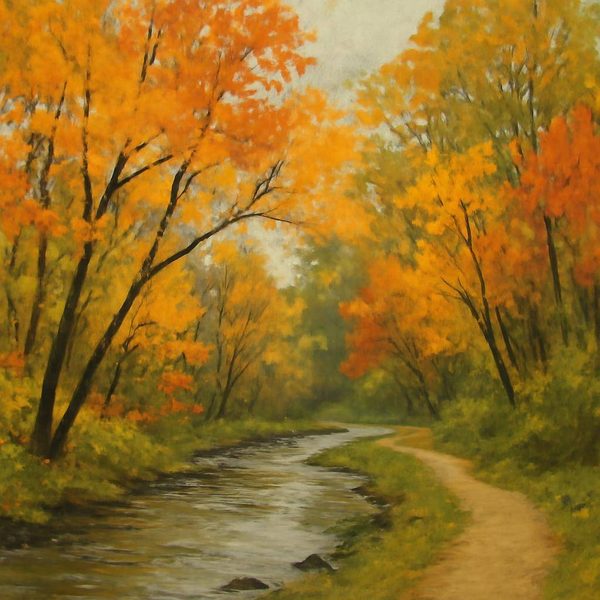
Elmcrest Creek was running well. She found it through a gap in the residential streets, following the green corridor south toward Renforth Creek, which joined it a little further along. The valley here is shallow and unremarkable in the way that genuinely useful urban green space tends to be: worn paths, wet leaves, the sound of water competing with the distant hum of the highway. No one was performing nature at her. She appreciated that.
The ghost of the place, if there is one, is not dramatic. It is the ordinary persistence of water in a landscape that has been paved over almost everywhere else. Elmcrest Creek still runs. The alder trees, or something like them, still lean over the banks. The Ojibwe who named this place for that fact were describing something that has not entirely gone away.
Midday: The Inn
Montgomery's Inn on Dundas Street West is the kind of building that surprises visitors who have not been looking for it. Built in the 1830s, it operated as a roadside hostelry when this corridor was the main road through a developing agricultural landscape — a stop on the way to somewhere, serving people who were moving through rather than staying. It is now a heritage museum operated by the City of Toronto, and the National Trust for Canada has noted its significance.
The researcher stood in front of it for a while, thinking about the John Grubb House nearby, whose earliest structure dates to 1808. Two hundred years is not ancient by some measures, but in a district where the dominant architectural language is post-war bungalow and glass condominium, a farmhouse from 1808 carries a particular weight. The ghosts here are practical ones: the people who worked the land along these creek valleys before anyone had decided what this part of Ontario was going to become.
Inside — or so the sources suggest — the inn gives a tangible sense of early Upper Canada commercial life. She noted the address and made a plan to check current opening arrangements before a return visit. The research had been clear on one point: opening hours for heritage sites are the kind of detail that deserves a direct phone call rather than an assumption.
Afternoon: The Mandir and the Waterfront
From Dundas she made her way eventually to the BAPS Shri Swaminarayan Mandir, which requires no ghost story. The carved stone of the complex, one of the largest Hindu temple structures in North America, is its own kind of time compression — craftsmanship that would have been recognisable to builders centuries ago, assembled in Etobicoke in the present century by communities that have made this district genuinely their own. Destination Toronto lists it as a heritage museum as well as a place of worship. The researcher had checked the BAPS website before coming and was prepared for the visiting protocols. She was glad she had.
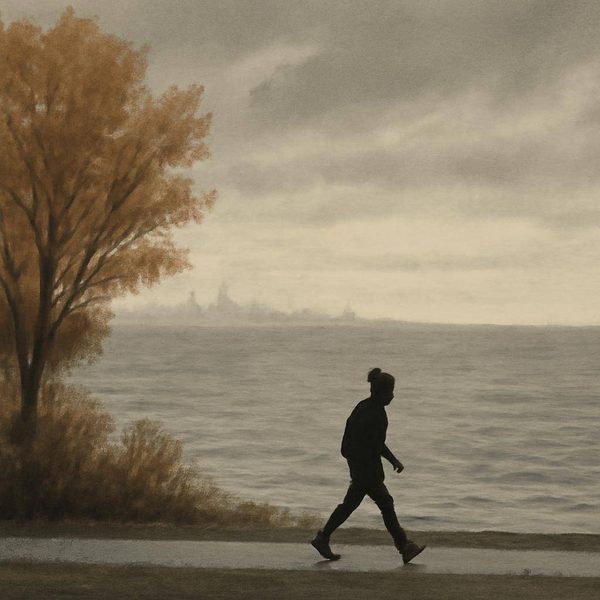
The afternoon light — when it finally arrived, briefly, through the overcast — found her on the Lake Ontario waterfront at Humber Bay Park East. The lake in October is not a gentle thing. It is wide and grey and entirely indifferent to the city behind it. Walkers moved along the path. A cyclist passed. The water went on to the horizon without explanation.
She had intended to walk further toward Colonel Samuel Smith Park but had checked the TRCA website that morning and found that major maintenance works were ongoing. She stayed at Humber Bay instead, which was enough. The lake views from the eastern park are long. You can see, or imagine you can see, the curve of the shore toward Mississauga, and the sense of the Great Lake as a geographical fact rather than just a boundary becomes briefly real.
Evening: The Return
Back at Islington station by early evening, she thought about what the district had offered. Not spectacle. Not a concentrated cultural quarter. Something more dispersed: creek valleys that still hold water, a 190-year-old inn, a temple complex that stops you in your tracks, a waterfront that the lake treats with bracing honesty. The TTC carried her east toward downtown without drama.
Etobicoke is the kind of place that reveals itself slowly, on foot, in the kind of weather that October provides. The ghosts are not in any one building. They are in the gaps between things — in the creek corridors, the agricultural grid of the old township, the layers of communities that have settled here and made the place their own. The alder trees, or their descendants, are still growing somewhere near the water. The Ojibwe who noticed them first were paying attention to the right things.
Frequently Asked Questions
What practical route does this Etobicoke story follow?
It follows source-backed places and route anchors from the guide, giving orientation and atmosphere while leaving live transport and opening details to the linked sources.
Which live details should I check before using this Etobicoke route?
Check current transport, access, opening and weather information from the linked official or operator sources before travelling.
What does this route help visitors understand about Etobicoke?
It turns source-backed places, route anchors and local context into a readable visitor route, so the story supports the main guide rather than replacing practical planning.
This is a fictional visitor story generated from source-backed place facts, image evidence and visitor-feel signals. It is not a first-hand WorldTownGuide visit. Named places, routes and historical references are source-backed; the visitor character and narrative events are invented.
Sources: Montgomery's Inn Museum - National Trust for Canada • BAPS Shri Swaminarayan Mandir and Heritage Museum - Destination Toronto • Etobicoke - Wikipedia (name etymology and history) • Things to Do in Etobicoke - todocanada.ca