

What Gwangju is known for
Gwangju, South Korea's sixth-largest city with 1.4 million residents, occupies the fertile southwestern corner of the Korean Peninsula. The city served as capital of South Jeolla Province through centuries of dynastic rule until its promotion to metropolitan status in 2005. Today it functions as a regional hub for agriculture and manufacturing whilst maintaining particular significance in Korean ceramic traditions and democratic history.
Orientation and Setting
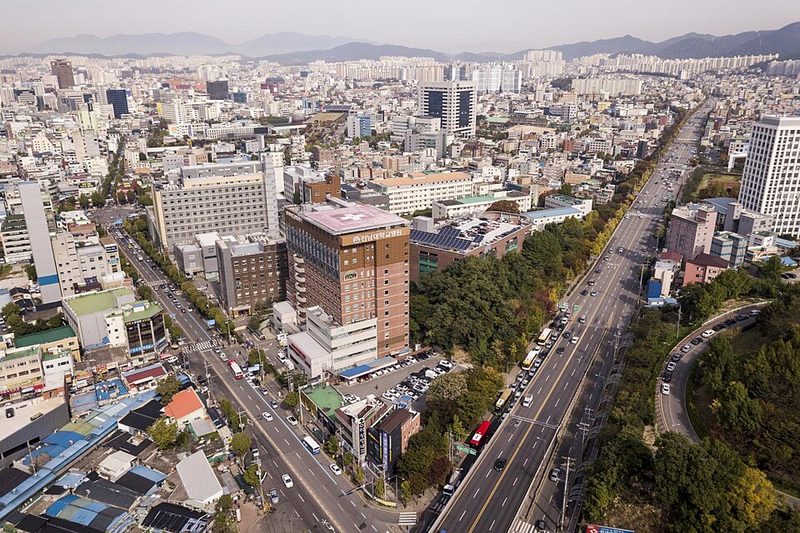
The city sits at 47 metres above sea level in the rice-growing Jeolla basin, where lowland terrain extends towards the coast. Mudeungsan Mountain rises to the east—now designated a national park—providing a geographical anchor and home to three historic temples: Jeungsimsa, Wonhyosa and Yakshasa. The urban area is administratively divided into five districts, a framework that organises a sprawling metropolitan footprint without the crushing density of Seoul.
The landscape retains visible connections to its agricultural hinterland. Rice paddies, orchards and vegetable farms remain threaded through and around the urban boundary, and regional produce—tomatoes, peppers, eggplants, pears—moves through the city's traditional markets. The urban fabric mixes older commercial districts with modern development, creating a practical, orderly environment typical of South Korea's second-tier cities.
Historical Weight and Democratic Memory
Gwangju's history extends to 57 BC, with the current name—translating as "Province of Light"—adopted in 940 during the Goryeo Dynasty. The settlement functioned as an administrative centre through the Baekje Kingdom period and later served as Jeolla Province's capital during the Joseon Dynasty.
The May 18 Democratic Uprising of 1980 defines the city's modern identity more than any other event. When military forces suppressed a pro-democracy uprising with substantial loss of life, Gwangju became a watershed moment in Korean political consciousness. The event catalysed the democratic transformation that followed and shaped how the city presents itself nationally—officially designated the "City of Justice" with human rights and democratic values integrated into civic identity.
The May 18 Democratic Uprising Archives, established in 2015 at the former Gwangju Catholic Centre, collects and preserves documentation of the movement. In 2011, the uprising's document archive was listed on the UNESCO Memory of the World International Register. The May 18th National Cemetery and memorial monuments serve as focal points for remembrance, whilst the Jeonil Building 245 hosts a permanent exhibition on the events.
Cultural Infrastructure
The National Asia Culture Center (ACC), completed in 2014 under the Asian Cultural Hub City Development Plan finalised in 2007, operates as the city's flagship cultural institution. The complex houses exhibition spaces, performance venues, archives and distribution facilities, positioning Gwangju as a regional arts hub.
The Gwangju Biennale, founded in September 1995, stands as Asia's oldest contemporary art biennale. The 2024 edition featured 31 pavilions with works from 180 artists and artist teams across 32 countries, with exhibitions spread across cultural venues throughout the city and public installations in Geumnam-ro Street and 5.18 Democracy Square. The event draws international curators and positions the city within global contemporary art circuits.
Gwangju maintains a 500-year porcelain tradition rooted in Joseon Dynasty craftsmanship, centred on white porcelain and traditional kiln techniques. The city has received UNESCO recognition as a ceramics centre (cited as a "3관왕" or three-time award winner), with the Bunwon Kiln Site and active porcelain workshops preserving this heritage. Museums dedicated to ceramics, contemporary art and regional history serve both residents and visitors.
Food and Regional Specialities
The Jeolla region's reputation as Korea's culinary heartland extends through Gwangju. The city hosts the annual Gwangju Kimchi Festival before winter, promoting varieties of kimchi and traditional fermentation practices. Gwangju Kimchi Town, a facility covering 8,782 square metres across two underground and four above-ground floors, houses a Kimchi Museum with exhibits on the culture, history and hands-on preparation of Korea's signature preserved vegetable.
Traditional markets—including Seonjeong Market mentioned in traveller accounts—function as both shopping venues and social spaces, maintaining their role as community anchors where regional produce moves directly from farm to consumer.
Mudeungsan National Park
Mudeungsan Mountain, designated a national park, rises directly east of the city centre. The park offers hiking trails leading to distinctive columnar jointing rock formations at Seoseokdae, Gyubong and Ipseokdae peaks. At the mountain's base sit three historic temples: Yakshasa, Jeungsimsa and Wonhyosa, each serving both Buddhist communities and visitors. Bus routes (including numbers 1187 and 1187-1) connect the city to trailheads, particularly to Wonhyo Temple, a common entry point for hikers.
The mountain terrain includes the Jangbuljae Valley and provides year-round hiking, with winter conditions creating distinct landscapes. The Chunseol Tea Plantation on the mountain's slopes produces tea associated with the region.
Practical Information
Gwangju is integrated into South Korea's national rail and highway networks. Specific transport schedules, terminal locations and fare structures should be verified with local authorities and official sources before travel. The city has been designated a Smart Tourism City, and themed travel courses covering history, culture and seasonal exploration have been developed. A tourist information line (1330) operates for visitor inquiries.
Accommodation options and detailed service information should be sourced from current local directories and official tourism websites. The Yangnim-dong neighbourhood preserves modern historical architecture from the colonial and post-war periods.
When to Visit
The city functions year-round, though specific events—including the biennial contemporary art exhibition and the annual kimchi festival—operate on published schedules that should be confirmed in advance. The agricultural calendar shapes seasonal produce availability in traditional markets.