

What HÄora is known for
HÄora sits on the western bank of the Hooghly River, opposite Kolkata. The city of over a million people functions as one of West Bengal's most important industrial and transport hubs, dominated by its massive railway junction and the cantilever bridge that links it to its more famous neighbour. This is a working city—shaped by railways, engineering works and the river—rather than a tourist destination, though it offers insight into industrial India and Bengali urban culture for those interested in such places.
Geography and Arrival
The Hooghly River defines HÄora's character and position. The city sits at sea level in the Bengal Delta, its low-lying terrain a reminder of the marshland that once dominated this landscape. The river connects HÄora to Kolkata, the broader delta region and ultimately the Bay of Bengal.
Howrah Junction railway station serves as the primary arrival point for most visitors. Designed by British architect Halsey Ricardo and opened in December 1905, the station handles over a million passengers daily, making it one of India's busiest transport hubs. The building displays Romanesque architectural features, including a central dome and clock tower. The first commercial train ran from Howrah to Hooghly on 15 August 1854, establishing the city's enduring role as a railway gateway.
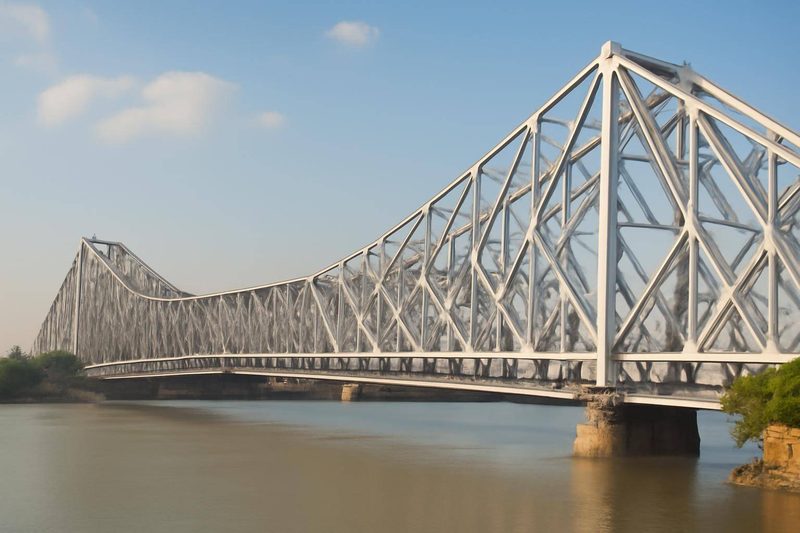
The Howrah Bridge (officially Rabindra Setu) provides the main road connection to Kolkata. This cantilever structure spans 705 metres with a central span of 457 metres, standing 82 metres high. Constructed between 1936 and 1942 and opened in February 1943, the bridge was assembled entirely with rivets—no nuts or bolts were used. The steel for the structure, some 23,000 tons of a special grade called Tiscrom, was supplied by Tata and fabricated by the Braithwaite, Burn & Jessop Construction Company of Howrah. The bridge carries road traffic and pedestrians across the river 24 hours a day with no toll.
Industrial Heritage and Urban Character
HÄora developed its modern identity after 1854 when the East Indian Railway established its terminus here. The railway transformed a riverine settlement into a major transport node, connecting the interior with Kolkata and the port. The city became known as the "Sheffield of the East" for its concentration of engineering works, particularly small to medium-scale operations. Jute mills also became part of the industrial landscape, creating a working-class urban culture distinct from colonial Kolkata's administrative and commercial character.
The streetscape reflects this industrial past through colonial-era factory buildings and railway infrastructure, layered with newer development. Streets near the station and bridge remain densely congested, with mixed traffic of commercial vehicles, local transport and pedestrians. The city functions as a working hub rather than presenting a planned tourist-facing environment.
Cultural Life and Religious Practice
Hindu practice predominates, reflected in temples throughout the city and the annual festival calendar. Durga Puja remains central to Bengali cultural identity here, alongside Saraswati Puja, Diwali, Kali Puja, Holi and the Bengali New Year (Pohela Boishakh). Bengali serves as the primary language, with Hindi, English and Urdu also widely spoken, reflecting the city's diverse population drawn by industrial and railway employment.
Belur Math, headquarters of the Ramakrishna Math and Mission, sits just north of HÄora proper. Established by Swami Vivekananda, the complex attracts devotees and visitors interested in the Ramakrishna movement's religious philosophy, which emphasises unity across religious traditions.
The Anand Niketan Kirtishala Museum, located in Bagnan block of Howrah district, displays cultural and historical materials including sculptures, terracotta pieces and scrolls from medieval Bengal. The institution was established to make heritage resources accessible to rural populations in the district.
The Howrah Book Fair, held at Sarat Sadan during winter months, indicates an active literary culture beyond the city's industrial character. The Rail Museum Howrah, opened in 2006, documents railway history in eastern India with exhibits including narrow gauge steam engines and historical rolling stock.
What Visitors Experience
The Howrah Bridge dominates the visual and physical experience of HÄora. Walking across the structure provides views of the Hooghly River, the Kolkata skyline and the constant flow of traffic and pedestrians. The bridge functions as both engineering monument and daily necessity, embodying the city's utilitarian character.
The area around Howrah Junction presents dense urban activity—transport workers, street vendors, accommodation clusters and the constant movement of passengers. The station itself, with its Romanesque architecture, offers historical interest for those attentive to colonial-era railway buildings.
Temples are scattered through the city, including the Bangeshwar Mahadev Temple in Salkia, though most visitors encounter HÄora as a transit point rather than a destination for religious or cultural tourism. The riverfront areas near the bridge provide some public space, though organised waterfront access remains limited in most sections.
Practical Considerations
HÄora forms part of the Kolkata Metropolitan Development Authority region and sits within Howrah district administratively. The city is highly urbanised and densely populated. Local transport operates through conventional urban modes including auto-rickshaws, taxis and buses, with metro connections to Kolkata available.
The UK Foreign Office and US State Department do not apply travel restrictions to West Bengal. Regional restrictions in India relate to border areas and specific states elsewhere in the country. Visitors should consult current official travel advice before travelling.
Those arriving at or departing from Howrah Junction should allow extra time for navigating the large, crowded station and for potential schedule changes given the high volume of traffic the junction handles. The bridge and surrounding roads experience heavy congestion, particularly during peak hours.
Context for Visitors
HÄora rewards visitors interested in industrial heritage, railway history and working-class Bengali urban culture rather than those seeking conventional tourist attractions. The city's significance lies in its functional role—as transport hub, industrial centre and working counterpart to Kolkata—rather than in curated visitor experiences. Those with time can explore the engineering heritage of the bridge, the architectural character of the railway station, or the scattered temples and museums, but most travellers encounter HÄora in transit, which itself reveals something of its essential character.