In This Guide
Read the guide as a story
The City That Refused to Sleep: Hyderabad in October
Hyderabad, Telangana
Hyderabad hits you all at once — the roar of an auto-rickshaw threading through impossible traffic, the scent of biryani drifting from an old-city lane, the shadow of a four-hundred-year-old minaret falling across a pavement full of phone-repair stalls and students. This is a city that has been reinventing itself for centuries without ever quite losing its original shape, and that tension is exactly what makes it worth paying attention to.
Setting and First Impressions
Hyderabad sits on the Deccan Plateau at roughly 515 metres above sea level, and the elevation gives the city a mild, breezy quality noticeable when you step outside an air-conditioned arrival hall or a metro carriage. Much of the urban fabric is built across hilly terrain punctuated by rocky outcrops, low ridges and a network of artificial lakes. The most visible of these is Hussain Sagar, a large tank that predates the modern city and connects what were once two separate settlements — Hyderabad and Secunderabad — across a broad expanse of water. Its surface reflects the skyline on clear mornings, and a large Buddha statue stands on a rock island at its centre. The Musi River runs through the older southern districts, separating the historic core from the neighbourhoods that grew up around it in later centuries. Hills rise within the urban area itself: Allāh Banda and Red Hill, both within roughly a kilometre of the city centre, give Hyderabad a broken topography that is unusual for a plains metropolis.
History and Identity
The city was founded in the late sixteenth century by Muhammad Quli Qutb Shah, the fifth ruler of the Qutb Shahi dynasty, and for much of its early life it functioned as a planned extension of the older Golconda fort settlement. The Charminar, a monumental four-towered arch built in 1591, remains the most legible symbol of that founding era. For generations, Hyderabad was the seat of the Nizam — the hereditary ruler whose wealth and patronage shaped the city's architecture, its cuisine and its particular cultural mix: a blend of Deccani, Mughal, Persian and later British colonial influence that shows up in everything from the calligraphy above doorways to the style of local bread. The city became part of independent India in 1948 and was later made the capital of Andhra Pradesh before becoming the capital of the newly formed state of Telangana in 2014.
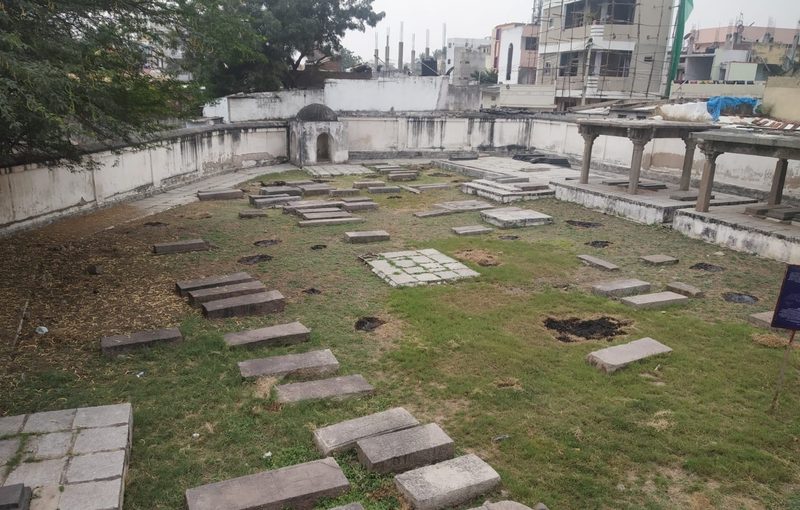
The Armenian cemetery in the Uppuguda district is a quieter reminder of the merchant communities from Central Asia and the Middle East who passed through and settled here during the Nizam era — one of several threads that make Hyderabad's history less straightforwardly local than it first appears.
The Old City and What to See
The old city quarter around the Charminar is the densest part of Hyderabad for heritage sightseeing and also the most navigable on foot, once you accept that the streets are genuinely busy. Mecca Masjid — one of the largest mosques in India, and a focus for Friday prayers and Ramadan observance — stands close to the Charminar itself. The Telangana state heritage authority documents both structures on its official heritage inventory. Chowmahalla Palace, a complex of audience halls and courtyards that served as the official seat of the Nizam, is within the same precinct; sources from the Hyderabad district government and tourism guides confirm it remains a visited heritage site. Laad Bazaar, immediately adjacent to the Charminar, is the old city's main market lane, historically associated with glass bangles and wedding goods and still trading in both. Together, these four sites — Charminar, Mecca Masjid, Chowmahalla Palace and Laad Bazaar — form the core of what Telangana Tourism identifies as the city's primary heritage cluster.
Mozamjahi Market, a covered market building from the Nizam period, occupies a prominent position closer to the city centre and remains in daily use. Golconda Fort, located to the west of the city at roughly nine kilometres from Hussain Sagar, is a substantial medieval fortification worth a half-day visit and is listed on the Hyderabad district government's official tourist places page. For a different kind of day out, Ramoji Film City, located east of the central area, is one of the world's largest film studio complexes and draws visitors curious about the Telugu film industry, though source depth on its current operational details is thinner than for the heritage sites.
Music, Culture and Festivals
Hyderabad has a documented performance culture that runs from classical to contemporary. According to sources including The Hindu and local discovery platform LBB, the city supports a number of live music venues at bars and cultural spaces, and community groups such as Beyond Hyderabad have been building organised communities around arts, music, trekking and heritage. The depth of a current live-music scene is harder to pin down from stable sources alone; visitors should check current listings locally before planning an evening around a specific venue.
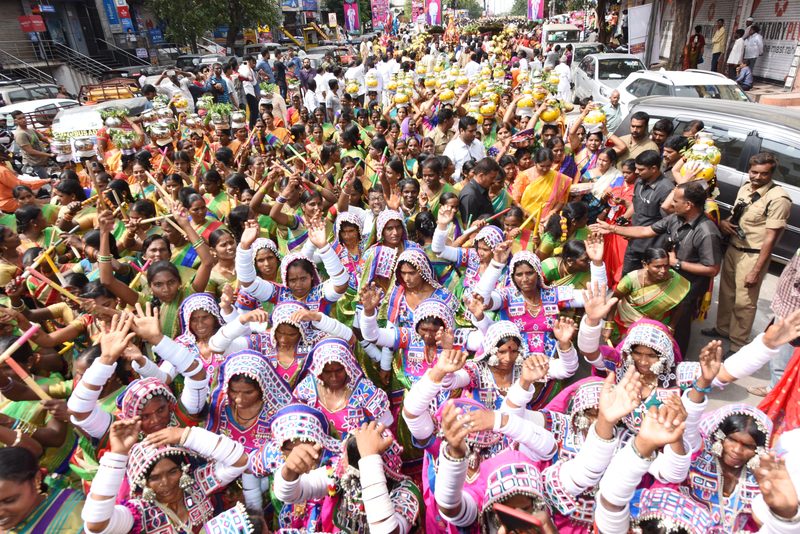
The Bonalu festival, observed by Telugu communities and associated with the goddess Mahankali, brings processions and performance artists — including Banjara cultural performers — into the streets each year during the monsoon season. The Hyderabad district government's festivals page identifies Bonalu as one of the city's principal annual celebrations. Ramadan is observed with particular intensity here, with the historic Mecca Masjid as the largest congregation point, according to Telangana Tourism's festivals and fairs documentation. The city also marks Ugadi, Navratri and Dussehra with public celebrations; a multi-faith calendar of city-wide events has been reported, reflecting the city's overlapping religious communities.
Economy, Scale and the Two Cities Effect
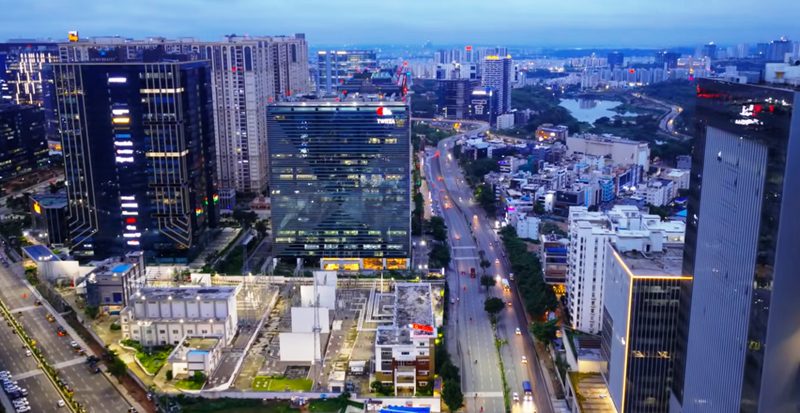
Hyderabad is the fourth most populous city in India, with close to seven million residents within the city limits and nearly ten million in the wider metropolitan region. It functions as a significant technology and pharmaceutical hub, which explains the dual character many visitors notice: a gleaming western corridor of glass office towers in areas such as Hi-Tech City and Gachibowli coexisting with the densely layered lanes of the old city. This is not a recent tension — the city has absorbed and juxtaposed different worlds since the Qutb Shahi era — but the current scale of the IT districts makes the contrast more visible than in most Indian cities.
Getting There and Around
Hyderabad is a major transport gateway for peninsular India. The city is served by Rajiv Gandhi International Airport (IATA: HYD), located south of the urban core, with connections to major domestic destinations and international routes operated by carriers including British Airways, KLM, Lufthansa, Ethiopian Airlines, Air India and Emirates, according to airport route network evidence. Exact routes and seasonal schedules should be verified with airlines or the airport directly before booking.
The main rail terminus is Hyderabad Railroad Station, approximately 1.6 kilometres from the city centre, with Kachiguda and Secunderabad also serving the broader metropolitan area. Khairatabad station, around 3.2 kilometres from the centre, is a further node and also connects to the Hyderabad Metro Rail at the nearby Khairatabad metro station. The Metro Rail operates elevated lines across significant parts of the city and is widely used; for travel between the old city and the newer IT districts, the metro is the clearest option for visitors unfamiliar with the road layout. TSRTC (Telangana State Road Transport Corporation) city buses cover a wide network; routes and current schedules are best verified locally or through current apps. Auto-rickshaws and ride-hailing apps are the standard short-distance options.
Bus route numbers identified in research include services 10 and 27 towards Mahabubnagar, Nalgonda and Pragnapur; service 26 connects to Secunderabad. These are research signals rather than a current timetable — verify any route before travel.
Seasonal and Practical Notes
The months between October and February are generally the most comfortable for visiting: the plateau location moderates temperatures, and post-monsoon air quality improves noticeably. Summers — April to June — can be intense before the rains arrive, with temperatures regularly exceeding 40°C in the hottest weeks. The monsoon season (roughly June to September) brings the Bonalu festival but also makes outdoor sightseeing less predictable. Visitor pressure is seasonally important: the old city heritage sites attract larger crowds at weekends and during festivals, and peak periods around Bonalu and the major religious observances are worth planning around if you prefer quieter visits.
Hyderabad observes Indian Standard Time (IST, UTC+5:30). The UK FCDO advises against all travel to specific regions of India — areas within 10 km of the India-Pakistan border, the Union Territory of Jammu and Kashmir (with exceptions for Jammu city), and advises against all but essential travel to Manipur state. These restrictions do not apply to Hyderabad. Most of India, including Hyderabad, is accessible with normal precautions. Visitors should check current advice at gov.uk/foreign-travel-advice/india and travel.state.gov before travelling.