In This Guide
The Clock That Stopped story uses Leeds civic time, theatre streets and urban legends as a fictional route through source-backed local history after dark.
Read the guide as a story
The Clock That Stopped: Leeds After Dark
First Impressions and Setting
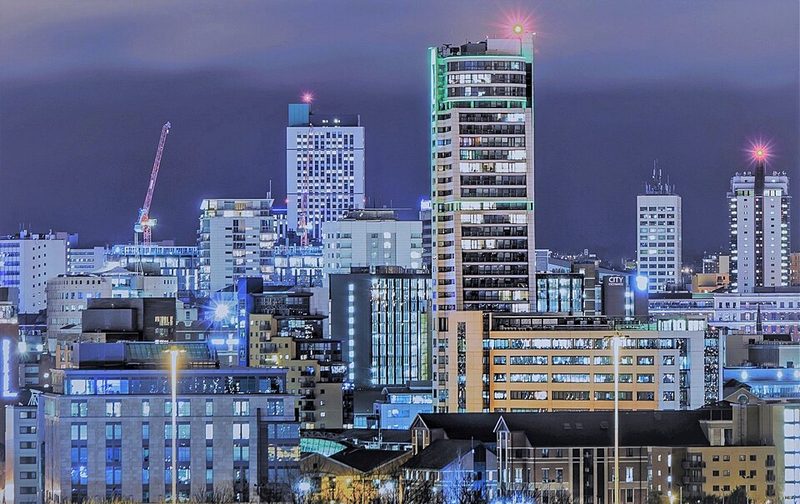
Step off the train at Leeds City Railway Station and the city presents itself with directness: a confident urban core of Victorian stonework alongside contemporary glass, built tightly along the banks of the River Aire. The station area is functional rather than picturesque, and the streets closest to the centre are busy and purposeful from early in the day. Leeds does not ease you in gently.
The eastern foothills of the Pennines give the wider landscape a rumpled quality, and on clearer days the sense of moorland beyond the rooftops is a genuine part of the city's character. Inner districts close to the centre — Camp Field, The Leylands, Steander and Mabgate among them — reflect the layered, patchwork quality of a settlement that has grown organically over centuries rather than being designed from above. City Square, a short walk from the station, provides the most composed civic set-piece and is a useful landmark for orienting yourself on arrival.
History and Identity
Leeds began as a small manorial borough in the thirteenth century and developed into a market town by the sixteenth. Over the seventeenth and eighteenth centuries it became a major centre of textile production and trade, a role that shaped both its physical fabric and its character. The city received its royal charter from Queen Victoria in 1893 — a formal recognition of how far it had come from its modest medieval origins.
That industrial and mercantile history left behind a city with real architectural confidence. Ornate Victorian buildings stand alongside the working infrastructure that once served the wool and textile trades, and that legacy is still legible in the streetscape today. Leeds is the administrative centre of the City of Leeds Metropolitan Borough, one of the most populous local authority districts in the United Kingdom, and holds the title of the largest settlement in Yorkshire.
The city's museums engage directly with this heritage. The Leeds Industrial Museum at Armley Mills documents the machinery and labour of the textile era, including some of the earliest commercially successful steam locomotives from 1812; now operated as a heritage attraction, it offers a tangible link to the city's industrial pioneering. Abbey House Museum near Kirkstall uses reconstructed Victorian street scenes to anchor the period more vividly. Kirkstall Abbey itself — a twelfth-century Cistercian ruin on the River Aire — is one of the most substantial medieval remains in the north of England and is managed by Leeds Museums and Galleries. The museum is located 3.4 miles from Leeds city centre in the Armley district, and the site includes a visitor centre (open Tuesday–Sunday, 10am–4:30pm April–September, with reduced hours at other times of year — check the current schedule before visiting).
Parks and Green Spaces
Leeds has two parks worth making deliberate plans to visit. Roundhay Park, to the north of the city centre, is listed by Historic England and is among the larger urban parks in England; its grounds include lakes, woodland and open lawns that draw a wide mix of visitors and local residents. The park has hosted major outdoor concerts and events over the decades, giving it a cultural identity beyond its landscaping.
Hyde Park, closer to the university area of the city, has a different and more neighbourhood character. It is closely associated with the student population and with Leeds' music and cultural life — the surrounding streets have a density of cafes, independent shops and music venues that make the area feel distinct from the commercial city centre. Both parks are well-connected to the centre by bus.
For walkers, the Leeds city council documents several longer routes including the Meanwood Valley Trail, a seven-mile walking route through the Meanwood Valley to Golden Acre Park, and the Leeds Country Way, a 62-mile circular route around the city's outer edges. The Discover Leeds resource lists additional walk options across the wider district.
Music, Culture and Archives
Leeds has a particularly well-documented music history. Wikipedia's Music in Leeds article and sources including Leeds Live identify a city that produced a significant independent music scene from the late 1970s onwards — post-punk, goth and electronic culture all found footholds here, sustained by a cluster of venues and independent record shops that have since largely closed or changed. Sources referencing archived photographic records of 1980s and 1990s Leeds document venues including the Duchess of York on Vicar Lane as central to that period, and describe rock, goth and student club culture across the city centre.
The Leeds city council resource on arts, music and culture acknowledges this heritage through its children's arts programming, community workshops and creative infrastructure — suggesting that the city treats cultural memory as something worth maintaining rather than just commemorating. The Royal Armouries Museum, located in a purpose-built building on the waterfront, holds a collection of over 8,500 arms and armour items spanning approximately 3,000 years and is one of the more visited attractions in the city according to Visit Leeds. Note that weekday mornings from 10am to 2pm are peak times for visits; the museum opens Tuesday to Friday from 10am to 5pm, Saturdays from 12pm, and it operates normal hours of 10am to 5pm on other open days — last admission is typically 30 minutes before closing, so checking the current schedule before visiting is advisable.
Leeds has also produced artists of international standing. Henry Moore (1898–1986), one of the 20th century's most celebrated sculptors, trained in Leeds and the city retains a strong connection to his legacy; the Yorkshire Sculpture Park — reachable from Leeds — is widely regarded as a major centre for sculpture, and Moore's work can be found in public and gallery collections around the world.
The West Indian community has been a significant presence in Leeds life for generations. The Leeds West Indian Community Centre is a documented anchor of that cultural presence, and the city's Caribbean community has shaped its food, music and social fabric in ways that are reflected at street level and formalised in the Leeds West Indian Carnival, which has its own established history dating back decades. The carnival is among the city's major annual celebrations, attracting an estimated 150,000 visitors in strong years; it traditionally takes place on the August Bank Holiday Monday, starting at 2pm from Potternewton Park, with the parade moving through the surrounding streets — check the current year's arrangements before planning a visit around it.
Getting There and Around
Leeds City Railway Station is the primary arrival point for most visitors and sits within easy walking distance of the city centre. National Rail services connect Leeds directly to London, Manchester, Edinburgh and most major cities across England and Scotland, with frequent services throughout the day. Operators including Northern and others serve regional routes.
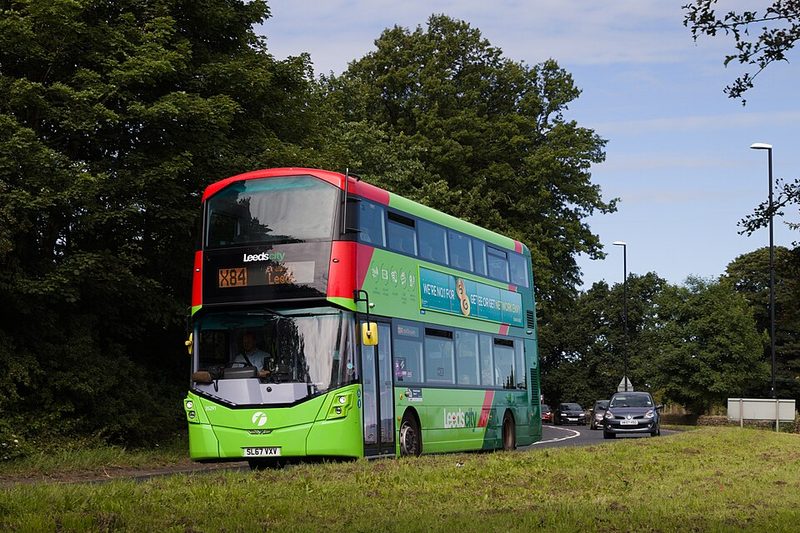
For coach travel, Leeds City Bus and Coach Station is in the city centre, with National Express, FlixBus and Megabus operating services from destinations across the country. The Stourton Park and Ride provides a bus link into the city centre on service PR3 operated by First Bus, which is useful for visitors arriving by car who prefer not to drive into the centre.
Leeds Bradford Airport (LBA) handles flights to destinations across the UK, Europe and North Africa, with operators including Ryanair, KLM and Aer Lingus among those serving the airport. Route availability and schedules change seasonally; checking directly with the airport or flight search tools before booking is advisable.
Local bus services operate across the city and surrounding communities. West Yorkshire Metro (soon to be rebranded as Weaver Network) coordinates bus and rail information for the region; Leeds City Bus Station has accessible facilities and is a practical interchange for onward journeys. For current timetables and routes, Traveline and the relevant operators are the reliable first stop. The city centre is walkable at its core, and most of the landmarks closest to the station are accessible on foot.
Practical Notes
Both UK and US government travel authorities apply their lowest advisory levels to the United Kingdom, and no specific regional restrictions or security concerns apply to Leeds. Standard urban awareness is appropriate, as it would be in any large city. Medical facilities including hospital services are available in the city; the Nuffield Hospital Leeds and NHS provision both operate here.
Currency is pound sterling. English is the first language. Leeds operates on Greenwich Mean Time, with seasonal adjustment to British Summer Time (UTC+1) in summer. The city's peak visitor periods coincide with summer events and festival season; source evidence indicates crowd levels are seasonally significant, so visitors preferring quieter conditions may find spring or autumn more comfortable.
Roundhay Park and the Birth of Cinema
Roundhay Park is one of Leeds' major green spaces, but its strongest global claim sits just outside ordinary park description. Leeds Museums and Galleries records that in October 1888 Louis Aime Augustin Le Prince used his single-lens camera to shoot the Roundhay Garden Scene, a few seconds of moving images made in Roundhay. Guinness World Records describes it as the oldest surviving film.
That gives Leeds a claim most visitors do not expect: the city is tied to the birth of cinema before Edison or the Lumiere public screenings became the better-known story. Roundhay is therefore not only a lake, woodland and concert landscape; it is part of the prehistory of the moving image.
Sources: Roundhay Park - Leeds City Council • Leeds Museums and Galleries - Louis Le Prince • Guinness World Records - oldest film
Stations, airports and arrival routes for Leeds
Leeds City Railway Station is the primary arrival point for most visitors and is one of the busiest rail hubs in England outside London. It sits within easy walking distance of the city centre and connects Leeds to London, Manchester, Edinburgh and most major cities across England and Scotland via National Rail. Northern operates many regional services; intercity connections run frequently throughout the day. The station's position at the heart of the city means that for most visitors, it is the most practical way to arrive.
For coach travel, Leeds City Bus and Coach Station is in the city centre and handles services from National Express, FlixBus and Megabus from destinations across the UK. The station has accessible facilities including an accessible toilet, baby changing and a staffed concourse, according to West Yorkshire Metro's station information. It is a short walk from the railway station.
Leeds Bradford Airport (LBA) serves the city for air travel, with routes to destinations across the UK, Europe and North Africa. Operators including Ryanair, KLM and Aer Lingus have been documented as serving the airport, though routes and airlines change seasonally. The airport's own route map and flight search tools such as Flightconnections are the most reliable way to verify current destinations and operators before booking.
For visitors arriving by car, the Stourton Park and Ride provides a bus connection into the city centre on route PR3, operated by First Bus. Driving into the city centre itself involves city-centre parking charges and can be congested during peak periods.
Local bus services across Leeds are operated by First Bus, Stagecoach and other operators. West Yorkshire Metro — shortly to be rebranded as the Weaver Network — coordinates bus and rail information for the region. Traveline and the individual operators' websites are the practical starting point for current timetables and route planning. Visitors should check current service information directly with operators, as schedules and network details change.
Sources: West Yorkshire Metro • National Rail - Leeds station
Abbey House Museum and Victorian Leeds
Abbey House Museum occupies the former gatehouse of Kirkstall Abbey, directly across from the medieval ruins. The museum specialises in Leeds social history and Victorian life, offering an interactive experience centred on authentically recreated 19th-century streets, childhood galleries and community exhibits that bring industrial-era Leeds to life.
Victorian Streets and Exhibits
The museum's signature feature is Stephen Harding Gate, a reconstructed Victorian high street on the ground floor where visitors can wander through period shops, houses and businesses. The recreated environment includes authentic architectural details, shop fronts and interiors that reflect 19th-century commercial and domestic life. In the back streets, exhibits show working-class homes including the residence of a window washer woman and a Sunday School, providing insight into different social strata of Victorian Leeds.
The first floor houses the Childhood Galleries, displaying authentic toys and objects from the museum's collection that document how children lived, played and learned during the Victorian era. The Community Galleries on the same floor explore broader aspects of Leeds social history, complemented by a changing programme of temporary exhibitions.
Visiting Information
Abbey House Museum opens Tuesday to Friday from 10am to 5pm, Saturdays from 12pm to 5pm, and Sundays from 10am to 5pm. The museum is closed on Mondays except bank holidays, when it operates normal hours of 10am to 5pm. Last admission is 30 minutes before closing. Visitors should note that weekday mornings from 10am to 2pm are peak times for school group visits.
The museum is located 3.4 miles from Leeds city centre in Kirkstall. Abbey Walk provides the postal address, with Abbey Road leading to nearby Kirkstall Abbey itself. The museum aims to provide accessible facilities for all visitors, with information about specific access provisions available through Leeds Museums and Galleries.
Connection to Kirkstall Abbey
The museum's location in the abbey's historic gatehouse creates a natural pairing with Kirkstall Abbey ruins across the road. Abbey Café, situated in the abbey visitor centre, serves both sites with coffee, sandwiches, cakes and ice cream, offering indoor and outdoor seating within the abbey grounds. The combination of medieval monastic ruins and Victorian social history provides a sweep through several centuries of life in the Leeds area.
The museum operates with reduced admission rates when temporary exhibitions are being changed or galleries are undergoing maintenance, with the Victorian Streets typically remaining open. Current admission rates and any temporary closures should be confirmed through Leeds Museums and Galleries before travelling.
Leeds Industrial Heritage
Leeds industrial history has a railway claim that predates the more familiar Stephenson story. The Middleton Railway says its route was protected by a 1758 Act of Parliament, described by the railway as the first Act titled for and largely concerned with building a waggonway or railway.
The later steam breakthrough is equally Leeds-specific. In 1812 Matthew Murray built locomotives for the colliery to John Blenkinsop's rack-rail system; Middleton Railway describes them as the world's first commercially viable steam locomotives. That makes the site a stronger fame anchor than a preserved heritage railway alone: it links Leeds engineering to working steam traction before the railway age became national mythology.
Sources: Middleton Railway - Our History • Middleton Railway - Railway 200
Henry Moore Institute and Leeds Sculpture
The Henry Moore Institute occupies a prominent position in Leeds city centre as an international research centre for sculpture. Henry Moore (1898-1986), one of the 20th century's most influential sculptors, began his training in Leeds and maintained a commitment to giving back to his home city—though visitors are unlikely to see his own work on permanent display at the institute that bears his name.
The Institute and Its Mission
The Henry Moore Institute functions as both a public exhibition space and a research facility dedicated to the study of sculpture. It hosts a changing programme of exhibitions and events throughout the year, all offered free of charge. Rather than serving as a museum of Moore's own work, the institute encourages visitors to think about what sculpture is, how it is made, and the artists who create it, placing sculpture at the centre of art historical scholarship.
The institute houses a sculpture research library and an archive of sculptors' papers, providing unique resources for the study of sculpture. The archive contains a rich collection documenting the working lives of hundreds of sculptors, with particularly strong holdings on British artists. These research facilities support fellowships and scholarly programmes that contribute to sculpture studies internationally.
Leeds Art Gallery and Sculpture Collections
Adjacent to the Henry Moore Institute, Leeds Art Gallery maintains sculpture collections that have grown to over a thousand works. The collection includes pieces by major artists such as Phyllida Barlow, Alexander Calder, Jacob Epstein, Antony Gormley, Barbara Hepworth, Hew Locke, Henry Moore, Alison Wilding and Bill Woodrow. These holdings reflect Leeds' position as a hub for sculptural excellence in Britain.
Yorkshire Sculpture International
The Henry Moore Institute participates in Yorkshire Sculpture International, a partnership with The Hepworth Wakefield, Leeds Art Gallery and Yorkshire Sculpture Park that celebrates the region's sculptural heritage. This collaboration acknowledges Yorkshire's particular significance in British sculpture history, connecting institutions across the region in exhibitions, events and research programmes.
The formative influence of the Yorkshire landscape on Moore's work—particularly his semi-abstract monumental bronzes and undulating reclining figures—demonstrates how the region's physical environment has shaped sculptural practice. Moore's connection to Leeds remains visible through the institute's commitment to sculpture research and public engagement.
Visiting
The Henry Moore Institute is open year-round with free admission to all exhibitions and most events. The building is located in Leeds' cultural quarter in the city centre, making it easily accessible on foot from the main railway station. Current exhibition schedules, library hours and event bookings should be confirmed through the Henry Moore Foundation website before visiting, as programmes change regularly and some events require advance registration.
Sources: Henry Moore Institute Official Site • What's on - Henry Moore Institute • Visit Henry Moore Institute • A History of Sculpture in Leeds - Henry Moore Institute • Leeds Art Gallery - Leeds Museums and Galleries
Tetley's Brewery and Leeds Ale
Tetley's is a Leeds industrial and drinking-culture anchor rather than just a brand name. Historic England records that Joshua Tetley took on the Leeds brewery in 1822. The Hunslet brewery later became one of Britain's most recognisable ale names, with the huntsman logo tied closely to the city.
The cultural break came when Carlsberg announced the Leeds brewery would close, with reporting at the time noting that brewing at the site was expected to end after 2011. For visitors, the point is not simply that Leeds once brewed beer; it is that a national beer identity was made in the city and then physically detached from it.
Sources: Historic England - operating breweries gazetteer • Guardian - Tetley closure
Leeds West Indian Carnival
Leeds West Indian Carnival is one of the city's strongest living heritage anchors. The carnival organisation traces the first street carnival to Chapeltown in 1967, when Arthur France worked with Ian Charles, Calvin Beech, Willie Robinson, Samlal Singh and Rose McAlister to take Caribbean music, costume and masquerade into the streets. Leeds City Council describes that first event as the first Caribbean Carnival Europe had seen.
Read the Leeds West Indian Carnival guide
Sources: Leeds West Indian Carnival - Our History • Leeds West Indian Carnival - Carnival Heroes • Leeds City Council - Leeds West Indian Carnival case study • Leeds West Indian Carnival - Parade route • MyLearning - Leeds West Indian Carnival