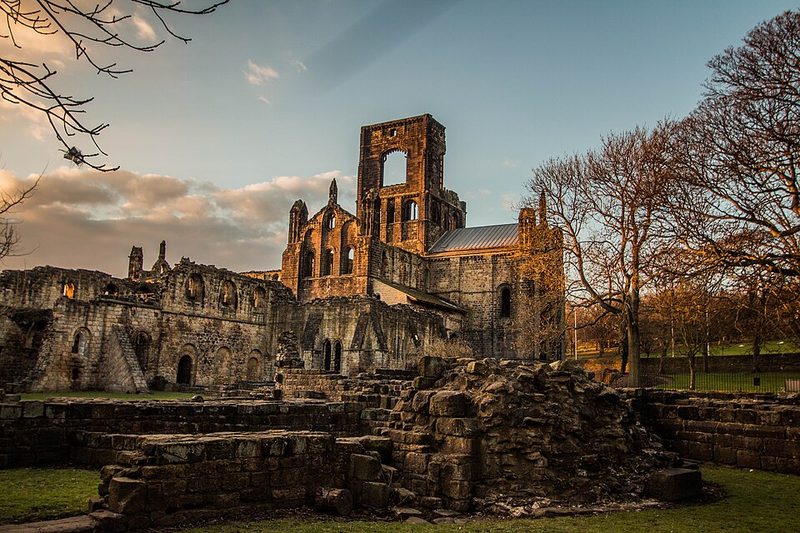
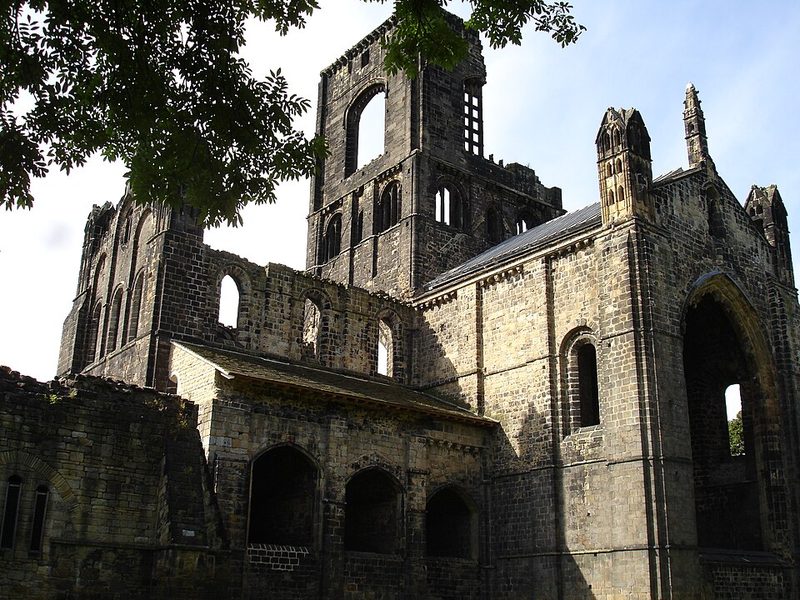
Kirkstall Abbey stands as one of Britain's most complete surviving Cistercian monasteries, its substantial ruins occupying parkland beside the River Aire approximately three miles northwest of Leeds city centre. Founded in 1152 when twelve Cistercian monks led by Abbot Alexander arrived from Fountains Abbey, the monastery buildings were mostly completed by 1182 during Alexander's abbacy.
Architecture and Site
The abbey buildings were constructed using millstone grit quarried from Bramley Fall on the opposite bank of the River Aire, the same golden-grey sandstone that characterises much of historic Leeds. The ruins preserve the essential structure of a Cistercian monastery: the church with its nave, transepts and eastward chapels; the cloister buildings where the monks lived and worked; and supporting structures that served the religious community.
The Cistercian Order followed strict rules emphasising manual labour, prayer and self-sufficiency. Kirkstall Abbey operated with two parallel communities: the choir monks who could read and write, conducting religious services and managing the monastery; and the lay brothers who performed agricultural and industrial work while following the order's rules under the abbot's authority but remaining unable to read or write.
Visiting Today
The abbey ruins sit within a public park with walking trails, offering free access to the grounds. The visitor centre operates Tuesday to Sunday, opening from 10am to 4:30pm between April and September, and 10am to 4pm from October to March, with last entry 30 minutes before closing. The centre is closed on Mondays except bank holidays. The visitor centre provides an immersive introduction to the abbey's history, detailing the lifestyles of the medieval Cistercian monks and featuring a touch table displaying historical images of the abbey from the 18th century to present day.
Kirkstall Abbey operates as a "Give What You Can" museum, with a suggested donation of £5 per person. These contributions support the ongoing care of the historic site, educational programmes, and special events. The nearest train stations are Kirkstall Forge and Headingley, both approximately one mile from the abbey.
Abbey House Museum
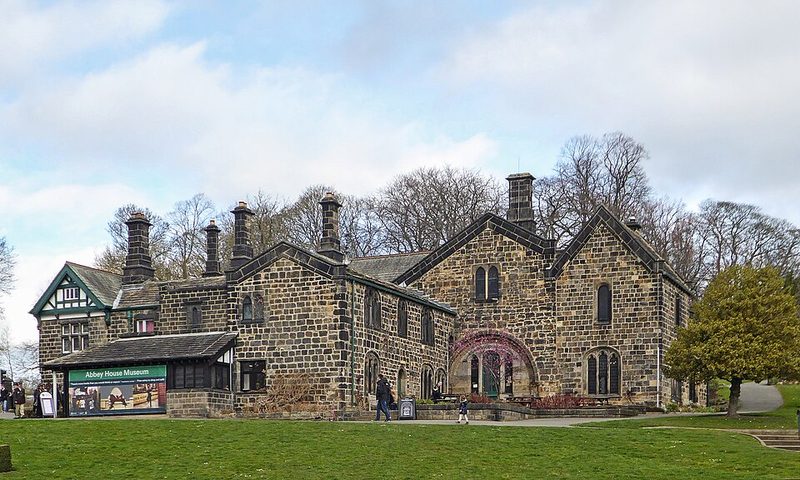
Directly across the road from the abbey ruins, Abbey House Museum occupies the former abbey gatehouse. The museum focuses on Leeds social history and Victorian life, making the two sites natural companions for a day visit. Abbey Café, located in the abbey visitor centre, provides refreshments with indoor and outdoor seating within the historic abbey grounds.
Events and Activities
The abbey hosts special events throughout the year, including historical re-enactments, medieval tournaments, performances and seasonal activities. The parkland surrounding the ruins offers walking trails and access to the River Aire, creating a haven for wildlife on the western edge of Leeds. Current event schedules should be checked through Leeds Museums and Galleries before visiting, as programmes change seasonally.
Sources: Kirkstall Abbey - Leeds Museums and Galleries • Visit Kirkstall Abbey - Leeds Museums and Galleries • Kirkstall Abbey - Wikipedia