In This Guide
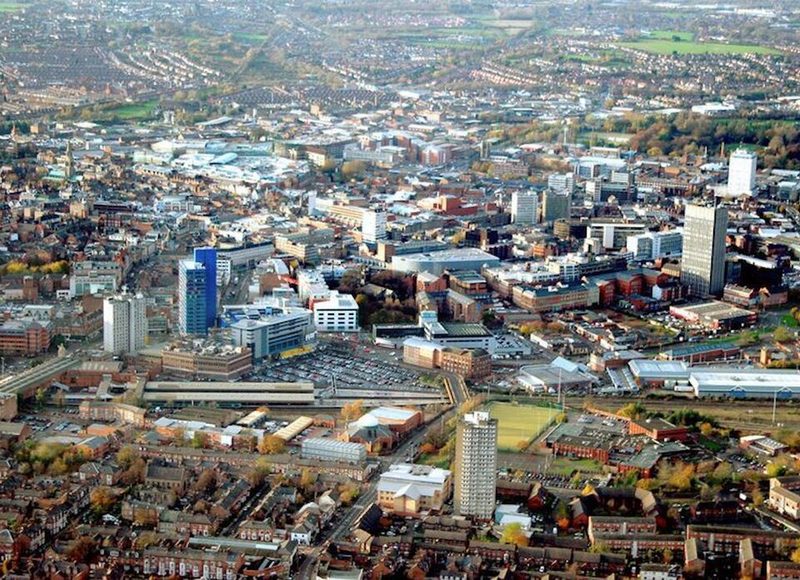
Leicester is a city of just under 370,000 people in the East Midlands of England, and it carries rather more history than its modest size might suggest. A Roman bath house, the reinterred remains of the last Plantagenet king, and one of England's largest Diwali celebrations are all within a short walk of each other in the city centre. The greater Leicester urban area is home to over 559,000 people, making it the eleventh most populous urban area in England. For three consecutive years, the annual Good Growth for Cities Index ranked Leicester first in the East Midlands as the best place to live and work — a measure of economic and social function that reflects the city's practical strengths.
Getting Your Bearings
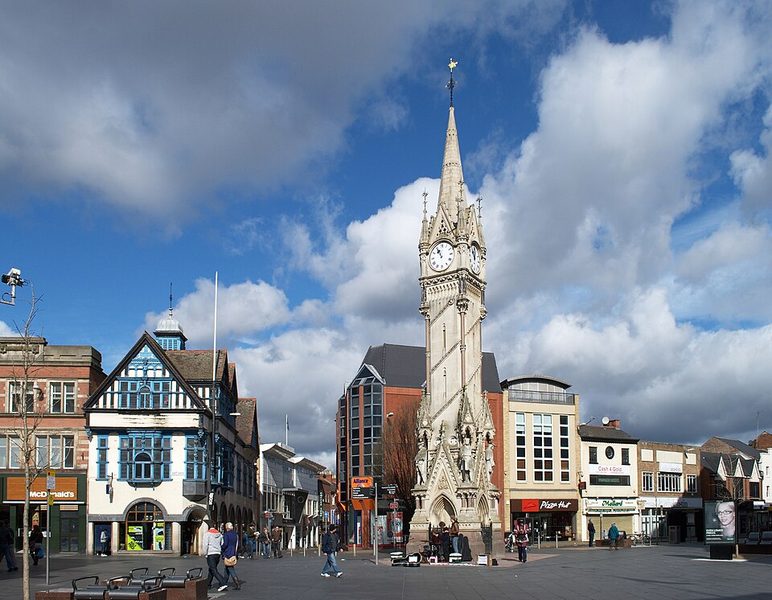
Leicester sits roughly at the geographic centre of England, connected by direct rail to London St Pancras and accessible by road via the M1 and M69 motorways. The city centre is compact and walkable: the King Richard III Visitor Centre, Leicester Cathedral, the Jewry Wall Roman ruins and the Newarke Houses Museum are all within reasonable walking distance of one another in the historic core. Belgrave Road — known as the Golden Mile — lies to the north of the city centre and is the hub of Leicester's South Asian commercial and cultural life. Victoria Park, adjacent to the University of Leicester campus south of the centre, provides the main open green space within the urban area. For sites beyond the city itself, including Bosworth Battlefield to the west of the county, a car or local bus connection is advisable.
Richard III and the Medieval City
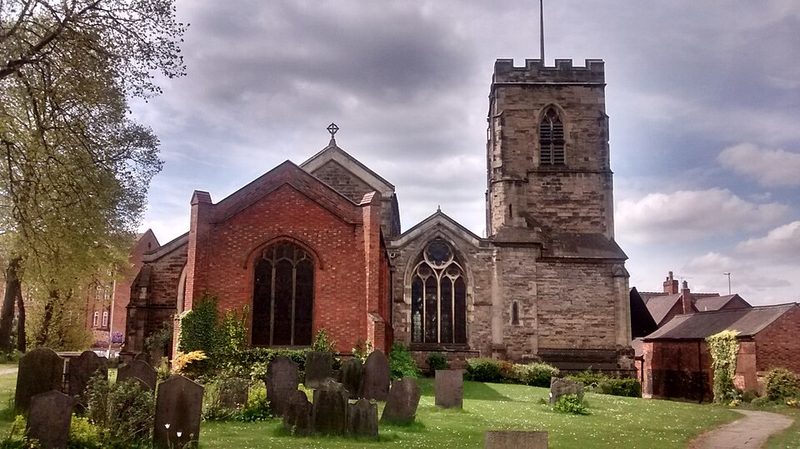
Leicester Cathedral — formally the Cathedral Church of Saint Martin — became a place of international interest in 2012, when archaeologists discovered the remains of King Richard III beneath a city centre car park on the site of the former Greyfriars church. Richard was the last Plantagenet king, killed at the Battle of Bosworth in 1485, and his body had lain unidentified for over five hundred years. His reinterment at Leicester Cathedral in 2015 drew visitors from across the world. The cathedral itself is one of five surviving medieval churches in the city centre; it received cathedral status in 1927 following the establishment of the Diocese of Leicester in 1926.
Directly opposite the cathedral, the King Richard III Visitor Centre occupies the building above the car park excavation site. The award-winning centre uses interactive displays to tell the story of how the Duke of Gloucester became king, how he died at Bosworth, and how DNA testing led to his identification in 2012. The Visit Leicester Information Centre operates from the same building. The Battle of Bosworth itself took place near the village of Shenton to the west of the city — visitors with an interest in the period can combine the city centre sites with the battlefield and the Battlefield Line heritage railway, which runs from Shackerstone to Shenton via Market Bosworth.
Leicester's medieval history extends beyond the Plantagenet connection. Simon de Montfort, the 6th Earl of Leicester, led the baronial opposition against King Henry III in the thirteenth century, governed England for a period, and played a formative role in the constitutional development of Parliament. His name attaches to streets and institutions across the city. The University of Leicester — a public research university whose main campus lies south of the city centre adjacent to Victoria Park — bears his name in its crest and takes him as a symbolic antecedent of representative governance.
Roman Leicester: The Jewry Wall
Leicester's Roman history surfaces most visibly at the Jewry Wall site in the city centre. The Jewry Wall itself is one of the tallest surviving sections of Roman masonry in England, and it forms part of the remains of a Roman bath house — one of the largest surviving bath house sites in the UK. A revamped Jewry Wall Museum opened in July 2025, incorporating the bath house remains into a contemporary museum building. Visitors should note that access to the Roman bath house can be viewed for free from the St Nicholas' Walk public footpath; the museum itself offers further displays. Check current opening arrangements and admission details at jewrywall.com before visiting, as the attraction is recently opened and operational details may continue to evolve.
The Golden Mile and Diwali
Belgrave Road, running north from the city centre through the Belgrave district, is known as the Golden Mile. It is Leicester's main South Asian commercial street — lined with Indian restaurants, sari shops and jewellers — and has been described as the closest that Britain comes to an Indian bazaar. Bobby's, one of the first vegetarian restaurants in Britain, has operated on Belgrave Road since 1976. The area has been a centre of Leicester's South Asian community since the 1960s and 1970s, when significant numbers of East African Asians settled in the city following expulsions from Uganda and Kenya.
Each autumn, the Golden Mile hosts Leicester's Diwali celebrations. Leicester City Council lists Diwali among its major public events, and the celebration is widely described as the largest Diwali festival held outside India. The entire length of Belgrave Road is illuminated for the Festival of Lights, with firework displays, community dance and music, food vendors, arts and crafts stalls, and a children's funfair. In 2026, Leicester City Council confirmed that Diwali celebrations would return to a local park as well as the Golden Mile. Visitors travelling specifically for Diwali should check current event dates with Leicester City Council, as the Hindu calendar means the festival date shifts each year.
Other Festivals and Events
Leicester City Council recognises a range of annual public festivals, including Caribbean Carnival, the Riverside Festival, the Old Town Festival, and Christmas in Leicester, alongside Diwali. These reflect the cultural diversity that characterises the city's permanent population. Visitors planning a trip around a specific event should verify current dates and locations with the council directly, as programming and venues can change between years.
History, Institutions and Context
The University of Leicester, established as University College in 1921 and granted university status in 1957, is a public research university with its main campus south of the city centre adjacent to Victoria Park. The presence of a large student population alongside a long-established diverse permanent population gives the city a layered character. The Newarke Houses Museum, which hosts exhibitions including those of the Leicester Society of Artists, is among the city's longer-established cultural institutions.
Getting There and Around
Leicester is on the national rail network with direct services to London St Pancras, making it straightforward to reach from the south. Road connections via the M1 and M69 give good access to the wider Midlands motorway network. The city centre is walkable for most of the key historic and cultural sites. Visitors should check current timetables directly, as services and schedules change. For sites in the surrounding countryside — including Bosworth Battlefield and the Battlefield Line Railway — a vehicle or local bus connection is advisable.
Practical Notes
The UK government's Foreign, Commonwealth and Development Office and the US State Department both currently rate the United Kingdom at their lowest advisory level, indicating normal precautions apply. There are no specific regional advisories affecting Leicester. UK travellers should check the FCDO at gov.uk/foreign-travel-advice for current guidance; US travellers should consult the State Department at travel.state.gov. Leicester is a functioning city with standard emergency and public services. As with any city centre, ordinary attentiveness to personal belongings and surroundings is sensible.
Jewry Wall and Roman Leicester
The Jewry Wall is one of the tallest surviving sections of Roman masonry in Britain, part of the public bath house complex of the Roman town of Ratae Corieltauvorum. It stands near the city centre alongside the bath house ruins, which represent one of the largest surviving Roman bath house sites in the United Kingdom. The wall itself can be viewed for free from St Nicholas Walk.
The Jewry Wall Museum, which sits immediately beside the ruins, reopened in July 2025 following an extensive redevelopment. The revamped attraction incorporates the bath house remains into a new multi-media exhibition and includes a café overlooking the site. The museum is open Monday to Friday and Sunday; the café is open from 10am daily without a separate admission ticket. Visitors should check current hours and access details at jewrywall.com before travelling.
The excavation of the site between 1936 and 1939 was led by archaeologist Kathleen Kenyon, whose four seasons of fieldwork here established the true character of the bath house and helped shape the methods used at urban Roman sites for decades afterwards. The Jewry Wall site is within walking distance of Leicester Cathedral and the King Richard III Visitor Centre, making it a practical addition to any city-centre itinerary.
Read the full Jewry Wall and Roman Leicester guide
Sources: Leicester's revamped Jewry Wall Museum to open in July - Leicester City Council • Leicester's new Roman visitor attraction ready to open its doors - Leicester City Council • Jewry Wall Museum - official site • Jewry Wall - Wikipedia • Jewry Wall - English Heritage history • Jewry Wall Roman Baths - Story of Leicester
King Richard III Visitor Centre
The King Richard III Visitor Centre in Leicester city centre tells the story of one of the most unlikely archaeological discoveries in modern British history: the recovery, identification and reburial of the last Plantagenet king of England, whose remains lay beneath a municipal car park for more than five centuries. The centre opened in July 2014, and the story it narrates is both a medieval history and a forensic detective case.
Sources: Grey Friars project overview - University of Leicester • Richard III: Discovery and identification - University of Leicester • Leicester's King Richard III Visitor Centre celebrates its 10th birthday - Leicester City • King Richard III Visitor Centre - official site • King Richard III Visitor Centre - Wikipedia • Exhumation and reburial of Richard III - Wikipedia
Leicester Diwali and the Golden Mile
Belgrave Road, running north from the city centre through the Belgrave neighbourhood, is commonly known as the Golden Mile. It is described — including by Wikipedia — as the closest Britain comes to an Indian bazaar, and is widely cited as selling more gold than any other road in Europe. Its most significant annual event, the Diwali celebration, is widely regarded as the largest of its kind outside India.
Sources: Diwali celebrations set to return to Leicester park for 2026 - Leicester City Council • South Asian collections - East Midlands Oral History Archive, University of Leicester • Crowds gather for Diwali in Leicester despite lack of fireworks - BBC News • Golden Mile (Leicester) - Wikipedia • Diwali in Leicester - Visit Leicester • Diwali in Leicester - Story of Leicester
Sue Townsend and Leicester's Literary Identity
Sue Townsend, born in Leicester in 1946, is the city's most widely read writer. Her creation of Adrian Mole — the anxious, self-important teenage diarist whose first appearance came in a short-lived Leicester arts magazine in 1980 — produced one of the best-selling British novel series of the 1980s and remains widely read internationally. The connection between Townsend's work and the city that produced it is preserved in several tangible ways.
Sources: The arts at Leicester - University of Leicester centenary • Sue Townsend exhibition - The Guardian • Sue Townsend - Wikipedia • Adrian Mole - Wikipedia • Sue Townsend Collection - University of Leicester Special Collections • Sue Townsend Theatre - Story of Leicester
Bosworth Battlefield and the Battlefield Line Railway
The Battle of Bosworth, fought on 22 August 1485, ended the Wars of the Roses and cost Richard III both his crown and his life. The battlefield lies roughly 16 miles west of Leicester, near the village of Shenton, and today the site is managed as a heritage destination with a visitor centre, country park and guided trail. The Battlefield Line Railway — a heritage steam railway running from Shackerstone to Shenton via Market Bosworth — provides a secondary route into the landscape and connects three points of interest in one journey.
Sources: Bosworth Battlefield Heritage Centre - official site • Battlefield Line Railway - official site • Battlefield Line Railway - Wikipedia • Visitor information - Bosworth Battlefield Heritage Centre