

What Los Angeles is known for
Los Angeles sprawls across a vast coastal plain in Southern California, a megacity of nearly 3.9 million people whose influence reaches far beyond its boundaries. From its origins as an indigenous settlement through Spanish colonization to its transformation into a global entertainment and commercial hub, Los Angeles has become a place where multiple worlds—old and new, wealthy and working-class, local and international—exist in constant tension. The city's character is shaped as much by its industrial past and geographic isolation as by its current status as the second-largest city in the United States.
First Impressions and Setting
Most visitors arriving in Los Angeles notice immediately how sprawling and horizontal the city is. Unlike densely packed eastern metropolises, LA spreads across multiple neighborhoods separated by considerable distances. The city sits at a relatively low elevation on a coastal plain, with mountains visible to the north and east. The climate is temperate year-round, with mild winters and warm, dry summers. This geography—combined with the city's explosive 20th-century growth powered by oil discovery, railroad development, and the motion picture industry—created a fundamentally different urban shape than older American cities. There are pockets of intense density, but much of Los Angeles feels designed for movement across space rather than movement on foot.
History, Identity and Local Stories
Los Angeles began as an indigenous settlement long before European contact. Spanish colonial authorities established a pueblo here in the late 18th century, with settlers (pobladores) laying out the original street grid near what is now downtown. During the Mexican era, the mission system was secularized, reshaping local landholding and economy. The U.S. Conquest of California in the 1840s marked the beginning of American territorial control, followed by a period of rapid industrialization and railroad expansion that fundamentally altered the city's trajectory.
The discovery of oil in the early American period became a defining economic engine. Derricks became a familiar sight across the city as petroleum extraction developed into a major industry. Simultaneously, the motion picture industry took root and grew into Hollywood—eventually becoming the cultural force that made Los Angeles globally recognized. The growth of early Chinatown during the American period represents another layer of the city's immigrant history, as successive waves of workers and families arrived seeking opportunity.
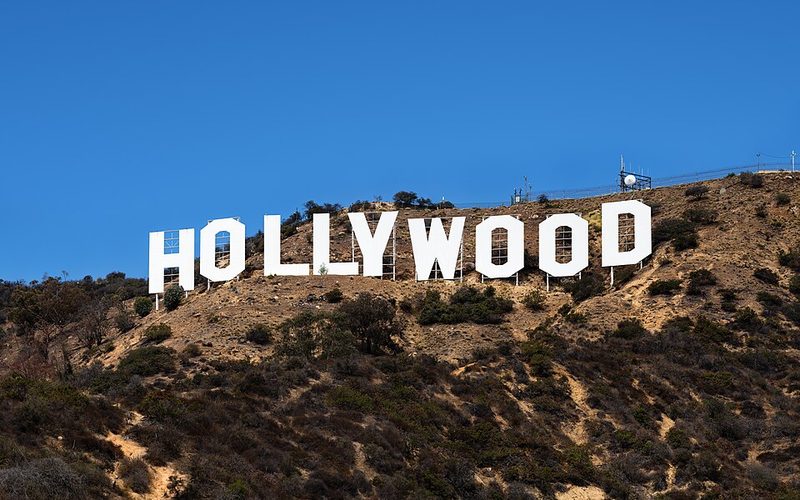
This history is visible in surviving elements: Heritage Square Museum preserves historical architecture that speaks to the city's earlier forms, while the iconic Hollywood Sign stands as a 20th-century cultural landmark. The Watts Towers, a remarkable display of folk art created over decades, represent another distinctive cultural achievement embedded in the city's landscape.
Daily Life, Economy and Culture
Los Angeles's modern economy is remarkably diversified, though entertainment and media remain central to its global identity. The film and television industries, though concentrated in specific areas, continue to shape the city's culture and international reputation. Beyond Hollywood, the city functions as the commercial and financial center of Southern California, supporting manufacturing, logistics, international trade, and professional services across a sprawling metropolitan region of nearly 13 million people.
The city's greatest resource is its cultural diversity. Los Angeles hosts distinct ethnic enclaves and established LGBTQ communities. This diversity is reflected in the city's cuisine, visual arts, architecture, and music. Museums and galleries operate throughout the city, drawing on this creative density. The cultural landscape—shaped by immigrants, artists, workers, and entrepreneurs from many countries and backgrounds—remains one of Los Angeles's most distinctive features.
What Visitors Notice
Walking through different neighborhoods reveals the city's fragmented character. Downtown has its own skyline and urban core. Wealthy enclaves like those in the Platinum Triangle area (which includes Beverly Hills, Bel Air, and Holmby Hills)—all noted for their multi-million-dollar homes—contrast sharply with working-class and immigrant neighborhoods. Some areas feel intensely urban; others feel suburban. Public transportation exists but is limited compared to older American cities, and most residents and visitors rely on cars for movement across the city's vast distances.
The Hollywood Sign remains an iconic visual landmark visible from many vantage points. Museums and cultural institutions draw visitors interested in art, history, and the city's cinematic legacy. The Boyle Heights neighborhood, home to Los Angeles General Medical Center (a major public teaching hospital), represents the city's medical and institutional infrastructure. The diversity of neighborhoods means that a visitor's experience varies dramatically depending on which areas they explore.
Getting There and Around
Los Angeles is served by major air transportation infrastructure, with access to regional and international flights. The city's sprawling geography means that traveling between different areas typically requires motorized transport—either personal vehicles, taxis, or ride-sharing services. Local transit exists but should be researched based on your specific destination within the city, as coverage and frequency vary considerably. Most visitors find that understanding which neighborhoods they plan to visit, and how those areas connect, is essential for planning movement through the city.
Practical Notes
The city operates on Pacific Time. Its position at sea level and temperate climate make year-round visitation feasible, though summers are warm and dry. Visitors should check current travel advisories through official U.S. government sources for any updates relevant to their plans. The city's size means that preparation and local knowledge—about neighborhoods, distances, and transport options—make the difference between a smooth and a frustrating visit. Long-term residents understand Los Angeles as a collection of distinct communities rather than a single unified downtown, and visitors benefit from approaching it the same way.