

What Luoyang is known for
Luoyang served as capital for 13 dynasties from the Xia period (21st-16th century BC) onwards, a concentration of imperial history that shapes the city's character today. The legacy includes the UNESCO-listed Longmen Grottoes, China's first Buddhist temple, and scattered ancient capital ruins along the Luo River. With a metropolitan population exceeding 7 million, the city functions as a substantial urban centre in western Henan province, roughly 300 kilometres west of the provincial capital Zhengzhou and east of Xi'an.
Orientation and Setting
The city occupies the confluence area where the Luo River meets the Yellow River in western Henan province. The administrative structure encompasses seven urban districts, seven counties, and a development zone under prefecture-level city status. The built-up area—formed by five core urban districts plus Yanshi District—contains 2.75 million residents as of 2018, with the wider municipality reaching 6.9 million.
Luoyang Longmen Railway Station, located south of the city near the Longmen Grottoes, serves as a major high-speed rail stop. Luoyang Railway Station in the city centre handles conventional services. The city sits on China's east-west rail corridor connecting Xi'an and Zhengzhou, with regular high-speed connections to both cities.
The Ancient Capital Legacy
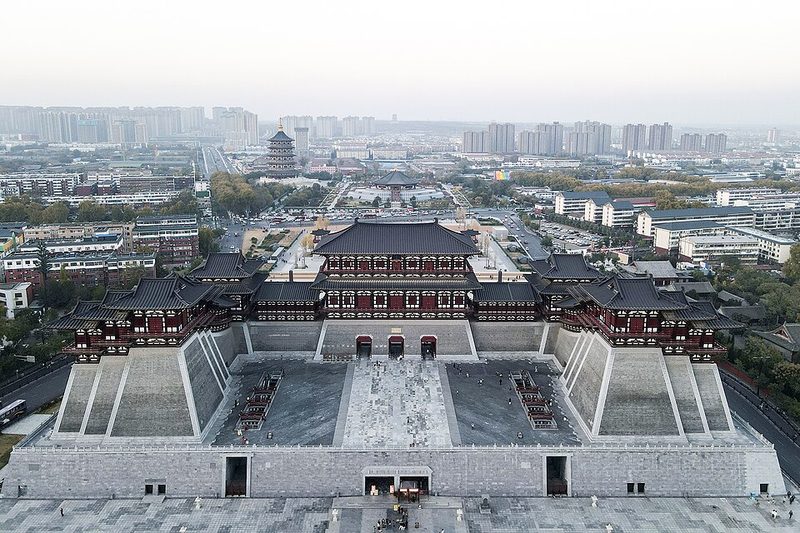
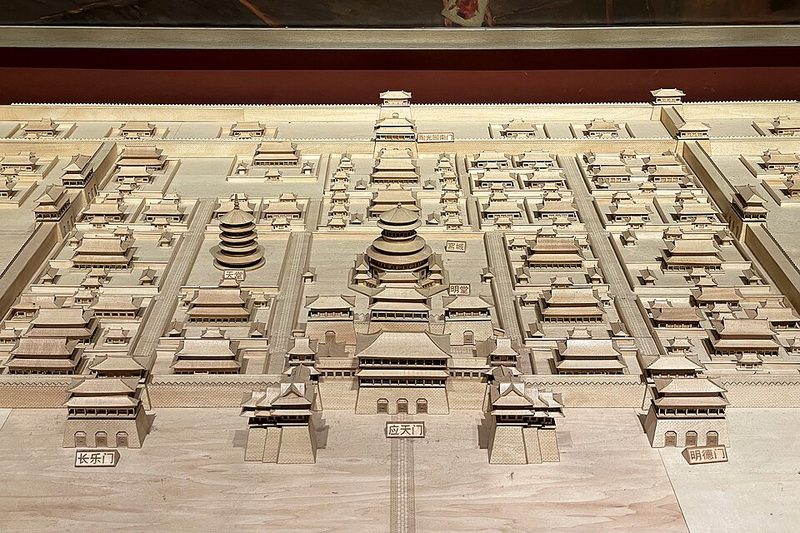
Over a hundred Chinese emperors ruled from Luoyang across 13 dynasties, beginning with the Xia Dynasty in the 21st century BC. Archaeological sites include the Erlitou ruins (Xia Dynasty), Yanshi city remains (Shang Dynasty), and the Imperial City of the Eastern Zhou Dynasty along the Luo River. During the Tang dynasty, Luoyang served as Dongdu—the Eastern Capital—with a population approaching one million, second only to Chang'an (modern Xi'an). Empress Wu Zetian, China's only female emperor, moved the capital of her Zhou dynasty to Luoyang and renamed it Shen Du (Capital of the God).
This history is not merely academic: the concentration of heritage sites draws visitors interested in Chinese civilisation's early development and the physical evidence of successive imperial periods in one location.
Longmen Grottoes
The Longmen Grottoes, a UNESCO World Heritage Site located south of the city, contain thousands of Buddhist statues carved into limestone cliffs over several centuries. The site represents one of China's most significant collections of Buddhist rock art. The grottoes stretch along the Yi River (a tributary of the Luo) and comprise numerous caves and niches containing figures ranging from tiny carvings to monumental statues.
Visitors typically allocate several hours to explore the main areas. The site's proximity to Luoyang Longmen Railway Station makes it accessible for travellers using high-speed rail connections. Current ticket prices and opening hours should be verified locally, as these change periodically.
White Horse Temple
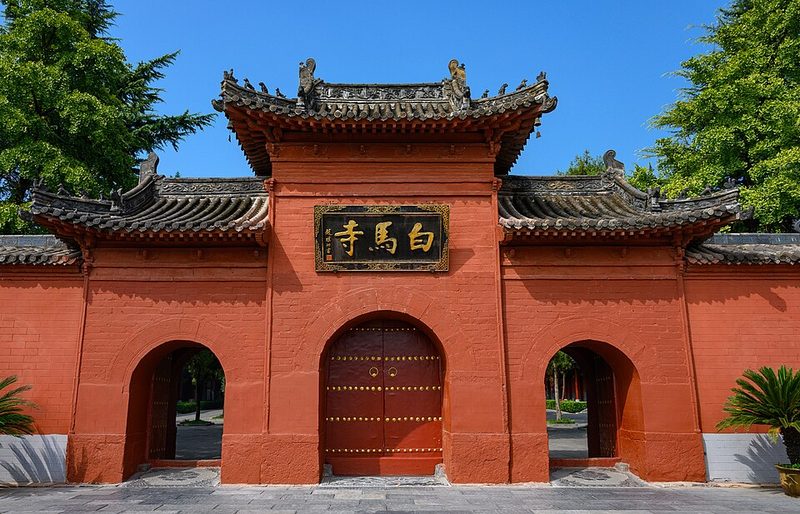
White Horse Temple (Baima Si) holds the distinction of being China's first Buddhist temple, established during the Eastern Han Dynasty. The temple complex includes traditional Chinese Buddhist architecture and remains an active religious site. Its historical significance as the entry point for Buddhism into China makes it a standard component of cultural tours in the region.
The temple is located within reasonable reach of the city centre. Combined itineraries visiting both the Longmen Grottoes and White Horse Temple in a single day are common.
Peony Festival
The Luoyang Peony Cultural Festival runs annually from early April to early May, with peak bloom typically occurring between 15 and 25 April. The event, which began in 1983, is organised by China's Ministry of Culture and Henan provincial government. Multiple peony gardens across the city host exhibitions, with ticket prices varying by peak and shoulder periods within the festival dates.
The peony holds particular cultural significance in Luoyang, where the flower has been cultivated for over a millennium. During festival season, the city experiences substantially higher visitor numbers, and accommodation prices rise accordingly.
Local Food
Luoyang Water Banquet (Shuixi) represents the city's most distinctive culinary tradition. The banquet comprises 24 courses served sequentially—like flowing water, hence the name—with approximately one-third being soup or semi-soup dishes. The tradition dates to the Tang dynasty and differs from typical multi-dish presentations in Chinese cuisine. Signature dishes include preparations featuring carved peony garnishes that reference the city's floral association.
Street food includes Bufantang soup, beef soup, and other broth-based specialities found at food stalls throughout the city. The old city area and Luoyang Cross Street are mentioned as locations for local snacks, though specific vendor recommendations change frequently.
Museums and Cultural Sites
Luoyang Museum houses collections related to the city's role across multiple dynasties, with artefacts from the various capital periods. Reddit discussions from visitors note the museum as worth allocating time during a Luoyang stay.
Lijing Gate serves as a restored entrance to Luoyang's old city area. The gate and surrounding streets, particularly atmospheric in the evening, offer access to traditional architecture and night markets. Some visitors rent Tang dynasty-style hanfu clothing for photographs in these historical settings.
Day Trips: Shaolin Temple
Shaolin Temple, the legendary Buddhist monastery associated with martial arts traditions, is located in Dengfeng, Henan, within day-trip distance of Luoyang. The temple complex sits on Song Mountain, one of China's Five Sacred Mountains. Combined tours visiting Shaolin from Luoyang are widely available, though travel time should be factored into planning.
Getting There and Around
High-speed rail connects Luoyang to major cities along China's east-west corridor. Services to Xi'an (west) and Zhengzhou (east) run regularly, with journey times of approximately 1.5 and 0.5 hours respectively. Beijing is accessible via high-speed rail in around 4 hours. Luoyang Longmen Station serves high-speed trains, while Luoyang Station handles conventional rail services.
Within the city, taxis and ride-hailing services provide transport to major sites. Local bus services connect the various districts, though route information is primarily available in Chinese. The spread-out nature of the metropolitan area means that sites like the Longmen Grottoes, White Horse Temple, and city centre museums require separate journeys.
Practical Considerations
Luoyang operates on China Standard Time (Asia/Shanghai timezone, UTC+8). The city experiences four distinct seasons, with cold winters and hot summers typical of inland northern China. Spring (April-May) coincides with the peony festival and represents peak tourist season, requiring advance accommodation bookings. Autumn offers comfortable temperatures for outdoor site visits.
English signage is present at major tourist sites but limited in general city areas. Translation apps are useful for navigating local transport and dining. Payment in China increasingly relies on mobile platforms (WeChat Pay, Alipay), though major tourist sites accept cash and cards.
The UK Foreign, Commonwealth & Development Office maintains normal precautions for China (Level 1), with seasonal attention to typhoons in coastal and southern regions—less relevant to Luoyang's inland location. The US State Department recommends exercising increased caution when travelling in China. Medical screening procedures may be in place at entry points. Visitors should verify current visa requirements and obtain travel insurance covering their itinerary.