

What Manchester is known for
Manchester functions as a major commercial and cultural centre in northwest England. Once the world's first industrial city—the engine room of the Industrial Revolution—it has transformed itself from a landscape of mills and smoke into a diverse hub for business, education and innovation. The city sits at the heart of Greater Manchester, a metropolitan area of nearly three million people, yet retains a distinct identity shaped by its radical industrial past and pragmatic present.
Arrival and Geography
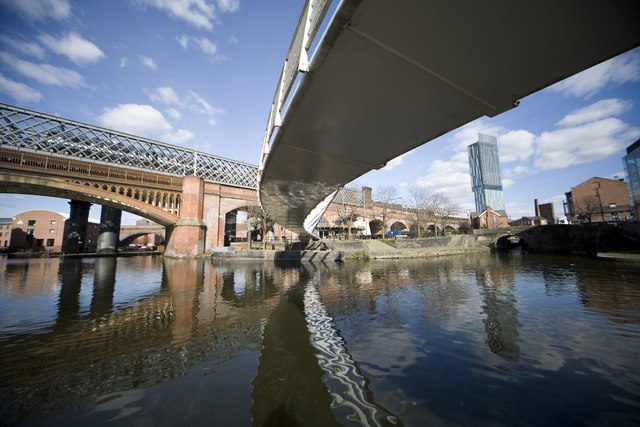
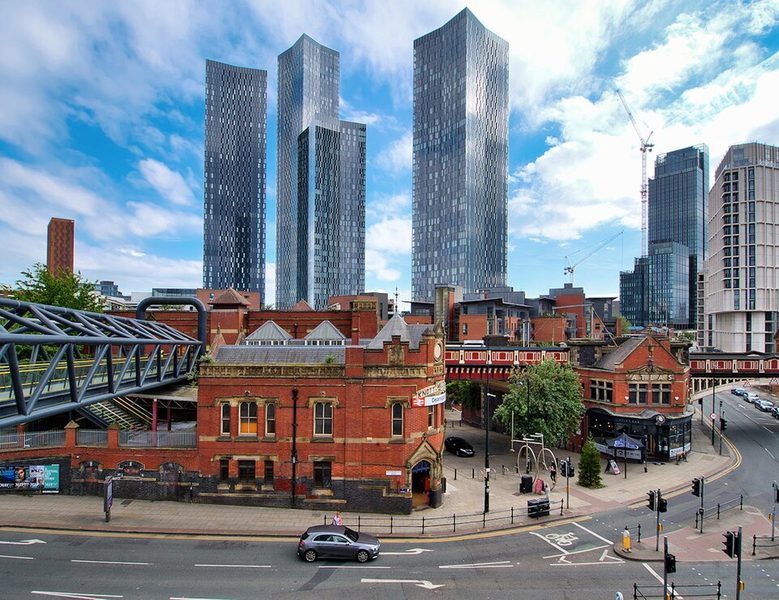
Manchester occupies relatively flat terrain at 51 metres above sea level, positioned on a plain that opens southward toward Cheshire while the Pennine hills rise to the north and east. The city spreads across what was once marshy ground where the rivers Irwell and Medlock meet—geography that enabled the concentration of mills that defined the industrial era. The immediate surroundings feel urban and purposeful rather than picturesque, with a mixed streetscape of Victorian warehouses converted to apartments and offices, modern glass structures, older civic buildings and patches of green space. Beetham Tower stands as one of the largest buildings outside London. The sense is one of ongoing activity and practical restoration rather than heritage preservation alone.
The Industrial Legacy
Manchester's historical significance rests on a single, transformative identity: it became the world's first industrial city. During the 18th and 19th centuries, mechanised cotton manufacturing arrived here on a scale and intensity never seen before. The city's position between the textile mills of Lancashire and port access via Liverpool made it the epicentre of a global cotton trade, one deeply entangled with transatlantic slavery—a connection the Science and Industry Museum documents openly. This was not genteel manufacturing. Factories dominated the landscape, workers crowded into dense housing, and the city's growth was brutal and rapid. By the mid-19th century, Manchester embodied industrial modernity: it hosted the world's first steam passenger railway and the world's first industrial estate.
Karl Marx and Friedrich Engels observed Manchester's factories and slums while writing their theories. The city became synonymous with industrial progress and industrial misery simultaneously. The 20th century brought decline as manufacturing moved elsewhere, particularly after the Second World War. An IRA bombing in 1996 destroyed parts of the city centre, but the subsequent reconstruction accelerated the shift away from industrial nostalgia toward modern redevelopment.
The Modern City
Manchester now functions as a major employment and commercial hub, particularly for office-based work. The city centre and nearby Salford Quays concentrate significant financial, digital, creative and professional services employment—the largest concentration outside London. Between 2010 and 2020, the local economy grew 39 per cent. Greater Manchester as a region achieved a 31 per cent rise in productivity between 2004 and 2023, the highest of any UK city region, with projections suggesting continued growth outpacing the national average through 2027.
The local economy encompasses healthcare, logistics, finance, green technology, banking, insurance, construction and retail sectors alongside the creative industries. This economic diversity means Manchester functions as a working city for its 569,000 residents, not primarily as a tourist destination, though cultural life has expanded significantly. The University of Manchester, a major research institution that resulted from a 2004 merger of two longstanding civic universities, shapes the local character through student populations and academic activity.
What Visitors Find
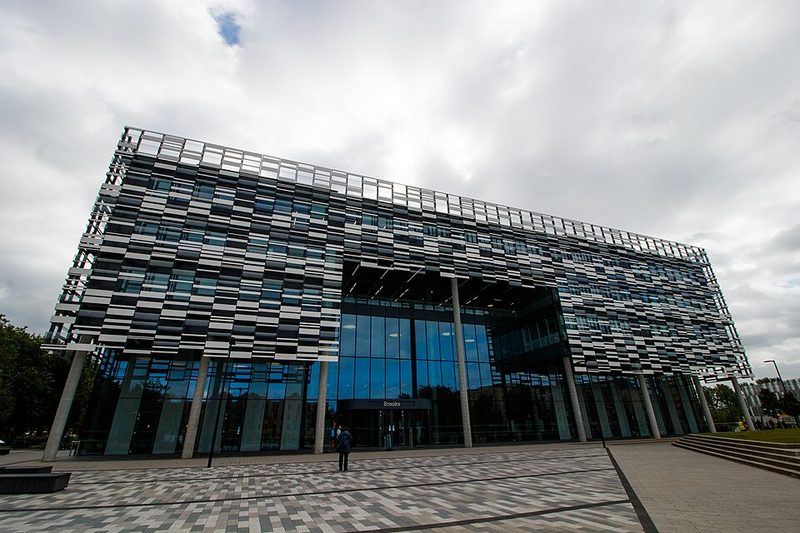
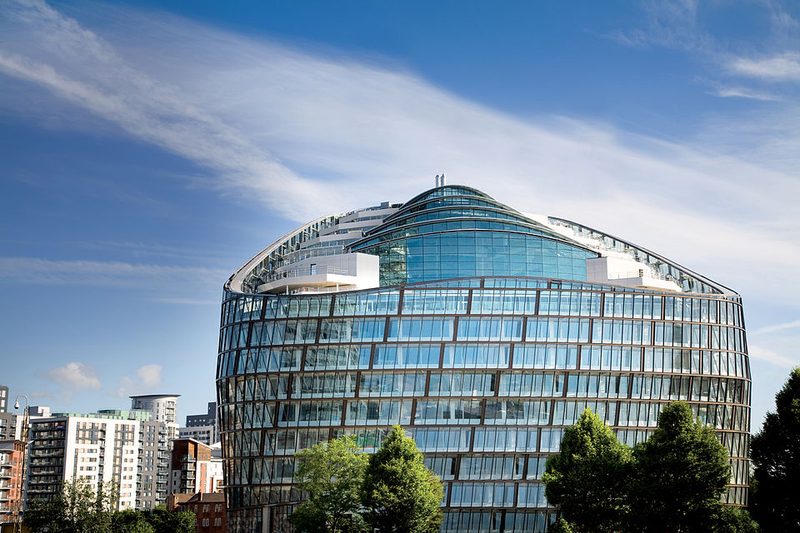
The streetscape reflects layers of different eras. Industrial warehouses, some converted to creative and residential use, sit alongside contemporary office buildings and civic structures. The city feels less historically preserved than actively regenerated—less museum than workplace. The Science and Industry Museum operates daily with free admission, drawing visitors interested in the city's industrial heritage and its uncomfortable historical connections. The John Rylands Library, a Gothic Revival building commissioned in 1890 by Enriqueta Rylands in memory of her industrialist husband, houses a world-class collection including the oldest known piece of the New Testament.
The Northern Quarter has developed into a district of independent shops, bars and street art. The area around Wilmslow Road extends south through student neighbourhoods. Old Trafford stadium offers museum and tour experiences for visitors interested in Manchester United's history. The landscape around the city, with the Pennines visible to the northeast and the gentler Cheshire Plain to the south, provides geographical context but does not dominate the urban experience.
Is Manchester Worth Visiting?
Manchester offers substantial interest for visitors drawn to industrial history, music culture, football heritage or functioning urban environments. The Science and Industry Museum provides honest documentation of the city's role in shaping industrial capitalism and its connections to slavery. The city's transformation from manufacturing decline to diversified economy represents a distinct narrative among English cities. Cultural institutions, independent neighbourhoods and the visible layers of different eras provide context for understanding modern Britain. The city functions as a working centre rather than a heritage destination, which some visitors find more authentic than preserved historic cities.
Where to Stay in Manchester
The city centre provides direct access to transport connections, museums and cultural venues. The Northern Quarter offers proximity to independent shops and bars. Areas along Wilmslow Road place visitors near the university district and student-oriented establishments. Salford Quays positions visitors near the waterfront redevelopment area. Specific accommodation should be verified for current availability and positioning relative to planned activities.
How Many Days Do You Need?
Two to three days allows time for the Science and Industry Museum, one or two cultural institutions such as the John Rylands Library, a walk through the Northern Quarter, and exploration of specific interests such as football stadium tours or music heritage. Visitors focused specifically on industrial history or football culture may find a full day sufficient for core sites. The city also functions as a base for exploring the broader northwest region, which would extend the stay.
Is Manchester Safe for Visitors?
The United Kingdom maintains a Level 1 travel advisory status from the US State Department (Exercise Normal Precautions) and normal travel advice from the UK Foreign Office. No specific regional restrictions apply to Manchester. Visitors should follow standard urban precautions. Current safety information should be verified through official government travel advisory sources before departure.
Getting There and Around
Manchester is accessible by road, rail and air through major transport connections. Public transport options include tram, bus and rail services within the city and surrounding areas. Specific schedules, routes and fare information should be verified with local transport providers before travel. Taxis and ride-sharing services operate in the city.
Practical Notes
The city operates on Greenwich Mean Time (Europe/London timezone). Weather is typically cool and often damp, characteristic of northwest England. For current visitor information, attractions, accommodation and specific transport details, consult local tourism resources and official city guides.
John Rylands Library and Manchester's Victorian Legacy
The John Rylands Library, opened in 1900, represents one of Europe's finest examples of neo-Gothic architecture and houses world-class collections including the St John Fragment, generally accepted as the earliest extant record of a canonical New Testament text dating from between 100 and 160 CE. The building was commissioned in 1890 by Enriqueta Rylands as a memorial to her husband John Rylands, one of Manchester's wealthiest industrialists, who died in 1888 with a personal fortune of £2.75 million accumulated through cotton textile manufacturing.
The library's Gothic Revival design creates cathedral-like spaces with vaulted ceilings, carved stone details, and filtered light, deliberately evoking medieval learning whilst serving modern functions. Collections include roughly 2,000 Greek papyri, rare manuscripts, and printed books of international research significance. The library operates with free admission as part of The University of Manchester Library system whilst maintaining its character as a public cultural institution. Visitors can explore both the architecture and rotating special exhibitions drawn from the holdings.
The library illustrates Victorian philanthropic patterns in industrial cities, where private wealth from industries such as cotton created public cultural institutions. Checking current opening hours before visiting is essential, as the library undergoes periodic closures for conservation and academic use.
Read the full John Rylands Library and Manchester's Victorian Legacy guide
Sources: John Rylands Library - University of Manchester • John Rylands Library - Manchester City Council • Rylands Library Papyrus P52 - Wikipedia • The St John Fragment - History of Information
Manchester Football: Old Trafford and Stadium Tours
Football defines much of Manchester's contemporary cultural identity, with the city home to two of England's most successful clubs: Manchester United and Manchester City. Both clubs operate stadium tours and museums that attract visitors regardless of match-day schedules, providing access to spaces typically off-limits to the public and documenting decades of sporting history. For visitors interested in British football culture, these experiences offer substantive insight into how the sport functions as both entertainment industry and community identity.
Sources: Old Trafford Tour & Museum - Manchester United • Old Trafford Tour & Museum - Visit Manchester • Manchester City Stadium Tours • Manchester City Museum and Stadium Tour - WhichMuseum
Manchester Music Heritage: Factory Records and the Madchester Scene
Manchester's music heritage from the late 1980s and early 1990s created a cultural phenomenon known as "Madchester," when the city became synonymous with the convergence of indie rock and dance music. Factory Records, the independent label founded by Tony Wilson, and the Haçienda nightclub defined this era, bankrolling bands including Joy Division, New Order, and Happy Mondays whilst establishing Manchester as a centre for post-punk and acid house music that influenced British youth culture for decades.
Sources: Factory Records - Wikipedia • The Haçienda - Wikipedia • Madchester - Wikipedia
The Northern Quarter: Independent Manchester
The Northern Quarter, located northeast of Piccadilly Gardens in Manchester's city centre, functions as the city's primary concentration of independent retail, bars, music venues, and creative businesses. Occupying a grid of streets that includes Oldham Street, Stevenson Square, and surrounding blocks, the area represents Manchester's alternative and creative culture, with a character distinct from the mainstream retail and corporate office spaces that dominate other parts of the centre.
Sources: Explore the Northern Quarter - Visit Manchester • The Northern Quarter Shopping - Visit Manchester • Afflecks • Northern Quarter - Manchester's Finest