In This Guide
Read the guide as a story
The Dead and the Living: A Night Walk Through Old Montreal
First Impressions and Setting
Montreal sits on an island in the St. Lawrence River, about 196 kilometres east of Ottawa and 258 kilometres southwest of Quebec City. The island is largely flat except for Mount Royal itself, which gives the city its name — rising 216 metres above the surrounding plain in the commonly cited figure, though the summit is measured at just over 230 metres — and its most-used public park. The urban core spreads from the mountain's base in a pattern of dense, low-to-mid-rise neighbourhoods broken by wide commercial boulevards, stone rowhouses, and winding outdoor staircases that have become an architectural signature of the city's residential streets.
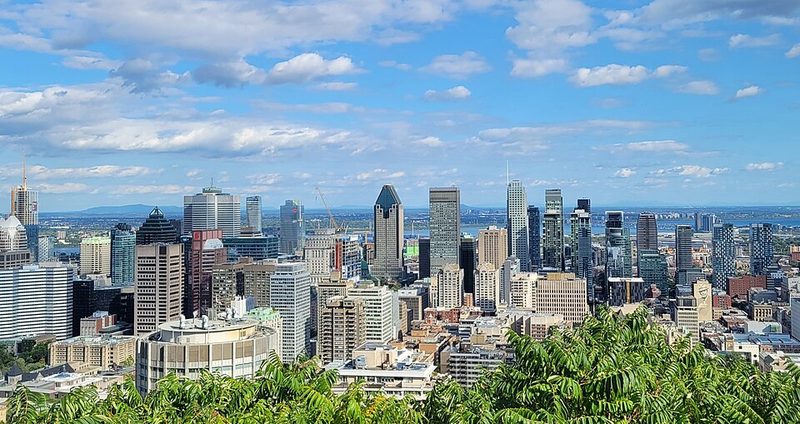
Most first-time visitors describe the same moment: you climb the forested paths of Parc du Mont-Royal, break through the tree line at the Kondiaronk belvedere, and the entire downtown grid opens out below — glass towers, church spires, the St. Lawrence River glinting to the south. That view, earned on foot, tells you almost everything about what Montreal is. The mountain is not a backdrop; it is the reason the city exists in the shape it does.
History and Identity
Montreal was founded in 1642 under the name Ville-Marie — the City of Mary — as a French missionary settlement on the island, reflecting its roots as a 1642 colonial outpost that would grow into one of the busiest trading hubs in North America. It was occupied by American forces in 1775–1776 during the Revolutionary War, an episode that left its mark on the city's political identity, and was formally incorporated in 1832. Industrial expansion continued through the nineteenth century, cementing Montreal's role as Canada's commercial capital before that status eventually passed to Toronto.
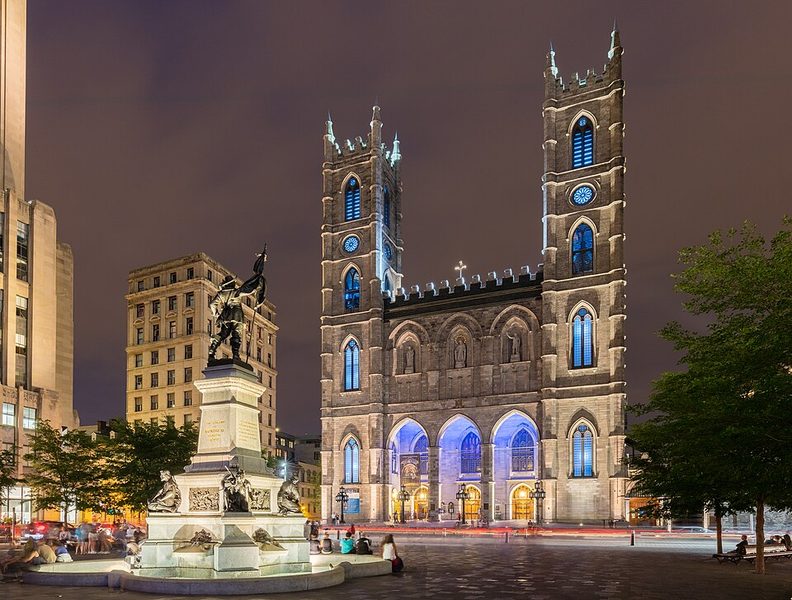
The city carries older stories too. Griffintown, the working-class Irish neighbourhood southwest of downtown, holds the Black Rock — a rough fieldstone monument marking the mass grave of Irish immigrants who died of typhus during the 1847 famine migration. It is one of the more quietly affecting historical sites in the city, easy to walk past and genuinely moving when you know what it marks. Pointe-à-Callière, the archaeological museum built directly over the site of the original 1642 settlement at the confluence of the St. Lawrence and the now-buried Little Saint Pierre River, lets visitors walk through the layered foundations of the city's first 350 years.
The Quiet Revolution of the 1960s transformed Quebec society, shifting power away from the Catholic Church and asserting French-Canadian identity through language laws, public institutions, and a burst of artistic and intellectual life. Leonard Cohen, who grew up in the city's Westmount neighbourhood, was writing and recording during precisely this period and remains one of Montreal's most recognised cultural exports. Expo 67 projected the city onto the world stage: the 1967 World's Fair drew tens of millions of visitors to what is now Parc Jean-Drapeau on Île Sainte-Hélène, and Moshe Safdie's Habitat 67 — the stacked prefabricated housing complex built for the exposition — still stands on the riverfront as one of the most cited examples of modernist residential architecture in Canada.
Walks and Viewpoints
Parc du Mont-Royal is the centrepiece. Designed in the 1870s by Frederick Law Olmsted — the landscape architect behind New York's Central Park — the park covers the mountain's upper slopes and offers a network of trails usable in all seasons, according to Tourisme Montréal. The Kondiaronk belvedere on the east face provides the most-photographed view of downtown. Two further lookout points, Belvédère Terry-Fox and Belvédère Léo-Ayotte, sit higher on the mountain and offer views across the western and northern parts of the island respectively. In winter the park's meadow becomes a cross-country skiing and snowshoeing area; in summer it fills with picnickers, drummers, and families from across the city.
Parc Jeanne-Mance, immediately east of the mountain's lower slopes, connects the park to the Plateau neighbourhood and functions as an informal meeting place year-round. The Old Port waterfront offers a different kind of walk along the river with views back toward the city and across to the south shore. The Tour de l'Horloge (Clock Tower), a designated National Historic Site at the eastern end of the Old Port, is a documented landmark of the area; visitors should check current access conditions with the Old Port of Montreal directly before visiting, as pier facilities in the area have seen periodic changes.
Food, Culture and Local Life
Montreal operates in French. Street signs, government services, most restaurants, and the working culture of the city run primarily in Quebec French, though English is widely spoken in commercial and tourist contexts. With nearly 1.8 million people in the city proper and a significantly larger metropolitan population, it is the second-largest French-speaking city in the world by most measures, a scale that shapes both cultural and economic life in ways that are immediately apparent to visitors. The neighbourhood of Mile End, straddling the Plateau-Mont-Royal and Rosemont boroughs, has become well known as a hub for independent music, small publishers, and the kind of low-key creative density that takes generations to accumulate. The Main — Boulevard Saint-Laurent — has historically been the dividing line between the city's French east and English west, and it remains one of the more culturally textured streets to walk.
The food culture is specific and stubbornly local. Montreal-style bagels — smaller, denser, wood-fired, and slightly sweet — are a distinct product with a documented history tied to the city's Jewish immigrant community on the Main. Montreal smoked meat, a cured and steamed brisket with roots in the same community, has its own provenance that locals will defend at length. These are not merely tourist talking points; they are genuinely part of how the city understands its own identity.
The summer festival calendar is one of Montreal's most distinctive features. The Montreal International Jazz Festival, held in the Quartier des spectacles in late June and early July, is among the largest jazz festivals in the world by attendance, according to the festival's official records; it draws both local and international artists across 20-plus venues in the district. The festival sits alongside dozens of other events — including Montréal Complètement Cirque, a street and circus festival involving more than 500 artists and performers in a typical edition — as well as the St-Ambroise Montréal Fringe Festival and many others, meaning most weekends between June and September involve some kind of public event in the city centre. The Tourisme Montréal summer festival guide documents the breadth of the season each year.
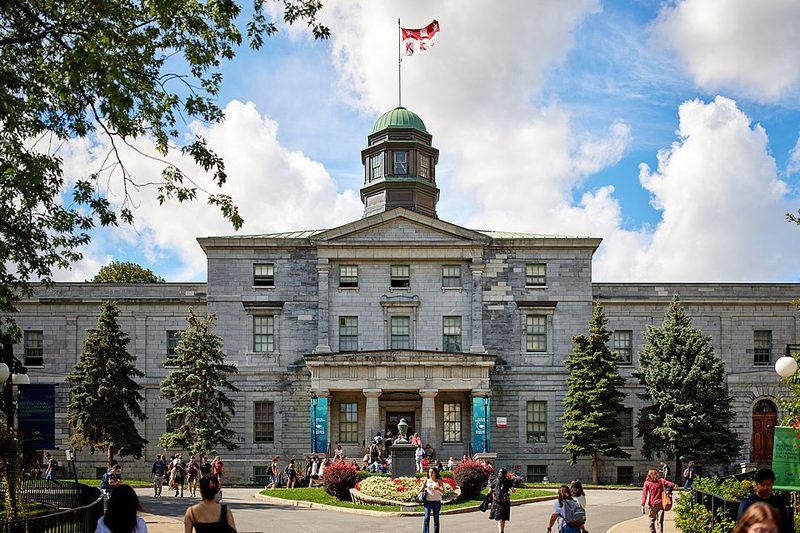
The Université du Québec à Montréal (UQAM) anchors the Quartier des spectacles culturally and institutionally, and its performing arts facilities include a performance venue with over 800 seats that serves as a year-round anchor for the neighbourhood beyond festival season.
The Underground City
The Underground City — known as RESO — is a network of climate-controlled pedestrian tunnels and indoor passages connecting metro stations, shopping centres, office towers, universities, and hotels across a large section of downtown. In a city where January temperatures regularly fall well below minus twenty Celsius, RESO is less a curiosity than a practical piece of urban infrastructure that a significant portion of the population uses daily.
Getting There and Around
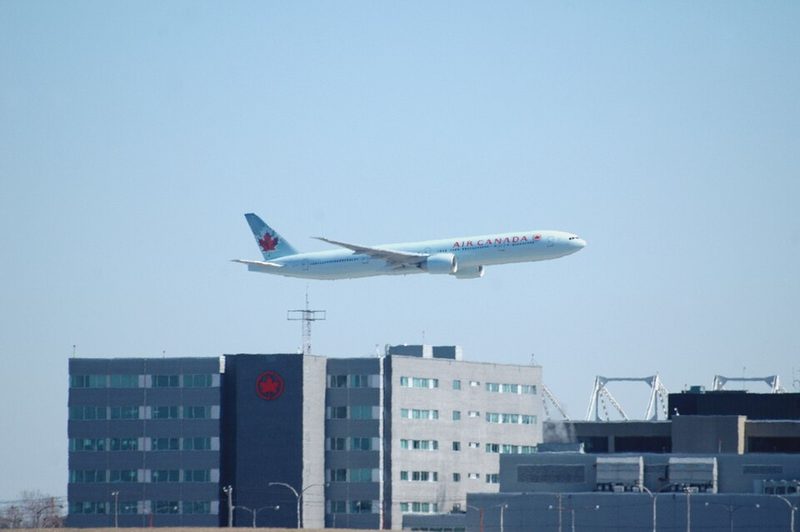
Montréal-Trudeau International Airport (IATA: YUL) handles the city's international and domestic air traffic and is located on the western part of the island. Bus connections and taxis serve the airport; visitors should confirm current ground transport options on arrival. Tourist information offices operate at 174 Notre-Dame Street East in Old Montreal and at other locations around the city; hours and staffing can vary seasonally, so it is worth confirming current availability before visiting.
The Société de transport de Montréal (STM) operates the metro, a rubber-tyred underground rail system with four lines covering the central island. The metro connects directly with the Underground City at multiple points downtown, and the STM also runs an extensive surface bus network. Intercity rail connects Montreal to Toronto, Ottawa, and Quebec City via VIA Rail Canada, with the main terminus at Gare Centrale beneath Place Ville Marie in the downtown core. Bus connections to regional destinations run from the Gare d'autocars de Montréal. The 2026 FIFA World Cup is scheduled to bring matches to Montreal; visitors planning to travel around that period should be aware that accommodation and transport demand will be significantly elevated, and bookings and local conditions should be confirmed upon arrival closer to the date.
Cycling infrastructure has expanded significantly across the city. Bixi — Montreal's public bike-share system — operates across a wide network of stations during the warmer months.
Seasonal Practicalities
Montreal's climate is genuinely extreme in both directions. Summers are warm and humid, with temperatures regularly reaching the low thirties Celsius in July and August. Winters are long and cold: snow is reliable from December through March, and wind chill can push the apparent temperature well below minus thirty. The city does not slow down significantly in winter; it adapts. The metro, RESO, and a culture of indoor eating and drinking mean that winter visitors find an active city even in February. Packing appropriate cold-weather gear is not optional.
Autumn — September and October — brings dramatically coloured foliage across the mountain and the surrounding region, and is widely considered among the most pleasant times to visit in terms of weather and crowd levels. Spring arrives later than in most Canadian cities, but by May the park trails and cycling routes are fully active again.