Montreal-Style Bagels
Montreal-style bagels are not just a local variant of a familiar food. They are one of the ways Mile End tells its own history: Jewish immigrant baking, narrow shopfronts, wood-fired ovens, and a rivalry so durable that visitors are still expected to pick a side.
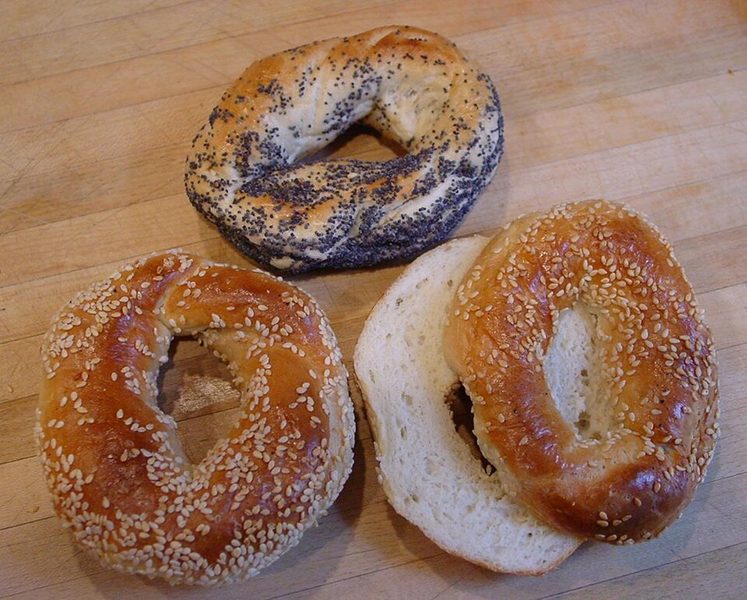
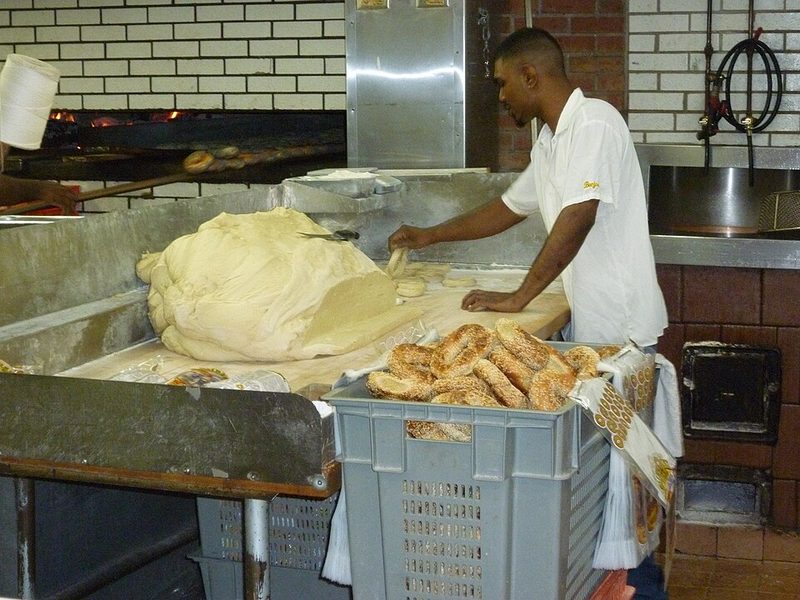
The method is the point. Montreal bagels are usually smaller and denser than New York bagels, with dough that is boiled in honey-sweetened water before being baked in a wood-fired oven. The result is lightly sweet, chewy, and often faintly smoky at the edge. They are best eaten warm, and ideally before anyone has had time to turn breakfast into a committee meeting.
The two classic addresses are Fairmount Bagel and St-Viateur Bagel, both in Mile End and close enough to compare on foot. Fairmount presents itself as Montreal's first bagel bakery, with roots in the city's Jewish immigrant community. St-Viateur, founded later, became the other half of the neighbourhood argument. The useful visitor fact is simple: try one from each if time allows. The more truthful local fact is that the argument may never end, which is part of its charm.
Mile End gives the food its setting. The neighbourhood grew through working-class, Jewish, Greek, Italian and later creative communities, and still has the street-level texture that makes a short food stop feel like a neighbourhood walk. Bagels work well with a Plateau or Mile End route: start near Fairmount Avenue or St-Viateur Street, add coffee nearby, then walk south toward the Plateau staircases or west toward Outremont.
Frequently Asked Questions
What makes a Montreal bagel different?
Montreal-style bagels are generally smaller, denser and sweeter than New York-style bagels. The standard method boils the dough in honey-sweetened water and bakes it in a wood-fired oven, which gives the crust a light sweetness and a slight smoky edge.
Should visitors choose Fairmount or St-Viateur?
Both are classic Mile End stops and they are close enough to compare in the same walk. Fairmount is usually described as the older bakery; St-Viateur is the other major institution. For visitors, the best answer is to buy one from each and decide without expecting the city to agree with you.
Where do bagels fit into a Montreal visit?
They fit naturally into a Mile End or Plateau walk rather than a formal restaurant plan. Pair a bakery stop with Boulevard Saint-Laurent, nearby coffee shops, residential streets with exterior staircases, and the wider food history of the Main.
Sources: Montreal Bagel - Wikipedia • Mile End, Montreal - Wikipedia • Fairmount Bagel • St-Viateur Bagel