In This Guide
Read the guide as a story
October on the Plains: Arriving in Québec City by Rail
Québec City, Quebec
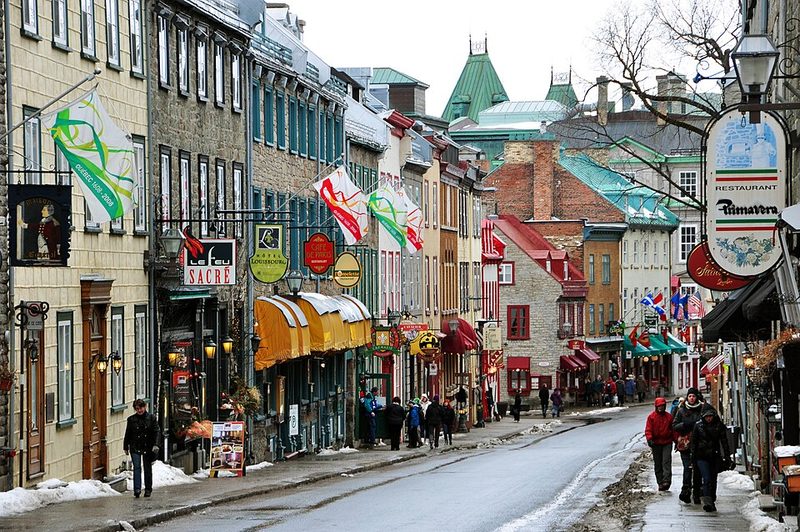
Few cities in North America wear their history quite as visibly as Québec City. Step off a train at Gare du Palais or out of a taxi near the old fortified core and you are immediately confronted by centuries of stone: ramparts, a turreted château hotel dominating the skyline above the St. Lawrence, and streets narrow enough that the smell of a boulangerie follows you halfway down the block. This is the capital of the province of Québec, a city of around half a million people that carries itself with the quiet confidence of somewhere that knows exactly what it is.
Setting and First Impressions
Québec City sits on a dramatic promontory above the St. Lawrence River, roughly 54 metres above sea level at its core. The city divides naturally into an upper town perched on the Cap-Diamant clifftop and a lower town clustered along the waterfront below. The contrast is immediate: the upper town feels fortified, monumental and European in its proportions, while the lower town and the Saint-Roch neighbourhood carry a more lived-in, streetwise energy. The Jardins Saint-Roch, visible from the neighbourhood staircases that link the city's different levels, give a clear sense of how public space functions in the denser quarters.
Winters here are genuinely cold and snowy — source accounts consistently mention cold, snow and ice as defining seasonal features — and summers are warm and often lively. These are not abstract climate statistics: they visibly shape daily habits, with heavy coats and ice-gripped boots the norm in February and open terrasses packed until late on July evenings.
History and Identity
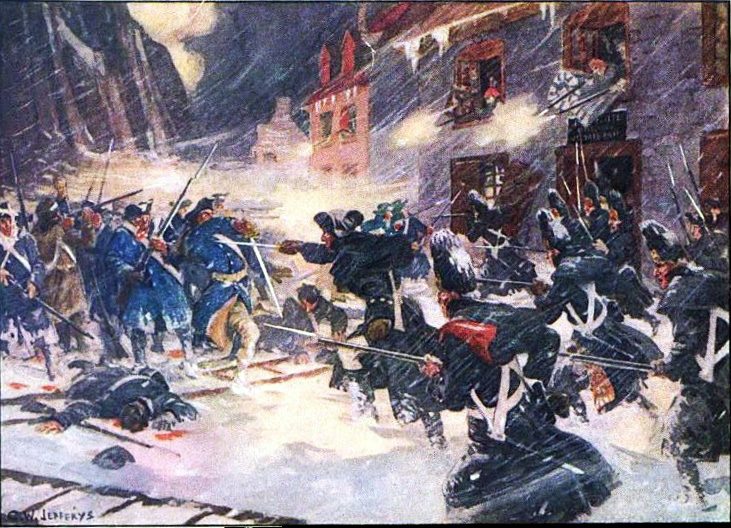
Québec City is one of the oldest continuously inhabited European settlements in North America, and that weight is felt throughout the built environment. The fortifications enclosing the old city are the only remaining walled city north of Mexico, a distinction that earned the historic district its UNESCO World Heritage listing. The city changed hands between French and British forces in 1759 at the Battle of the Plains of Abraham, an event whose consequences still echo in the province's bilingual but predominantly francophone culture. The Battle of Québec of 1775 — when American colonial forces attempted to take the city during the Revolutionary War — saw fierce street fighting in the lower town, a moment depicted in paintings showing the repulse of the assault at Sault-au-Matelot.
French-Canadian folk traditions run deep here, expressing themselves through music, seasonal festivals and an attachment to the French language that is not performative but simply the texture of ordinary life. The Bibliothèque et Archives nationales du Québec documents this heritage as stretching from oral legend — including the famous chasse-galerie tale — through to contemporary performance culture rooted in the province's franco-settler history.
Music, Culture and the Joan of Arc Garden
As the provincial capital, Québec City is a city of government, institutions and universities, but its cultural life extends well beyond official functions. The Palais Montcalm — Maison de la musique is one of the city's main dedicated concert venues, programming classical and contemporary performances. The wider live music scene, documented through local listings platforms, spans folk-rooted traditions and contemporary sounds; the city's French-Canadian identity gives the local scene a distinct character, with folk music maintaining genuine currency rather than existing as a heritage curio.
On the Plains of Abraham — the same ground where the 1759 battle was fought — the Joan of Arc Garden (Jardin Jeanne-d'Arc) has been maintained by the National Battlefields Commission as part of a longstanding horticultural tradition on the site. According to the National Battlefields Commission, the garden has served as a horticultural landmark on the plains since the early development of the park, and it remains a free, accessible green space within the upper town. It sits alongside the Wolfe-Montcalm Monument and the Martello Towers as part of the wider complex of memorials and gardens that make the Plains of Abraham one of the more historically layered public parks on the continent.
What Visitors Notice
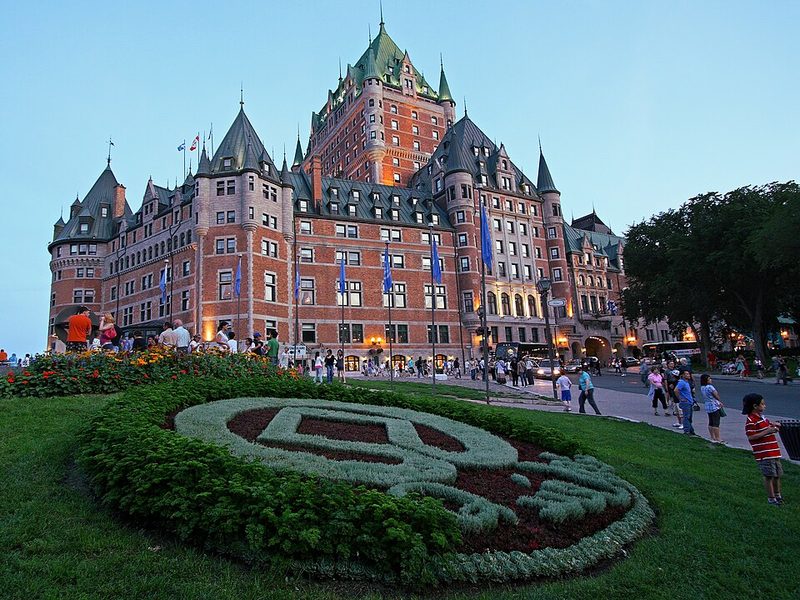
The Château Frontenac is inescapable and was designed to be: the grand railway hotel, completed in 1893, was intended to be seen from the river, and it still anchors the upper town's identity. The Terrasse Dufferin — named after Lord Dufferin, a Governor General of Canada — is the broad wooden boardwalk running along the clifftop in front of the château, offering wide views over the St. Lawrence and across to Lévis on the opposite bank. In summer it hosts live entertainment; in winter a toboggan run operates from the terrace.
Boat trips on the river give a different vantage point on the city's position against the cliff face. The waterfront below the cliff has its own character and access points, and the historic Porte Saint-Jean — one of the original gates to the walled city — provides a physical reminder of the fortified past for visitors moving between the old city and the Saint-Jean-Baptiste quarter.
The old city can become crowded during peak summer season, which is the one consistent note of caution in visitor accounts. The wider city beyond the walls offers quieter neighbourhoods for those willing to walk further. Visitor reports consistently praise the quality of food and the ease of walking through the core neighbourhoods as the city's most reliable pleasures.
Getting There and Around
Québec City functions as a transport gateway for the region. The Jean Lesage International Airport (IATA: YQB) connects the city to major Canadian cities and some international destinations, with carriers including Air Canada and Porter Airlines among those serving the airport. Rail travellers arrive at Gare du Palais (Palace Station), the main rail terminus situated approximately half a kilometre from the city centre, making onward movement into the urban core straightforward on foot or by local bus. VIA Rail operates services between Québec and Montréal, with trains calling at Gare de Sainte-Foy in the city's western district as well.
The city's public transit network, operated by the RTC (Réseau de transport de la Capitale), covers the main urban areas with bus services. Route 800 links the Sainte-Foy area along Boulevard Laurier, and route 80 serves the Saint-Roch district. The Lévis ferry, operated by Société des Traversiers du Québec, crosses the St. Lawrence between Québec City and the south shore town of Lévis — it is a practical crossing and also provides one of the better views of the Château Frontenac and the cliff face from the water. The compact nature of the historic core means that much of the most visited territory is walkable once visitors are in the right part of town; the official tourism authority describes Old Québec as particularly suited to exploration on foot.
Travellers planning visits around June and July 2026 should note that Canada is co-hosting the FIFA World Cup during that period, which may affect accommodation availability and travel logistics across major Canadian cities.
Practical Notes
Québec City operates on Eastern Time. French is the dominant working language of daily life and commerce, though English is understood in most visitor-facing contexts. Both the UK Foreign, Commonwealth and Development Office and the US State Department rate Canada at their lowest advisory levels, indicating normal precautions and no specific security concerns identified for the country or city. Visitors are advised to check current entry requirements and travel insurance arrangements before departure.