

In This Guide
Read the guide as a story
Eight Minutes at 430 km/h: Arriving in Shanghai
Few cities compress so much ambition, history, and sheer human energy into a single skyline view. Standing at the Bund on a clear evening, with the Huangpu River running dark beneath you and the towers of Pudong blazing on the opposite bank, it is easy to understand why Shanghai has come to mean something almost mythological — a city that has reinvented itself more than once, and shows no sign of stopping.
First Impressions and Setting
Shanghai sits on China's eastern coastline at the southern mouth of the Yangtze River, with the Huangpu River cutting the city in two. The result is a place fundamentally shaped by water: bridges, ferries, and riverside promenades are woven into the fabric of daily movement. The city is largely flat — barely above sea level — which means the skyline appears with dramatic suddenness wherever buildings are tall enough to announce themselves.
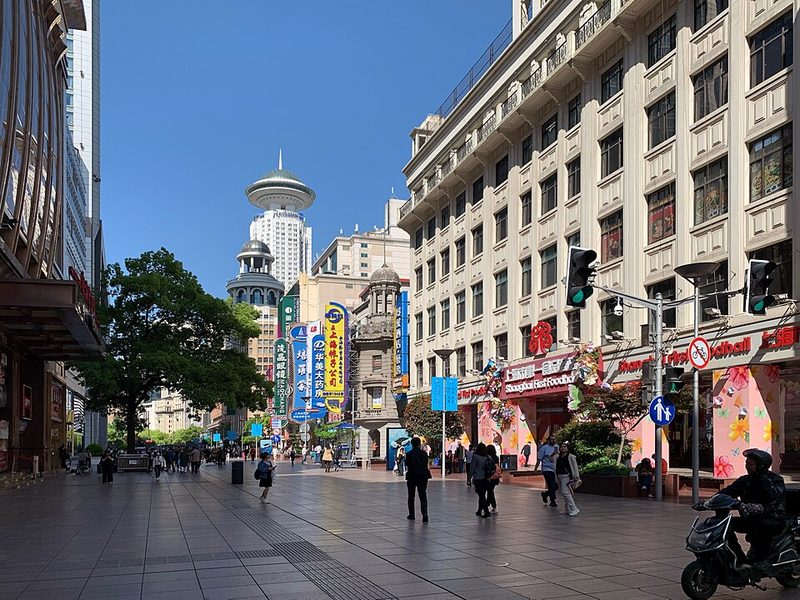
The density is real and immediate: Shanghai is the most populous urban area in China, and that population makes itself felt in the scale of its metro stations, the width of its main roads, and the breadth of its commercial districts. Yet parts of the city still manage to feel intimate, particularly in older lane neighbourhoods where daily life unfolds in narrower spaces.
History, Identity and Local Stories
Shanghai grew into a major trading port through the nineteenth century, a history that left a permanent mark on the built environment along the Bund, where European-style financial and trading buildings still line the western bank of the Huangpu. The city became a meeting point between Chinese commercial life and international commerce, a role it never entirely abandoned. The twentieth century brought dramatic change — political upheaval, wartime occupation, and later the transformations of the reform era — all of which folded layer upon layer into what Shanghai is today.
The development of Pudong, the district east of the Huangpu, from agricultural land into one of the world's most recognisable financial districts, is among the more striking urban transformations of recent decades. North of the Bund, Hongkou District carries a distinct chapter of that layered history: it served as a refuge for thousands of Jewish refugees during the Second World War, a period commemorated through sites in that part of the city, though visitors should confirm current access to specific venues locally before visiting.
Daily Life, Economy and Culture
Shanghai functions as China's leading centre for finance, trade, and international business. The Port of Shanghai holds the distinction of being the world's busiest container port, which gives some sense of the city's role as a logistics and commercial hub at a global scale. The wider metropolitan economy has been estimated at close to 13 trillion RMB in gross output, reflecting a concentration of banking, manufacturing, technology, and professional services that few cities anywhere can match.
For residents, this translates into a city of long working hours, extensive public infrastructure, and a cultural scene that supports museums, galleries, theatres, and a restaurant culture that visitors consistently describe as a genuine highlight. The food offer is broad and serious — Shanghainese cuisine, centred on dishes such as xiaolongbao (steamed soup dumplings), is worth seeking out alongside the city's international dining options.
What to See and Do
The Bund and Waterfront
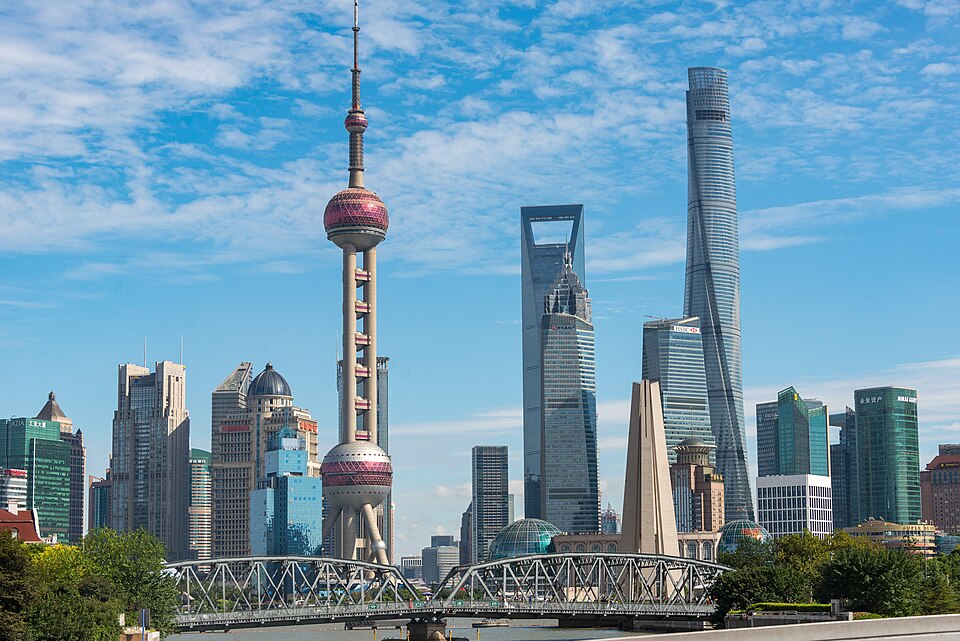
The Bund is the place most first-time visitors gravitate toward, and with good reason. The riverside walkway offers the most photogenic juxtaposition of the city's eras, with Beaux-Arts facades on one side and the towers of Lujiazui on the other — including the Oriental Pearl Tower and the Shanghai Tower, the tallest building in China. The Shanghai Municipal Government designates the Bund as a Historical and Cultural Block, reflecting its protected architectural status. The waterfront is open and freely walkable; the promenade can become very busy at weekends and during public holidays, so early mornings tend to offer a calmer experience.
At the northern end of the Bund, where Suzhou Creek meets the Huangpu, Garden Bridge (also known as Waibaidu Bridge) marks a historically significant crossing point. The current steel bridge dates to 1907 and was the first all-steel bridge built in China, replacing an earlier wooden toll bridge. It leads into Huangpu Park — a small, triangular stretch of green that carries the distinction of being Shanghai's oldest park, situated at a historically loaded point on the waterfront.
The French Concession
The area once administered as the French Concession, centred on districts such as Xuhui and parts of Jing'an, is now one of the most pleasant parts of the city to explore on foot. Tree-lined streets, lane houses, independent cafes, boutiques, and the arts and craft enclave of Tianzifang make it a natural counterpoint to the scale of the Bund and Pudong. Tianzifang, a network of converted shikumen (stone-gate) lane houses, developed into a creative cluster from the 2000s onwards and is one of the more visited corners of the former concession.
Yu Garden and the Old City
Yu Garden (Yuyuan Garden) is a classical Chinese garden dating to the Ming dynasty, constructed between 1559 and 1577 for a senior government official. It represents one of the best-preserved examples of traditional Jiangnan garden design in eastern China, with pavilions, rockeries, ponds, and covered walkways laid out across a compact site. The surrounding bazaar area is busy with commerce and food stalls. Visitors should expect queues at peak periods; the garden is closed on certain public holidays, and current opening hours and ticket prices should be confirmed through official sources before visiting.
Shanghai Museum
The Shanghai Museum, located in People's Square, is among the country's most respected repositories of Chinese art and antiquities. Its collections span bronzes, ceramics, calligraphy, painting, jade, furniture, and minority-nationality art spanning thousands of years of Chinese history. It makes for an absorbing few hours regardless of weather and is a natural rainy-day anchor for culture visitors.
Huangpu River Boat Trips
Boat trips on the Huangpu River give a different perspective on the city's scale, passing industrial and residential shorelines beyond the famous central stretch. The river remains genuinely active as a working waterway, and any trip along it reflects that dual character. Ferry services also operate as a practical transport option for crossing between the Puxi and Pudong banks; the Shanghai municipal transport portal lists current ferry routes as part of its integrated network.
Rainy Days and Family Visits
Shanghai's density of indoor cultural venues means options are rarely limited when the weather turns. The Shanghai Museum and the city's natural history and science facilities provide substantial indoor itineraries. Visitors with families note that the city generally offers enough variety — from natural history collections to interactive science facilities — to fill multiple days without difficulty. The city's official spring family events programme, as listed by the Shanghai municipal government, gives a sense of the range of activities available during warmer months. Visitor numbers at major attractions can be high during Chinese public holidays, particularly the May Golden Week; planning around those periods is advisable for families seeking lower-pressure visits.
Getting There and Around
Shanghai is served by two major international airports. Pudong International Airport, to the east of the city centre, handles the majority of long-haul international flights and is connected to the urban rail network by the Maglev high-speed rail link — one of the few commercially operating magnetic levitation train services in the world, running at speeds of up to 430 km/h on the airport corridor. Hongqiao Airport, in the west of the city, primarily serves domestic routes and regional connections, and is integrated into the metro and national high-speed rail network via Hongqiao Station. A newer inter-airport rail link (the city-domain airport line) connects the two airports in approximately 40 minutes; details and timetables are published by the Shanghai municipal transport authority.
Metro and Bus
The metro system covers most areas visitors are likely to need. The network currently runs around 20 lines; the metro generally opens at 5:30 am and closes at 11 pm on weekdays, with extended hours on Fridays and Saturdays — though visitors should check the official metro operator's site at service.shmetro.com/en for current station operating hours. Tickets can be purchased at station machines, and the Shanghai Metro Daduhui app supports mobile ticketing.
Shanghai also operates around 2,000 bus lines covering city-centre and suburban routes, with a base fare typically in the range of CNY 1–2 for standard services. For international visitors, the SH MaaS mini-programme within the Easy Go platform consolidates metro, bus, ferry, taxi and other services into a single digital hub — a practical starting point for navigating the network without a Chinese phone number.
Ferries
Ferry services operate on the Huangpu River, providing both a practical crossing option between Puxi and Pudong and a scenic waterway perspective. The Shanghai Transportation portal at english.shanghai.gov.cn/en-Transportation lists current routes and operators.
Taxis and Ride-Hailing
Taxis and ride-hailing services operate across the city. Visitors unfamiliar with Chinese-language apps should note that international access to some platforms may require a local payment method; asking hotel staff to assist with bookings or showing a destination written in Chinese characters can help.
For transport schedules and current route details, the Shanghai municipal government maintains an English-language transport information service at english.shanghai.gov.cn/en-Transportation.
Who Will Enjoy Shanghai
Shanghai suits a wide range of visitors. Culture and history travellers will find depth across the Bund's architectural heritage, the classical gardens of Yu Garden, the collections of the Shanghai Museum, and the layered district histories from the French Concession to Hongkou. Families will find the city practical and well-equipped with indoor options, though the sheer scale and crowd levels at major sites during peak holidays require some planning. Visitors who travel without a car will find the metro, bus, ferry and ride-hailing network sufficient for almost any itinerary. Food-focused visitors are well served: the city's restaurant culture spans everything from Shanghainese street food to high-end dining. Visitors who dislike dense, busy environments should be aware that central Shanghai, particularly around major waterfront and garden sites, is genuinely crowded during peak periods and public holidays.
Seasonal Considerations
Shanghai's main weather risk comes from the typhoon season, which runs from May to November; the city sits within the affected zone on China's eastern coastline, and occasional disruption to travel is possible during that period. Spring (March to May) and autumn (September to November) are generally considered the most comfortable seasons for visiting, with milder temperatures. Summer is hot and humid. The May Golden Week and other major Chinese public holidays bring significant visitor pressure at major attractions; if crowd levels matter to your plans, these periods are worth avoiding where possible.
Visitors are advised to monitor official meteorological sources and check the UK FCDO guidance at gov.uk/foreign-travel-advice/china before and during travel.
Practical Notes
The UK Foreign, Commonwealth and Development Office rates China at its standard precaution level, with no specific security warnings for Shanghai. The US State Department advises exercising increased caution in China generally. Dual nationals with Chinese citizenship should take particular note of entry requirements, which the FCDO guidance addresses in detail. Both official advisories should be read in full before travel: gov.uk/foreign-travel-advice/china and travel.state.gov.
The Bund and Waterfront Heritage
The Bund runs for roughly one kilometre along the western bank of the Huangpu River, lined with Neoclassical and Beaux-Arts commercial buildings from the late nineteenth and early twentieth centuries. The Municipal Government designates it a Historical and Cultural Block. Across the river, the towers of Lujiazui in Pudong — including the Oriental Pearl Tower and the Shanghai Tower, China's tallest building — complete one of the most photographed urban panoramas in Asia. At the northern end, Garden Bridge (Waibaidu Bridge, 1907) and the small Huangpu Park mark the historic confluence of Suzhou Creek and the Huangpu. Sightseeing and ferry boats operate from riverside piers. The promenade is freely accessible at all hours; expect crowds at weekends and during public holidays.
Sources: The Bund Historical and Cultural Block - Shanghai Municipal Government • The Bund - Wikipedia • Waibaidu Bridge - Wikipedia • Huangpu Park - Wikipedia • Oriental Pearl Tower - Shanghai Municipal Government • Shanghai Transportation - english.shanghai.gov.cn
Getting around Shanghai without a car
Shanghai is one of the most comprehensively served cities in the world for car-free travel. The metro, bus, ferry, taxi, and ride-hailing networks together cover virtually every destination a visitor is likely to need, and the city's official transport portal provides an English-language entry point to all of them.
Metro
The Shanghai Metro (operated by Shanghai Shentong Metro Group) runs approximately 20 lines. The network generally opens at 5:30 am and closes at 11 pm on weekdays, with extended hours on Fridays and Saturdays. Tickets can be purchased at station machines; the Shanghai Metro Daduhui app supports mobile ticketing. Current station operating hours are published at service.shmetro.com/en.
Bus
Around 2,000 bus lines operate across the city, covering central and suburban routes. Standard fares are typically CNY 1–2; some longer cross-district routes charge more. The bus network is extensive but can be harder to navigate without a knowledge of Chinese; the metro is generally the more practical option for visitors covering central districts.
Ferry
Ferry services on the Huangpu River connect the Puxi and Pudong banks and provide a practical lower-cost crossing alternative to metro tunnels. Current routes and operators are listed on the Shanghai transport portal.
Airport Connections
Pudong International Airport is connected to the city by the Maglev train — one of the few commercially operating magnetic levitation services in the world — running at speeds up to 430 km/h to Longyang Road station, where passengers transfer to the metro. A city-domain airport rail line also connects Pudong and Hongqiao airports in approximately 40 minutes, with stops at several intermediate stations. Hongqiao Airport connects directly into the metro (Lines 2 and 10) and the national high-speed rail network via Hongqiao Station.
Easy Go and Digital Navigation
For international visitors, the SH MaaS mini-programme within the Easy Go platform consolidates metro, bus, ferry, taxi and smart parking into a single digital hub. This is particularly useful for visitors without a Chinese-linked payment method, as it is designed with international access in mind. The Shanghai transport portal at english.shanghai.gov.cn/en-Transportation provides current route and operator information in English.
Sources: Explore Shanghai's public transport system - english.shanghai.gov.cn • Transportation - english.shanghai.gov.cn • SHANGHAI CHINA - service.shanghai.gov.cn • Taking a bus in Shanghai - english.shanghai.gov.cn
Yuyuan Garden and Bazaar
Yu Garden (Yuyuan) is a Ming dynasty classical garden in the Huangpu District, constructed between 1559 and 1577. It covers approximately two hectares arranged around rockeries, ponds, pavilions, and corridors, with the Grand Rockery — roughly twelve metres tall and one of the largest surviving Ming-era rockery structures in China — as its centrepiece. The surrounding bazaar is one of Shanghai's most visited food and craft precincts, known for xiaolongbao (soup dumplings) and the Huxinting Tea House. The garden charges admission and is busy at weekends and public holidays; confirm current hours before visiting. Metro access via Lines 10 and 14.
Read the full Yuyuan Garden and Bazaar guide
Sources: Yu Garden - Wikipedia • Yu Garden Shanghai - China Journey Guide • Yu Garden Shanghai: Opening Hours (2026 Guide) - Asia Odyssey Travel