Hofburg Imperial Palace, Vienna - Travel Guide
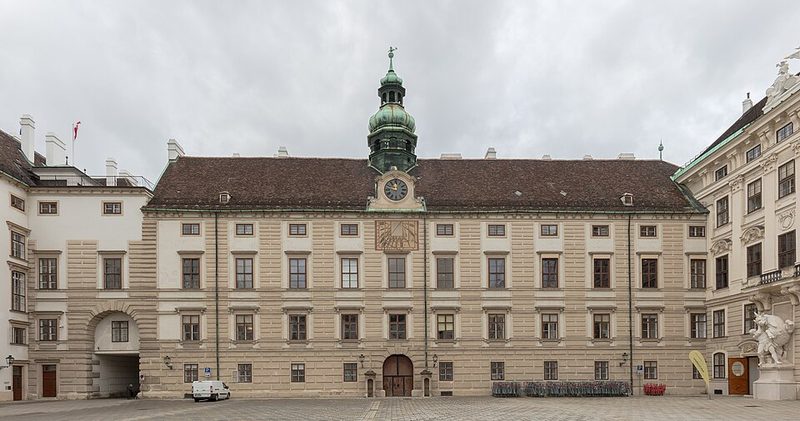
The Hofburg Imperial Palace is the largest palace complex in Vienna and one of the most layered imperial sites in Europe. It served as the primary winter residence of the Habsburg dynasty for roughly six centuries, and the buildings that make up the complex today were accumulated across that entire span — from the medieval Schweizerhof at its core to the Neue Burg wing, completed in 1913, which was the last major addition before the Habsburg empire dissolved at the end of the First World War.
The complex is not a single building but a cluster of interconnected palaces, courtyards and wings covering a large area of the Innere Stadt, immediately west of the Ringstrasse. Its many institutions include the Imperial Apartments (Kaiserappartements), which display the state rooms used by Emperor Franz Joseph and Empress Elisabeth; the Sisi Museum, focused on the life of Empress Elisabeth; the Imperial Silver Collection (Silberkammer); the Spanish Riding School, where Lipizzaner horses have been trained and performed since the sixteenth century; and the Austrian National Library, housed in the Prunksaal (State Hall), which is one of the finest Baroque library interiors in the world.
Visitors should note that the Hofburg is spread across multiple ticketed attractions under different administrations, and a single entrance fee does not cover everything. Planning which sections to visit in advance avoids frustration at the gates. The official tourism pages at wien.info provide an overview of the individual components and their ticketing arrangements.
The palace connects directly to the Ringstrasse and to the Heldenplatz (Heroes' Square), where two equestrian statues of Archduke Charles and Prince Eugene of Savoy face the Neue Burg. It was from a balcony here that Hitler addressed a crowd in March 1938 following the Anschluss — a fact the site does not elide and which gives the square a different register from the rest of the imperial complex.
Access to the Hofburg from the Innere Stadt is on foot; the nearest U-Bahn stations are Herrengasse (U3) and Volkstheater (U2/U3). The palace courtyards are generally accessible without charge; individual museums and the Spanish Riding School carry their own admission fees.
Frequently Asked Questions
What should visitors know before visiting Hofburg Imperial Palace?
Hofburg Imperial Palace is a focused stop within the wider Vienna guide. Check current access, hours, visitor etiquette, ticketing and any temporary notices before travelling.
How does Hofburg Imperial Palace fit into a Vienna visit?
Hofburg Imperial Palace works best as one planned stop alongside the hub page, nearby districts and practical transport notes for Vienna.
How should I plan around Hofburg Imperial Palace?
Treat the page as source-backed orientation rather than live operating advice, then confirm the latest access details with the official visitor or operator information linked below.
Sources: Tourist attractions in Vienna - Wikipedia (Hofburg) • Vienna Imperial Palace - wien.info • 13 Top Attractions and Things to Do in Vienna - thattravelista.com • Sights and attractions in Vienna - Vienna Pass • What to see in Vienna - souvenirs.vincent.voyage