The walk began at Stephansplatz in the last of the afternoon light. The South Tower of St. Stephen's Cathedral was already in shadow from the west, its 136-metre Gothic spire darker than the pale October sky behind it. Locals crossed the square without looking up. That is always the test of a city landmark — whether residents have fully absorbed it or still glance at it involuntarily. At Stephansdom, on this evidence, the answer was mixed.
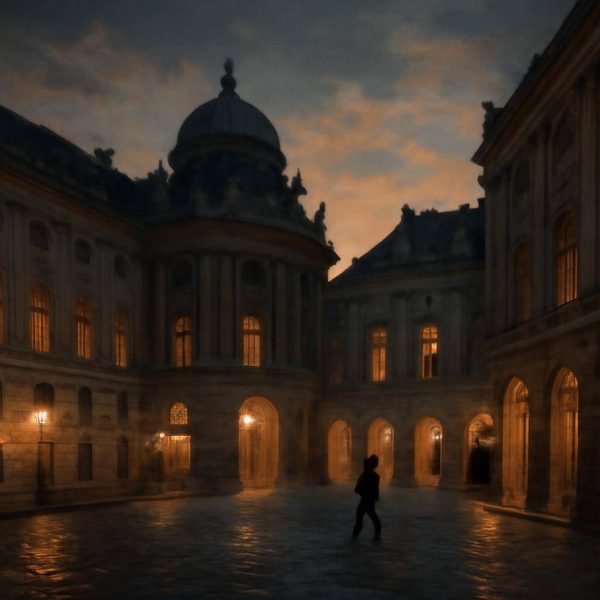
The route west from Stephansplatz to the Hofburg takes perhaps ten minutes on foot through the Innere Stadt. The Kohlmarkt leads toward the Michaelerplatz and the great green dome of the Michaelertor, one of the Hofburg's principal entrances. Coming through the gate into the Innere Burghof, the scale of the complex becomes clear in a way that no photograph prepares you for: the courtyard is large enough that the far walls seem slightly hazy in the autumn air, and the layers of architectural periods visible from a single standing point — from the Schweizerhof's medieval stonework to the later Baroque additions — compress centuries into a single glance.
The Heldenplatz, reached through the far end of the complex, is a different kind of space. The two equestrian statues of Archduke Charles and Prince Eugene stand at opposite ends, and the broad openness of the square was clearly designed for ceremony and crowd. In 1938, it was here that Hitler addressed the crowd following the Anschluss. The square does not hide this; there is nothing comfortable about standing in it while knowing its history, and the discomfort is part of what makes the Hofburg something more than a heritage complex to admire from the outside.
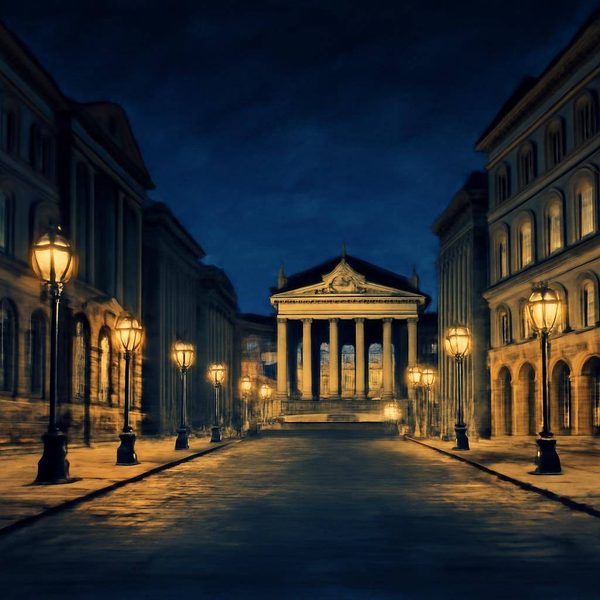
From the Heldenplatz, the Ringstrasse runs south past the Kunsthistorisches Museum and north past the Parliament building — both part of the grand remodelling of the city commissioned by Emperor Franz Joseph in the nineteenth century. The effect of the boulevard at dusk, with its monumental facades and period street lighting, is of a city that was designed at a very particular moment of imperial self-confidence and has worn the result with varying degrees of irony ever since.
The walk ended at the Vienna State Opera on the Kärntner Ring. The house was damaged in 1945, rebuilt, and reopened in November 1955 with a performance of Beethoven's Fidelio. The date — the same year as Austria's State Treaty restoring full sovereignty — was not accidental. Outside, a queue for the evening's standing places had formed at the Stehplatz entrance. The Stehplatz system is one of the more honest things about Vienna's cultural life: it means that a genuine cross-section of people, not only those who can afford full ticket prices, is in the building on any given night. The queue was patient, unhurried, and mostly young. That, too, felt like a good sign.
October in Vienna runs cool after dark — a coat is needed by the time the lamplighters would once have made their rounds. The Ringstrasse institutions stay open late; the coffeehouses stay open later. The city does not hurry visitors out. That may be its most underrated quality.
Frequently Asked Questions
What practical route does this Vienna story follow?
It follows source-backed places and route anchors from the guide, giving orientation and atmosphere while leaving live transport and opening details to the linked sources.
Which live details should I check before using this Vienna route?
Check current transport, access, opening and weather information from the linked official or operator sources before travelling.
What does this route help visitors understand about Vienna?
It turns source-backed places, route anchors and local context into a readable visitor route, so the story supports the main guide rather than replacing practical planning.
This is a fictional visitor story generated from source-backed place facts, image evidence and visitor-feel signals. It is not a first-hand WorldTownGuide visit. Named places, routes and historical references are source-backed; the visitor character and narrative events are invented.
Sources: Vienna State Opera - official site • Tourist attractions in Vienna - Wikipedia • Stephansdom South Tower - Wien Vienna • Vienna Imperial Palace - wien.info • Self-guided walking tour of Vienna • Vienna Walks - Six Exciting Routes With Maps