


What Washington, D. C. is known for
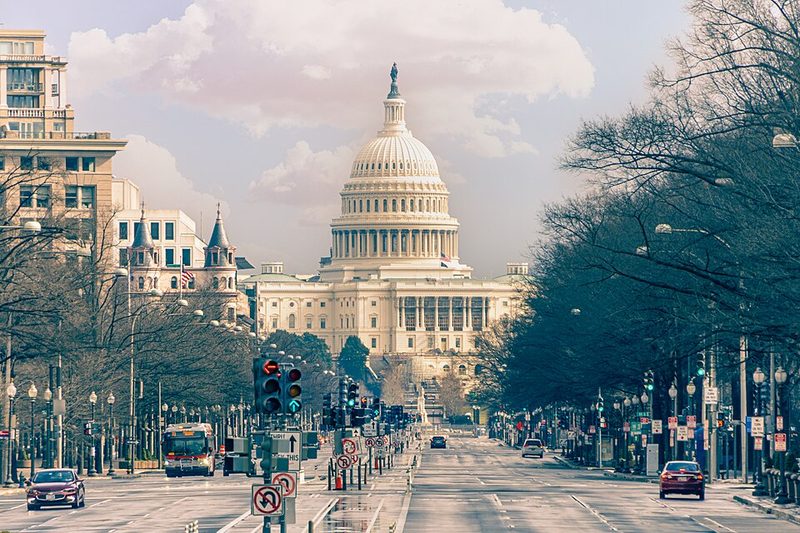
Washington sits at the heart of American government, where the federal apparatus of Capitol, White House, and Supreme Court operates alongside a substantial city of 689,545 residents. The National Mall stretches through the centre like a formal spine, flanked by the free Smithsonian museums and ringed by monuments that draw millions of visitors each year. The Potomac River curves along the southern and western edges, separating the District of Columbia from Virginia while Maryland borders the north and east. The city sits just six metres above sea level in terrain shaped by water, urban planning, and the particular demands of housing a national capital.
What strikes visitors quickly is the intentionality of the layout—numbered and lettered streets overlaid with diagonal state-named avenues, a grid designed in the 1790s that still governs the city's form. Another defining feature is the absence of tall buildings near key sightlines; legal restrictions preserve views of major monuments and the Capitol dome. This creates an unusually horizontal cityscape for an American urban centre of this size.
Historical Background
The city was established in 1790 as a compromise location for the national capital, placed between competing regional interests and named after George Washington. British forces burned much of Washington during the War of 1812, including the Capitol and the White House, both of which were subsequently rebuilt. That event remains a reference point in local historical memory.
Washington's core identity derives from its function: it exists to house the federal government and the institutions that surround it. For much of its history the District lacked full self-governance; home rule began in the 1970s, though federal authority still shapes local affairs in ways uncommon among American cities. The question of statehood remains an active political issue.
The city has been a centre of African American culture and politics for generations, particularly in neighbourhoods such as Shaw and U Street. It also carries a history of profound racial segregation and civil rights struggles through the mid-twentieth century. Population decline in the late twentieth century reversed in recent decades as younger professionals moved in and neighbourhoods gentrified.
The National Mall and Monuments
The National Mall functions as Washington's ceremonial centre and largest draw for visitors. The Lincoln Memorial anchors the western end, with the Washington Monument standing midway along the green expanse and the Capitol Building at the eastern terminus. The reflecting pool stretches between Lincoln and the Washington Monument.
Other memorials cluster around the Tidal Basin and nearby areas: the Jefferson Memorial, Franklin D. Roosevelt Memorial, Martin Luther King Jr. Memorial, Korean War Veterans Memorial, Vietnam Veterans Memorial, and World War II Memorial. Collectively they create an open-air memorial landscape. The Tidal Basin itself is edged by cherry trees, a gift of 3,020 trees from Tokyo to the United States capital in 1912. The first trees were planted on 27 March 1912 by Helen Herron Taft and the Viscountess Chinda. These trees bloom in spring and draw large crowds; the first festival-like celebration occurred in 1927 when schoolchildren re-enacted the original planting.
Most monuments and memorials charge no admission. The Capitol Building operates as a working legislature where visitors can observe Congress in session. The United States Botanic Garden, near the Capitol, offers greenhouse collections and garden space.
Museums and Cultural Institutions
The Smithsonian Institution operates multiple museums along the National Mall, all free to enter. These include the National Museum of Natural History, National Air and Space Museum, National Museum of American History, and several art galleries. The Smithsonian's reach extends beyond the Mall to other locations across the city.
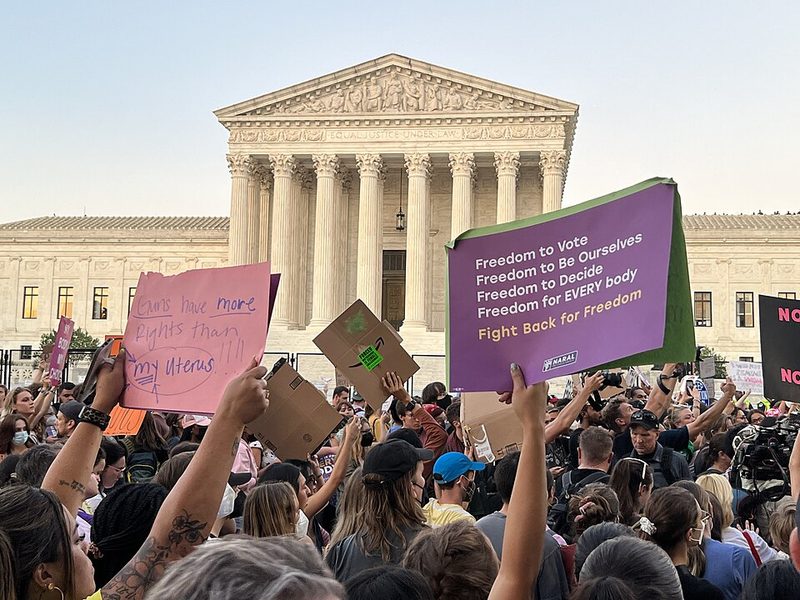
The Kennedy Center, on the Potomac waterfront, hosts theatre, opera, ballet, and orchestral performances. The Library of Congress, the world's largest library, sits on Capitol Hill and functions both as a research institution and a visitor attraction. The Supreme Court building, also on Capitol Hill, is open to the public.
Beyond the major institutions, Washington holds numerous smaller and specialist museums. Examples mentioned in available sources include the National Building Museum, the Christian Heurich House Museum (a Victorian mansion built 1892–1894 for a German-American brewer), and the Frederick Douglass National Historic Site. Multiple sources reference lesser-known collections and house museums throughout the city, though specific opening details should be confirmed locally.
Neighbourhoods and Daily Character
The federal government remains the dominant employer and economic engine. Around it sits an ecosystem of think tanks, research organisations, lobbying firms, nonprofits, and contractors serving governmental functions. Tourism also sustains significant activity.
Capitol Hill surrounds the Capitol and houses congressional staff and residential blocks. Georgetown, in the northwest, retains colonial-era architecture and serves as an upscale residential and commercial district. Dupont Circle, Adams Morgan, and Shaw have concentrations of restaurants, bars, and nightlife, drawing younger residents. U Street holds historical significance as a centre of African American culture. The Wharf and Navy Yard areas near the waterfront have undergone recent development. NoMa (North of Massachusetts Avenue) and the Union Market area represent newer growth zones. Rock Creek Park provides substantial green space running through the city.
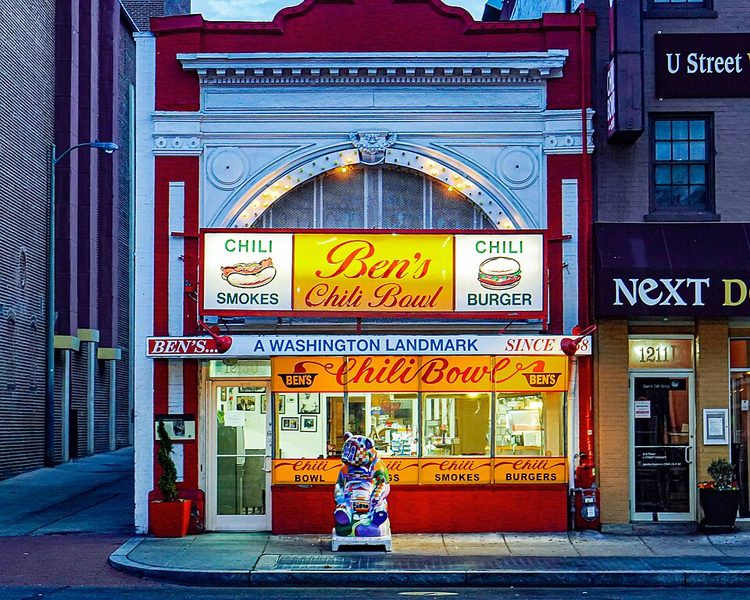
Local food identities include the half-smoke—a spicy pork and beef sausage served with chili, mustard, and onions, associated particularly with Ben's Chili Bowl on U Street—and mumbo sauce, a tangy condiment served at Chinese-American carryout restaurants. Ethiopian cuisine has a strong presence, reflecting the city's substantial Ethiopian community.
Practical Arrival and Transport
Three airports serve the region: Ronald Reagan Washington National Airport (DCA), Washington Dulles International Airport (IAD), and Baltimore/Washington International Airport (BWI). Ground transport options from each airport should be confirmed locally. Amtrak provides rail connections for regional and long-distance routes. The city sits on the Interstate 95 corridor and is accessible by car from surrounding regions.
The Washington Metro operates rail lines throughout the District and into surrounding Maryland and Virginia suburbs. Local bus service runs across the city. Taxis and ride-hailing services are available. Current routes, schedules, and fares should be checked with the Washington Metropolitan Area Transit Authority.
Is Washington, D.C. worth visiting?
Washington offers free access to major museums and monuments that would cost substantial admission fees in most other cities, combined with the functioning apparatus of American federal government. The city provides both tourist infrastructure and the character of a working capital. Visitors interested in American history, government, or museum collections will find extensive material. The free admission model for Smithsonian institutions and monuments makes it accessible for budget-conscious travellers.
Where to stay in Washington, D.C.?
Capitol Hill and the area near Union Station provide proximity to the Capitol, Supreme Court, and Library of Congress, with metro access. Downtown and Penn Quarter sit near the National Mall and museums, with substantial hotel inventory. Georgetown offers historic character but less direct metro access. Dupont Circle and Logan Circle have residential neighbourhood character with metro stations, restaurants, and bars within walking distance. The specific choice depends on whether visitors prioritise monument access, nightlife, or residential character.
How many days do you need in Washington, D.C.?
Three to four days allows time for the major monuments, several Smithsonian museums, and the Capitol area without rushing. Visitors focusing only on the National Mall monuments and one or two museums could manage in two days. Those interested in exploring neighbourhoods, lesser-known museums, or taking day trips to nearby sites such as Mount Vernon would benefit from a longer stay. The free admission model reduces pressure to maximise daily sightseeing value.
Is Washington, D.C. safe for visitors?
The UK Foreign, Commonwealth & Development Office and the US State Department apply no specific travel restrictions to Washington, D.C. Standard urban precautions apply. Crime rates vary by neighbourhood, as in most large American cities. Visitors should consult current official guidance and exercise normal awareness of surroundings, particularly outside central tourist areas after dark.
Day Trips and Nearby Destinations
Mount Vernon, George Washington's estate, sits approximately 24 kilometres south in Virginia along the Potomac River. The site includes the mansion, gardens, farms, and other buildings showing eighteenth-century plantation life. Multiple tour operators run trips from Washington, often combined with visits to Old Town Alexandria or Arlington National Cemetery.
Arlington National Cemetery lies directly across the Potomac in Virginia. Old Town Alexandria, a colonial-era port town also in Virginia, retains historic architecture and waterfront character. Annapolis, Maryland's capital, sits about 50 kilometres east and offers colonial streetscapes and Chesapeake Bay waterfront. All are accessible as day trips.
Practical Visitor Notes
The climate brings humid summers and mild winters. Summer is the peak tourist season and can be crowded, particularly around the National Mall. Many major attractions charge no admission, but specific exhibits or special collections may require advance tickets. Security screening applies at federal buildings. Visiting hours, accessibility details, and any admission requirements should be confirmed with individual sites and the official Washington, D.C. tourism authority before arrival. The city's relatively flat terrain makes walking and cycling practical for many routes.