In This Guide
Read the guide as a story
The All-Nighter: A Night at Wigan Casino, 1977
Wigan, England
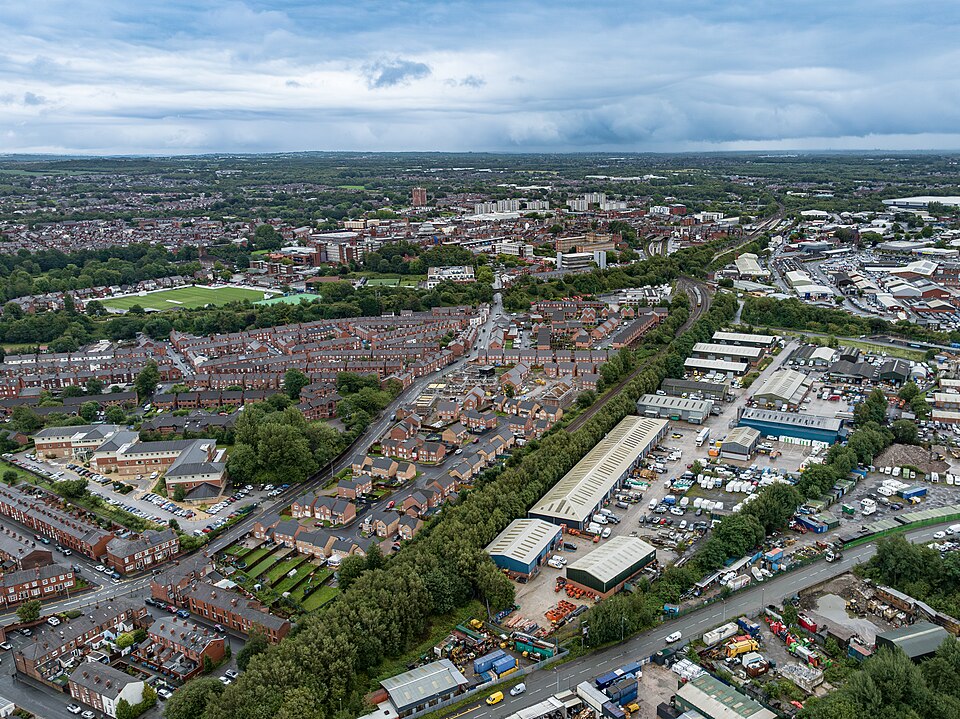
Wigan occupies the broad lowlands midway between Manchester and Liverpool — roughly 16 miles from Manchester city centre and about 17 miles from Liverpool — and it has accumulated a character that is harder to summarise than its geography suggests. A Victorian coal and cotton town, a brief world capital of underground dance music, the setting of one of the twentieth century's most important works of social journalism, and a borough administrative centre serving around 330,000 people: Wigan carries several histories at once, and that layering is part of what makes it worth understanding before you arrive.
First Impressions and Setting
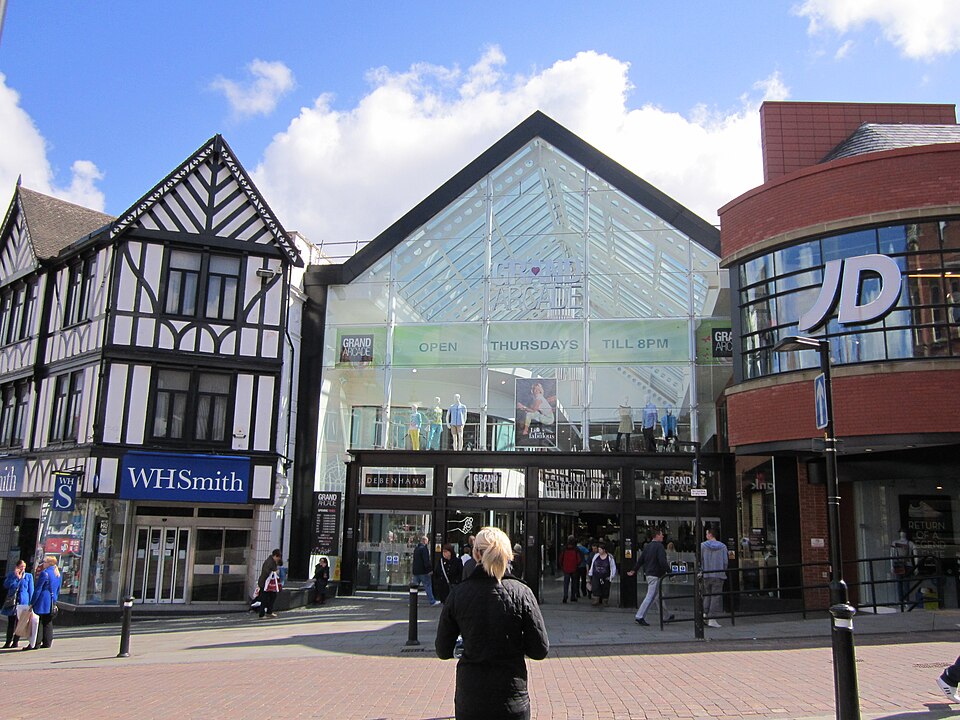
Arriving by rail, you immediately encounter one of Wigan's more unusual features: two separate mainline railway stations within a few hundred metres of each other, each serving a different historic network. Wigan North Western, on the West Coast Main Line, handles long-distance services; Wigan Wallgate serves regional connections to Manchester and Liverpool. The short walk between them passes through the town centre, and within those few minutes you get the basic shape of the place — practical, post-industrial, and with civic buildings that recall earlier ambition. The Grand Arcade shopping centre anchors the commercial core. Mesnes Park, a Victorian public park with a Boer War memorial, sits close by.
Historically part of Lancashire, Wigan was incorporated into the newly created Metropolitan Borough of Wigan in Greater Manchester by the 1974 boundary changes. The old county identity still runs deep in local conversation, and the distinction is sometimes made with feeling.
History and Identity
The town's most widely known literary moment came in 1937, when George Orwell published The Road to Wigan Pier, a forensic account of working-class life in the coal-mining north. The Guardian ranked it among the 100 best works of nonfiction; early reviewers including the poet Edith Sitwell praised its unflinching account of poverty. The pier referenced in the title was a somewhat ironic name for a canal loading point on the Leigh Branch of the Leeds and Liverpool Canal — made famous by the music hall comedian George Formby Sr before Orwell arrived. The canalside area was once the industrial backbone of the town; it now draws heritage visitors, and the Canal and River Trust notes a walking route along the towpath to the Wigan Flashes, a mosaic of wetlands formed in old mining subsidence hollows that support a wide range of birds.
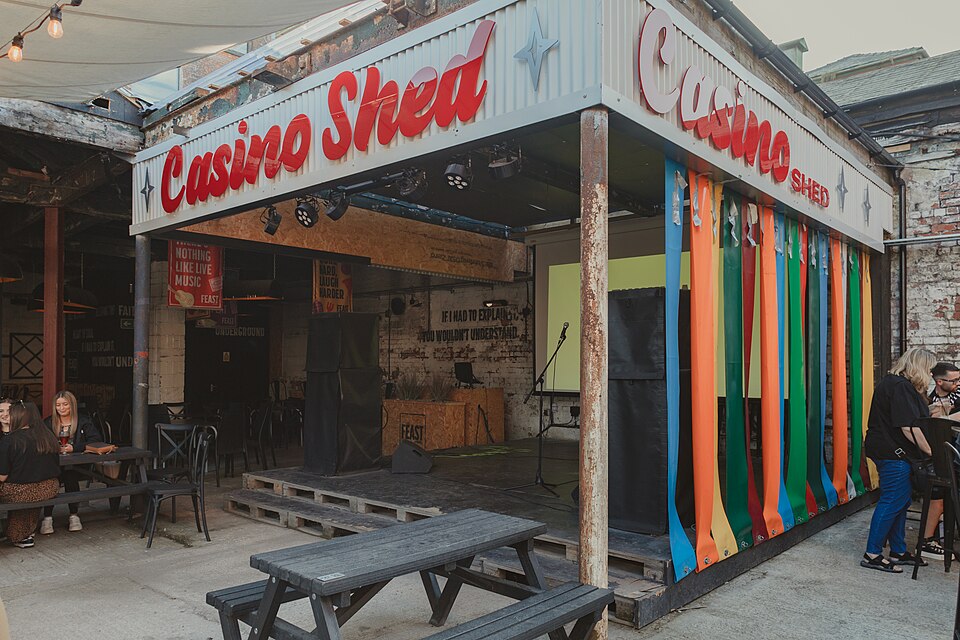
Wigan Casino — formally the Casino Club, which operated at Station Road from 1965, becoming the defining Northern Soul venue from around 1973 until its closure in 1981 — is the town's other major claim on cultural history. The all-nighters drew record-hunters and dancers from across Britain, built around obscure American soul imports. The Casino was demolished in 1984, but the nostalgia it generated was strong enough to produce a stage play, Once Upon a Time in Wigan, and the BBC reported on the venue's 50th anniversary in 2023. Wigan Heritage Service's Past Forward project and Historic England's Heritage Calling guide to original Northern Soul venues both document the Casino's place in British cultural history. The Museum of Wigan Life holds material from this period and is a practical starting point for visitors interested in it.
For those drawn to Victorian social history, the painting The Dinner Hour, Wigan by Eyre Crowe (1874), now held at Manchester Art Gallery, depicts women mill workers taking their midday break outside a Wigan cotton factory. It is one of those works that quietly illuminates a place once you have been there.
What Visitors Notice
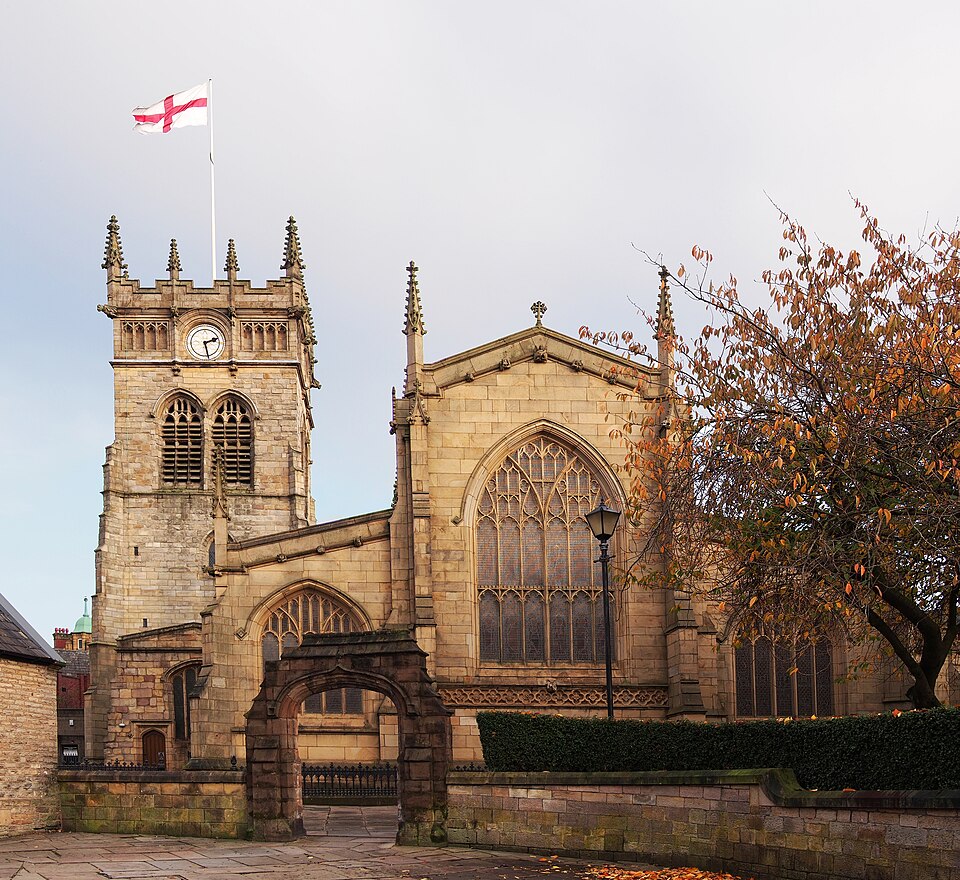
The Museum of Wigan Life is the primary heritage resource in the town centre, covering Roman roots, local industries including porcelain and clock-making, and the Northern Soul era. Haigh Hall and Country Park, within the wider borough, is frequently cited as a major green asset — 250 acres of woodland and open grounds in a historic estate setting — but visitors should check current access arrangements with Wigan Council before visiting, as the research available for this guide did not confirm current opening status or facilities with sufficient precision. Mesnes Park in the town centre is reliably accessible and carries a Boer War memorial. Wigan Warriors rugby league club provides one of the town's most enduring sources of civic pride, and matchdays bring a particular energy to the town.
Audience Fit
Wigan suits visitors interested in industrial and social history, music heritage or literary tourism. Car-free visitors are well served by the two railway stations and the Bee Network bus system. Families will find the borough has activity venues — the Day Out With the Kids site mentions trampoline venues and the Museum of Wigan Life as options for wet-weather days — but specific opening hours and current status for individual venues should be confirmed before visiting. Walkers will find routes along the Leeds and Liverpool Canal towpath and through Haigh Hall's woodland, though terrain and seasonal conditions vary. Visitors primarily seeking cosmopolitan dining, nightlife or beach culture will find Wigan limited relative to nearby Manchester or Liverpool.
Getting There and Around
Wigan's transport position is one of its practical strengths. Wigan North Western station, on the West Coast Main Line, is served by Avanti West Coast with journey times to London Euston of roughly two hours. Wigan Wallgate is served by Northern trains with connections to Manchester and Liverpool. The two stations are distinct — separate platforms, separate ticketing halls, different operators — but both are within walking distance of the town centre. Oyster cards are not accepted at either station; use a contactless bank card or buy a ticket.
Beyond the two main stations, Ince Railway Station lies around 1.7 kilometres from the town centre, Pemberton Railway Station around 2.5 kilometres, and Hindley Railway Station approximately 4 kilometres out — all useful if your visit takes you into those parts of the borough. Bus services operate under the Bee Network, the Greater Manchester-wide integrated transport scheme overseen by TfGM. Stagecoach and Arriva North West both operate routes in the area. Route 601 serves Ashton-in-Makerfield and Leigh; route 607 connects to destinations including Manchester via Ince and Hindley. Journey planning is best done through the TfGM Bee Network journey planner or wigan.gov.uk. The TfGM public transport network maps are available at tfgm.com and show the full regional coverage.
Wigan bus station is covered by the Bee Network; departure times and accessibility information are available through TfGM's station page. For those exploring the borough without a car, the combination of rail to outlying stations and Bee Network buses makes most parts of the borough reachable, though frequency and walking distances vary; check current timetables before planning a day out.
Practical Notes
Both UK and US authorities currently rate the United Kingdom at their lowest advisory level — normal precautions apply, and no regional restrictions affect Wigan or the wider Greater Manchester area. If you are travelling to Wigan by air and experience a flight disruption, UK rules provide for compensation of up to £600 depending on the delay length and route. Weather in this part of the north-west of England is reliably unpredictable; rain is possible in any season, and outdoor plans benefit from a backup option.