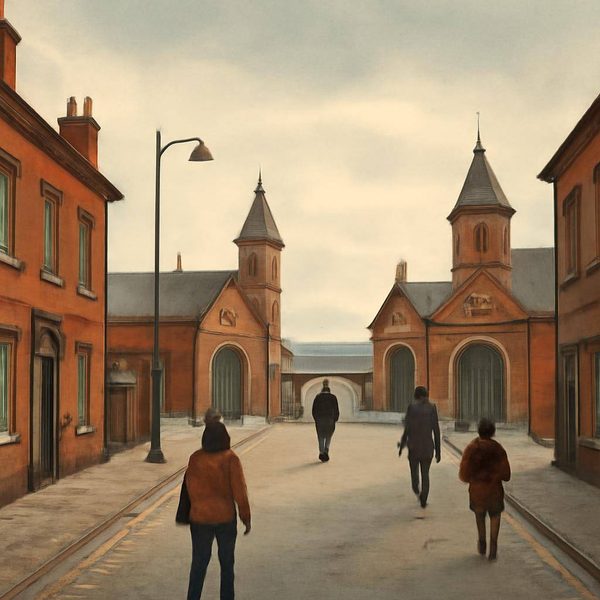
The train from Manchester pulled into Wigan Wallgate just after eleven on a Friday night in October 1977. On the platform, a scatter of people moved with a particular kind of purpose — not rushing, exactly, but certain. They carried record bags. A few carried nothing at all except the look of people who had done this journey before and knew exactly where they were going.
It was not far. Wigan Casino — the Casino Club, on Station Road — sat close enough to the station that you could almost hear it from the platform, or told yourself you could. The building had been there since the 1960s. It had opened in August 1965, Shirley Bassey on the bill, a conventional dance venue in a Lancashire mill town between Manchester and Liverpool. Then, in 1973, something shifted. The all-nighters began.
What the all-nighters meant, from the outside, was this: on a Friday evening, people arrived from Bradford and Birmingham, from London and Stoke-on-Trent, carrying boxes of 45rpm singles — American soul records on labels most people had never heard of, pressed in Detroit or Chicago or Cincinnati and shipped to Britain in small quantities, then distributed through a network of collectors who traded, argued and occasionally lied about what they had found. Inside the Casino, from midnight until eight in the morning, those records were played. The dancers on the floor had developed a style to match the music — athletic, fast, circular — that had no obvious precedent in British popular culture.
The fictional collector arriving at Wallgate that October night — call her Sandra, from Sheffield, twenty-three years old, a regular since 1975 — would have known the names before she entered. The Casino's reputation had spread through word of mouth, through the record fairs, through the pale carbon-copied newsletters that circulated among collectors. Wigan Heritage Service's Past Forward project and Wigan Archives have since documented what those years produced: a scene that Historic England later included in its guide to original Northern Soul venues, placing the Casino at the centre of a golden era in underground British music.
Inside, the heat was immediate. The main room had a sprung floor — useful when you were dancing for seven hours — and the sound system was calibrated for the specific mid-range punch of the soul 45. The DJ booth was not a place of celebrity in the modern sense; it was a place of curation. The value lay in what was played, not who played it. A record could be worth serious money and never appear on a mainstream chart.
Sandra's record bag contained eleven singles. Three of them she had found at a Midlands record fair six weeks earlier; one she had traded for from a collector in Wigan itself, which seemed appropriate. She did not expect to sell tonight. Tonight was for dancing and for listening, for hearing what was new on the circuit and what had been dropped because the wrong people had found copies.
By three in the morning, the room had settled into its particular rhythm. The music did not stop. The dancers rotated — some resting on the edges, others arriving at the floor from the bar, from the record stall at the back where dealers laid out their stock on trestle tables under strip lighting. The transactions there were quick, cash-only, conducted in the shorthand of people who already knew what they were looking at.
What Sandra could not have known — no one in that room in October 1977 could have known — was that the Casino had roughly four years left. It closed in 1981. The building was demolished in 1984. The BBC, reporting on the venue's 50th anniversary in 2023, found that the nostalgia ran deep enough to attract people who had never attended the original all-nighters but had inherited the music through older siblings, parents, or the persistent revival scene that the Casino's reputation had helped sustain. A stage play, Once Upon a Time in Wigan, has been produced about the scene.
The Museum of Wigan Life now holds material from this era. It is a quieter encounter with the same history — daylight, glass cases, the muted authority of objects removed from context. But it is enough to understand what the Casino was: not an anomaly in a Lancashire mill town, but a logical product of one. The music found its audience here because the people who came had learned, in other contexts, what it meant to do something seriously, in the dark, without waiting for permission.
Sandra caught the early train back to Sheffield. Her record bag was one single lighter — a trade, not a sale — and she was still half-deaf from the speakers. She did not write any of it down. She did not need to. She already knew she would be back the following month.
Frequently Asked Questions
What practical route does this Wigan story follow?
It follows source-backed places and route anchors from the guide, giving orientation and atmosphere while leaving live transport and opening details to the linked sources.
Which live details should I check before using this Wigan route?
Check current transport, access, opening and weather information from the linked official or operator sources before travelling.
What does this route help visitors understand about Wigan?
It turns source-backed places, route anchors and local context into a readable visitor route, so the story supports the main guide rather than replacing practical planning.
This is a fictional visitor story generated from source-backed place facts, image evidence and visitor-feel signals. It is not a first-hand WorldTownGuide visit. Named places, routes and historical references are source-backed; the visitor character and narrative events are invented.
Sources: Past Forward Issue No. 38 - Wigan Heritage Service • Wigan Archives • Wigan Casino: Northern Soul finds a new crowd on nightclub's 50th anniversary - BBC News • Wigan Casino - Wikipedia • Wigan North Western railway station - Wikipedia • A Beginner's Guide to Original Northern Soul Venues - Heritage Calling