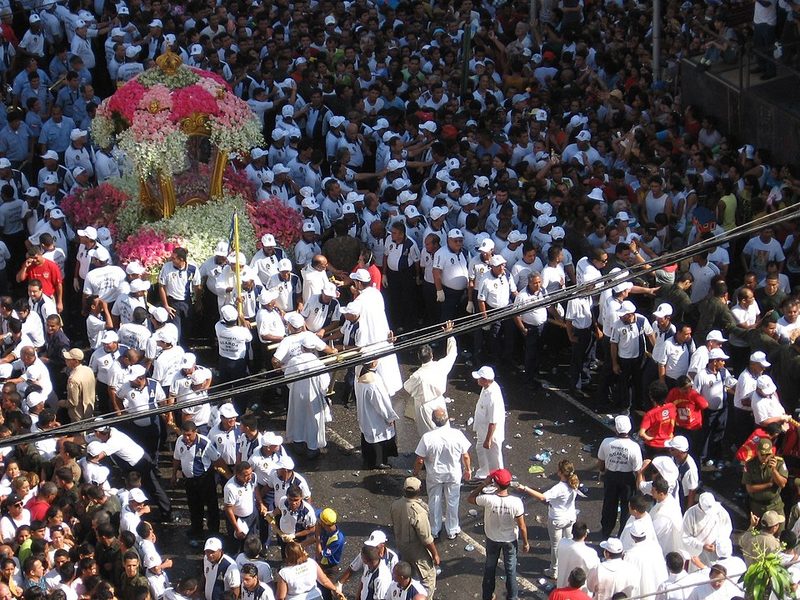
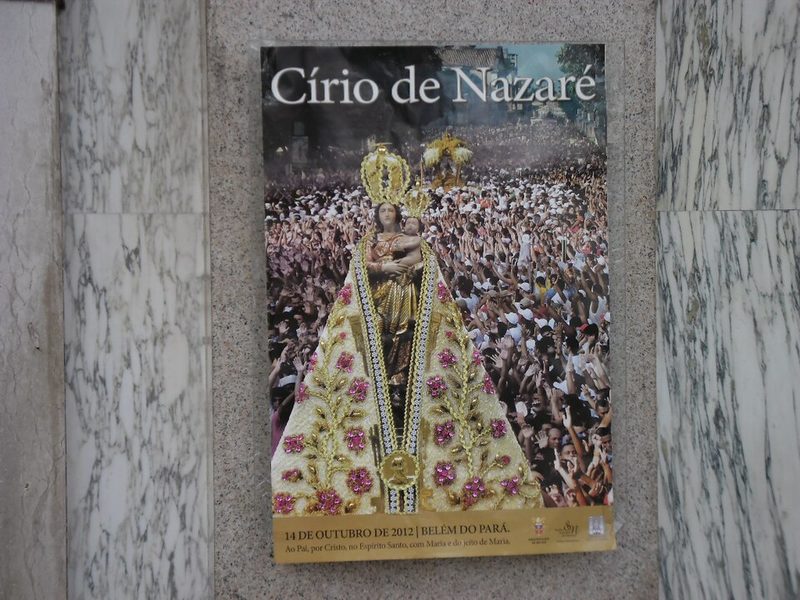
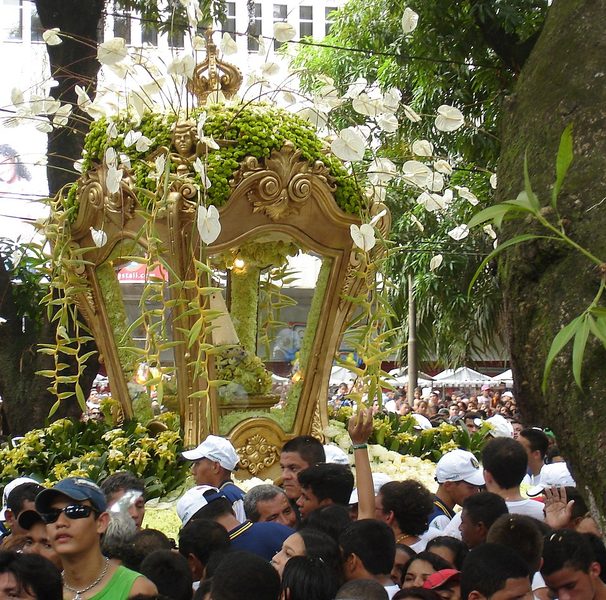
The CÃrio de Nazaré takes place annually on the second Sunday of October and draws approximately two million participants to Belém, making it one of the world's largest religious gatherings. The festival centres on devotion to Nossa Senhora de Nazaré (Our Lady of Nazareth) and spans roughly two weeks of celebrations, though the main procession on that Sunday represents the event's climax. UNESCO recognised the CÃrio as Intangible Cultural Heritage of Humanity, and Brazilian federal authorities list it as national intangible cultural heritage.
Origins and the Legend of Plácido
The devotion to Nossa Senhora de Nazaré in this region traces to Portuguese Catholic practice, specifically the Marian devotion observed on 8 September in the town of Nazaré, Portugal. The Brazilian festival's foundation story centres on an event said to have occurred in 1700. According to tradition, a caboclo—a person of mixed Portuguese and indigenous ancestry—named Plácido found a small wooden statue of Our Lady of Nazareth while hunting or travelling near the Igarapé Murutucu, a stream on the outskirts of colonial Belém. Different versions of the account place the statue among stones in the water, in the fork of a taperebá tree, or in a natural niche amid vines.
Plácido reportedly took the statue home, but it disappeared and reappeared at the original site. After this occurred repeatedly, the colonial authorities interpreted the events as a sign of the Virgin's wish to remain in that location. A small chapel was eventually built, which developed over time into the BasÃlica Santuário de Nossa Senhora de Nazaré, the sanctuary that now anchors the festival. The wooden statue found by Plácido, approximately 28 centimetres tall, is considered the original image and remains the focus of devotion. The story blends Portuguese Catholic heritage with local indigenous and mixed-race experience, and the figure of Plácido—a caboclo rather than a European colonist—holds symbolic significance in a region shaped by both indigenous presence and colonial imposition.
The Festival and Procession
The CÃrio festivities extend from August through to fifteen days after the main procession. The central event occurs on the second Sunday of October, when the statue of Nossa Senhora de Nazaré is carried from Sé Cathedral in Belém's historic centre to the Sanctuary Square at the BasÃlica, a distance of approximately 3.6 kilometres. Nearly two million people participate in or attend the procession, many walking the entire route. Devotees traditionally grasp a thick rope (the corda) attached to the carriage carrying the statue—holding the rope is considered an act of devotion and penance, and the crush of people attempting to touch it is intense.
The term cÃrio derives from the Portuguese word for a large candle or taper, reflecting the festival's origins as an evening or nighttime pilgrimage lit by candles. In 1854, the procession was moved to daytime to avoid the heavy rains that had disrupted the previous year's event, but the name persisted. Candles and lights remain symbolic elements of the festival.
The two-week period surrounding the main procession includes numerous smaller processions, masses, cultural events and neighbourhood celebrations. Pato no tucupi—duck cooked in tucupi, a yellow broth made from fermented cassava root—is the traditional dish eaten during CÃrio, particularly at the meal following the main procession. The festival period transforms Belém into a site of intense religious and social activity; hotels fill, and residents from across Pará and neighbouring states travel to the capital to participate.
Cultural and Regional Significance
The CÃrio de Nazaré represents one of Brazil's most significant expressions of popular Catholicism. Its scale and the intensity of devotion it generates reflect the deep embedding of Catholic practice in Amazonian culture, even as that practice incorporates elements distinct from European tradition. The figure of Plácido and the emphasis on the statue's connection to a specific Amazonian landscape root the devotion in local rather than purely imported terms.
For Belém, the CÃrio functions as the defining annual event—culturally, economically and in terms of civic identity. The festival marks the city's calendar and represents a moment when Belém's role as the Amazon's principal urban centre becomes visible through the convergence of participants from throughout the region. The recognition by UNESCO and Brazilian heritage authorities acknowledges both the scale of the event and its persistence as a living tradition rather than a historical re-enactment.
Visitor Considerations
Visitors planning to attend the CÃrio should arrange accommodation well in advance, as the city fills during the festival period. The main procession on the second Sunday of October draws enormous crowds, and conditions along the route are densely packed. Participating in or observing the procession requires tolerance for heat, crowds and long periods on foot. The festival's religious character should be respected; this is an active devotional event rather than a performance staged for outsiders. Those interested in Amazonian cuisine will find the festival period an opportunity to try pato no tucupi and other regional dishes prepared for the celebrations.
Sources: CÃrio De Nazaré - Wikipedia • CÃrio de Nazaré – Visit Brasil • CÃrio de Nazaré UNESCO Intangible Cultural Heritage • IPHAN - CÃrio de Nazaré