In This Guide
- Nikola Tesla's formative years and legacy in Belgrade
- Temple of Saint Sava
- Confluence of Sava and Danube rivers viewed from Kalemegdan
- Brutalist architecture walk (Genex Tower, Western Gate, New Belgrade blocks)
- 1961 Non-Aligned Movement Monument & Conference Legacy
- 1914 Battle of Belgrade and WWI Serbian resistance
- River ferries and floating restaurants (splavovi) on Sava and Danube
- Skadarlija (Belgrade's Bohemian Quarter)
- 1999 NATO bombing of Belgrade
- Belgrade Fortress and Kalemegdan Park
A first-hand visitor story: A Night in Belgrade: Fortress to the River.
Read the guide as a story
A Night in Belgrade: Fortress to the River
First Impressions and Setting
Landing at Nikola Tesla Airport — named after the Serbian-American inventor whose archive and ashes are held at the Nikola Tesla Museum in the city — visitors arrive at a gateway that connects Central Europe to the Balkans. Belgrade sits at the confluence of the Sava and the Danube, two of Europe's great rivers, and that meeting point is both geographical and visual: from the ramparts of Kalemegdan Fortress, you can look out across the wide water where the two rivers merge, a view that has oriented travellers, traders and armies for centuries.
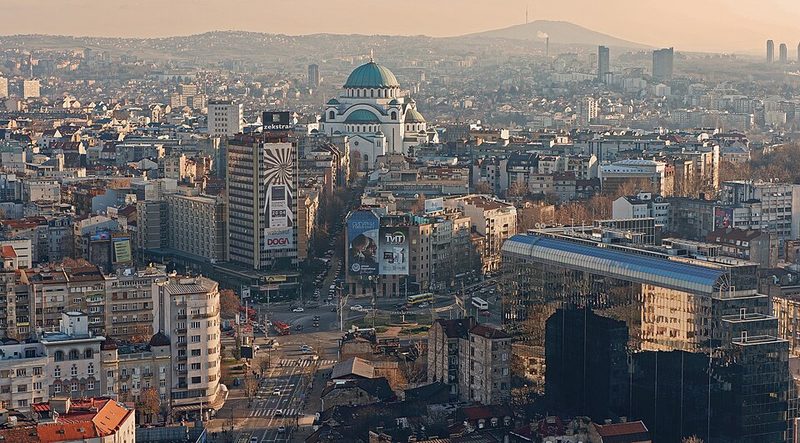
The urban texture mixes eras without apology. Ottoman lanes give way to Austro-Hungarian facades, which open onto broad Socialist-era boulevards. Across the Sava in New Belgrade, enormous Brutalist housing blocks and administrative buildings from the Yugoslav period define whole districts, and the Genex Tower — a double-cylinder skyscraper sometimes called the Western Gate — is among the most photographed examples of that architectural ambition. Walking between neighbourhoods often involves more gradient than the map suggests, as the city rises across ridges and bluffs above the riverbanks. Visitor experience across several sources describes the centre as walkable and genuinely rewarding on foot, with parking in the core recognised as frustrating enough to deter most drivers.
Daily Life, Culture and Music
Belgrade functions as Serbia's economic and institutional hub, home to the country's main universities, the Clinical Center of Serbia (one of the largest hospital complexes in the region), national broadcasters and the principal arts venues. The National Theatre and the Belgrade Philharmonic Orchestra anchor a formal cultural calendar. The city also hosts the FEST film festival, the BITEF theatre festival and Ethno Fest Belgrade, an international folklore festival documented by the European Association of Folklore Festivals across multiple annual editions. A recognised music scene — spanning folk revival, jazz, turbo-folk and electronic — runs through smaller venues and through the splavovi on the Sava. The Tourism Organisation of Belgrade (Turistička organizacija Beograda) publishes event listings that reflect the active cultural programme.
Food culture in Belgrade is rooted in grilled meats, seasonal produce and pastry traditions, with generous portions a recurring observation across visitor sources. The Skadarlija district is the most concentrated setting for traditional restaurant culture, while the city's broader restaurant scene has diversified substantially in recent years.
Parks, Green Space and Walking Routes
Tašmajdan, a park in the central part of the city close to the urban core, offers a practical green pause and orientation point. Ada Ciganlija, a river island on the Sava sometimes called the Belgrade Sea, is a popular outdoor destination for swimming and walking in warmer months. Both provide a different pace from the fortress and the pedestrian axis of Knez Mihailova Street. The city's terrain — ridges and bluffs rather than a flat grid — means that walking between neighbourhoods often involves more gradient than expected, but the elevation changes also produce good views from several points across the city.
Getting There and Around
Nikola Tesla Airport (IATA: BEG) is the main international gateway, located west of the city centre and connected to more than 100 destinations; carriers including Air Serbia, Wizz Air, Lufthansa and Turkish Airlines operate routes from the airport. The city's main rail hub is Beograd Centar station, which replaced the old Belgrade Main station (Savski trg) from July 2018; Topčider is also a referenced station on the network. The BG Voz (BG Train) suburban rail service links Belgrade to nearby towns, and a train line designated BG-NS connects the city with Novi Sad. Suburban bus services operate from the BAS bus station and from the termini at Šumice and Banovo Brdo, reaching surrounding municipalities including Mladenovac, Obrenovac, Barajevo, Sopot, Grocka and Lazarevac.
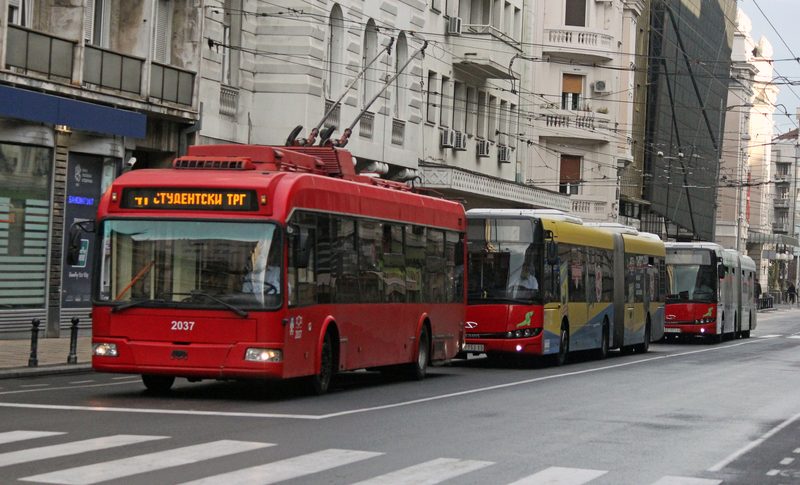
As of 1 January 2025, the Tourism Organisation of Belgrade confirms that public transport in the city is free for all passengers, covering all city and suburban lines including buses, trams, trolleybuses and the BG Train. The network is operated primarily by the city-owned GSP Belgrade. Local sources consistently note that the historic core is walkable and that bringing a car into the centre is more trouble than it is worth given parking constraints — a view echoed in local community discussion about the Nušićeva area and central tourist zones. Visitors who want to explore beyond the centre should use the free public transport network rather than a hire car.
Practical Notes
The UK Foreign, Commonwealth and Development Office advises normal precautions for Serbia. The US State Department has issued a Level 2 advisory — Exercise Increased Caution — citing crime concerns, particularly violence associated with organised crime and high-profile sporting events. Travellers are advised to consult the official advisories at gov.uk/foreign-travel-advice/serbia and travel.state.gov before departure, as guidance is subject to change. Multiple travel safety sources characterise violent crime targeting tourists as rare and note that local Belgraders are generally helpful to visitors; however, these perceptions do not replace official advisory guidance. Peak summer brings larger crowds to the historic core and the waterfront; spring and autumn are generally quieter and offer more comfortable walking conditions. Winter brings cold temperatures and reduced outdoor activity, though the city remains fully functional.
The Clinical Center of Serbia provides major medical services and is one of the largest hospital facilities of its kind in the region. For current transport schedules, the city transport authority (tob.rs) and GSP Belgrade (bgprevoz.rs) are the relevant operators; verify current services before travel.
Confluence of Sava and Danube rivers viewed from Kalemegdan
Where Two Great Rivers Meet
Standing on the ramparts of Kalemegdan Fortress, visitors look down on one of the most dramatic natural spectacles in Central Europe: the point where the clear-green Sava River flows into the broad, grey-blue Danube. The confluence — known locally as ušće — lies directly below the fortress cliff, and the colour contrast between the two rivers is visible to the naked eye for several hundred metres downstream before they fully mix. The Danube here is one of Europe's mightiest waterways, and this is one of the rare urban vantage points from which its true scale becomes tangible. Across the water, the flat, low-lying land of Zemun and New Belgrade stretches to the horizon, giving the panorama an almost oceanic width that surprises first-time visitors.
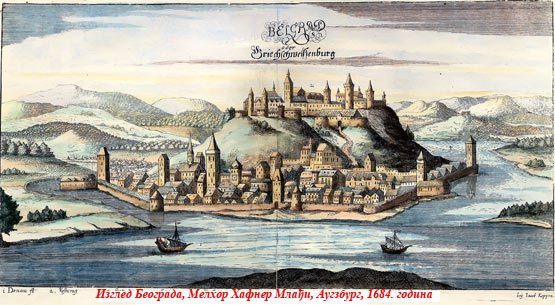
The strategic importance of this viewpoint shaped Belgrade's entire history. Whoever controlled Kalemegdan controlled river traffic on both the Sava and the Danube, which explains why Celts, Romans, Byzantines, Hungarians, Ottomans and Serbs all fought over this rocky promontory. The Ottomans fortified it extensively, and it was from these same walls that defending forces watched enemy fleets approach along the river corridors below. Today, the military tension has long dissolved, but the panorama that made this spot so coveted for two millennia is unchanged.
The Viewpoint Itself: What You Actually See
The most popular spot for viewing the confluence is the northwestern terrace of the Upper Town, close to the Pobednik (Victor) monument — a tall column topped with a bronze male figure that has become the symbol of Belgrade. From here the ground drops away sharply, and the full sweep of both rivers is unobstructed. On clear days, the view extends far into the Pannonian Plain. At dusk, when the low sun turns the Danube copper and the distant riverbanks fade into haze, the scene draws a crowd of locals and travellers who simply stand in silence taking it in. Many visitors note that photographs cannot fully convey how wide and unhurried the rivers appear from this height — the sense of scale only registers when you are physically present on the ramparts.
The park surrounding the fortress, Kalemegdan Park, is woven into this experience. In 1869, urban planner Emilijan Josimović envisioned the area as a public green space essential to the health and leisure of Belgrade's citizens, and that vision has been realised: shaded paths lead through mature trees right to the edge of the terraces, making the walk to the viewpoint pleasant even in summer heat. Benches face the river on multiple levels, and the atmosphere on warm evenings — families, chess players, couples — gives the panorama a lived-in quality that distinguishes it from purely tourist attractions.
Practical Matters for Visiting
Kalemegdan Fortress and its park are open and free to enter, and the confluence viewpoint requires no ticket. The fortress complex sits in the heart of the city, and the area around Knez Mihailova Street — Belgrade's main pedestrian boulevard — leads directly to the park entrance, making the walk from the city centre straightforward without any need for transport. The entire route is on foot, and comfortable walking shoes are worthwhile because the fortress paths involve uneven cobblestones and some steep ramps between terrace levels.
The park is busy throughout the day and well-lit in the evenings, and the general atmosphere is relaxed and safe. As with any busy public space, keeping belongings close and bags zipped is sensible, particularly when the terraces are crowded during weekend afternoons or summer festivals. Mornings on weekdays offer the confluence view with noticeably fewer people, which many visitors find more rewarding for photography and quiet reflection.
Historical and Cultural Depth
Beyond the view itself, the terrace context adds layers of meaning. Plaques and preserved fortification walls on the upper ramparts mark phases of construction stretching back to Roman Singidunum. The medieval Serbian fortifications were rebuilt and expanded under Ottoman rule, and sections of the medieval inner gate, towers and curtain walls remain intact. Walking from one defensive layer to the next while the rivers remain visible below connects the visitor physically to the military logic that drove centuries of construction. For anyone interested in how geography shapes history, the confluence viewpoint at Kalemegdan is one of the most eloquent single spots in the Balkans.
Sources: The Best Things to do in Belgrade, Serbia - Backpack Adventures • About Belgrade - DanubeENT 2026 • Walking tour of Kalemegdan Fortress • Belgrade in Old Postcards – Beogradska Tvrdjava • Belgrade, Serbia: All You Must Know Before You Go (2026) - Tripadvisor
Brutalist architecture walk (Genex Tower, Western Gate, New Belgrade blocks)
New Belgrade, across the Sava, was built as a Socialist-era planned city. The Genex Tower (Western City Gate), a double-cylinder skyscraper connecting two towers at height, is the district's most photographed landmark. The Museum of Yugoslavia and Tito's mausoleum (House of Flowers) are also here. Read more about the Brutalist architecture walk.
Sources: 17 Best Things to Do in Belgrade - MyWanderlust • Nightlife in Belgrade - Wikipedia • Serbia - Music, Art, Architecture | Britannica • Belgrade: What to See, Do and Experience Like a Local • Events in Belgrade Serbia - Domovina • r/serbia on Reddit: Recommendations in Belgrade? do's and don'ts? places to go and ones to avoid? • Where to eat in Belgrade, the capital of 'new Balkan' cuisine | National Geographic
1961 Non-Aligned Movement Monument & Conference Legacy
Belgrade hosted the first Conference of Non-Aligned Countries in September 1961, when 25 nations gathered under a movement that positioned itself outside both the American and Soviet superpower blocs. The conference was closely associated with Yugoslav leader Josip Broz Tito, who was one of its principal architects alongside Egypt's Nasser and India's Nehru. The event established Belgrade's Cold War identity as a diplomatic capital that operated independently of both NATO and the Warsaw Pact — a status that shaped Yugoslav foreign policy for decades. Monuments and references related to the Non-Aligned Movement are part of the city's public identity, and the Museum of Yugoslavia, which includes Tito's mausoleum known as the House of Flowers, provides further context for visitors interested in this period.
Sources: Remembering 1999: How the NATO Bombing Shaped Serbian National Identity - Modern Diplomacy
1914 Battle of Belgrade and WWI Serbian resistance
The First Allied Victory: Belgrade in 1914
When Austria-Hungary declared war on Serbia in July 1914, Belgrade — sitting directly across the Sava and Danube rivers from Austro-Hungarian territory — became the first European capital to face sustained bombardment in the First World War. The city was shelled from across the river as early as 29 July 1914, and by December of that year Austro-Hungarian forces had occupied it briefly. What followed was one of the war's most dramatic reversals: the Serbian Army, under desperate and exhausted conditions, launched a counteroffensive that recaptured Belgrade on 15 December 1914, making it one of the first significant Allied military victories of the entire war. The Battle of the Ridges (Kolubara) that enabled this retaking of the capital is still taught as a feat of national endurance against a far larger imperial power.
The human cost was staggering. Serbia lost a higher proportion of its population during the First World War than almost any other country involved in the conflict — a fact that lends a particular weight to how Belgraders speak about this period. Visitors who take time to engage with local guides or museum staff often find that this chapter of history resonates far more personally here than comparable battlefield histories do elsewhere in Europe, because for many families the losses were not abstract but ancestral and immediate.
Kalemegdan Fortress: The Physical Memory of the Battle
The most tangible place to encounter this history is Kalemegdan Fortress, the ancient citadel that crowns the confluence of the Sava and Danube rivers. The fortress changed hands repeatedly during the war, and its walls and ramparts look directly across to the territory from which Austro-Hungarian artillery once fired. Within the fortress complex, the Military Museum holds an extensive permanent collection covering Serbian military history from medieval times through both World Wars. Here visitors can examine artillery pieces, uniforms, maps, and personal effects from the 1914–1918 period, including equipment connected specifically to the defence and recapture of Belgrade. The museum presents this material with considerable national pride but also with genuine archival depth, and English-language signage, while not exhaustive, covers the main exhibits.
The fortress grounds themselves are free to enter and open daily, making them accessible to any visitor regardless of budget or schedule. Walking the outer ramparts gives a direct, almost visceral sense of Belgrade's strategic exposure — the rivers below are wide and the opposite bank clearly visible, helping visitors understand immediately why the city was so vulnerable to shelling and why controlling this position mattered so much to both sides.
Monuments, Memorials, and the Victor
Standing at the highest point of Kalemegdan is the Victor monument (Pobednik), erected in 1928 to commemorate Serbia's victories in both Balkan Wars and the First World War. Sculpted by Ivan Meštrović, the bronze figure stands atop a tall column overlooking the river confluence — a deliberately uncompromising symbol of survival and triumph. Visitors consistently find that the combination of the monument's scale, its hilltop position, and the panoramic view creates one of the most genuinely moving moments in the entire city, particularly at dusk when the rivers catch the light. The monument is freely accessible as part of the Kalemegdan grounds.
Beyond Kalemegdan, the city's older cemeteries — particularly the Belgrade New Cemetery — contain sections dedicated to soldiers who died in the First World War, including Allied forces. These quieter memorials tend to attract fewer visitors than the fortress but reward those who seek them out with a more intimate encounter with the individual scale of the losses.
Practical Context for Visiting
Kalemegdan and the surrounding historic core are highly walkable, and most WWI-related sites of interest sit within comfortable distance of one another on foot — the fortress, the Military Museum, and the central city are all connected without any need for transport. Belgrade's public transport network is extensive and includes a city train, useful for reaching districts further out, but for the fortress area and adjacent historic neighbourhoods walking is genuinely the most practical approach. The area around Kalemegdan is considered safe for solo visitors including solo female travellers, consistent with Belgrade's broader reputation as one of the more visitor-friendly capitals in the region. Streets near the fortress can be steep in places, so comfortable footwear matters more than any particular route planning.
Sources: Federal Republic of Yugoslavia, NATO Intervention - ICRC Online Casebook • THE 15 BEST Things to Do in Belgrade (2026) - Must-See Attractions
River ferries and floating restaurants (splavovi) on Sava and Danube
The splavovi — floating bars, clubs and restaurants moored along the Sava — are one of Belgrade's most distinctive evening experiences, ranging from daytime cafes to late-night music venues. River ferries on both the Sava and Danube provide transport and views of the confluence. Activity is strongest in summer. Read more about the splavovi and river ferries.
Sources: 15 best things to do in Belgrade - Tripwis • Your city guide to Belgrade, Serbia. - VISIT Belgrade • Famous Landmarks in Belgrade. Attractions, Monuments, Sightseeing • Belgrade nightlife - THE MOST DETAILED GUIDE | 2026 UPDATE • Belgrade | History, Population, Map, & Facts | Britannica • Belgrade, Serbia: All You Must Know Before You Go (2026) - Tripadvisor
Skadarlija (Belgrade's Bohemian Quarter)
A Street Born from Bohemian Defiance
Skadarlija is Belgrade's most celebrated cobblestone lane, a short but evocative stretch running through the Palilula municipality that became the spiritual home of the city's poets, painters, actors, and musicians from the mid-nineteenth century onward. When the city's bohemian community was displaced from the Terazije area to make way for more formal urban development, they resettled along this narrow, gently sloping street, and the atmosphere they created never entirely left. By the early twentieth century, Skadarlija had earned a reputation as Belgrade's answer to Montmartre, a comparison locals still invoke with quiet pride. The street's irregular stone paving, gas-style lamp posts, and rows of chestnut trees give it a distinctly unhurried character that contrasts sharply with the commercial buzz of nearby Knez Mihailova Street.
The quarter carries genuine historical weight: Serbia's most beloved poets and literary figures are associated with the kafanas — traditional Serbian taverns — that line the street, and their presence is commemorated in small plaques and murals that observant visitors will notice on the facades. This layered sense of cultural memory is part of what makes Skadarlija feel less like a tourist construction and more like a place that earned its mythology.
What You Actually See and Do Here
Walking Skadarlija takes no more than ten or fifteen minutes end to end, but that misses the point entirely. The street rewards slowness: the kafanas open onto the pavement, musicians play live Serbian folk and starogradska music, and the smell of grilled meats drifts from kitchen windows throughout the evening. The restaurant terraces are the main draw for most visitors, and a meal here — typically featuring grilled meats, roasted peppers, local cheeses, and Serbian wine or rakija — is considered a near-essential Belgrade experience. Many visitors note that the atmosphere after dark, when the cobblestones are lit by warm lamp light and the sound of accordion and violin fills the lane, is genuinely unlike anything else in the city.
Beyond eating and drinking, the street rewards walking with open eyes. A small fountain and a mosaic-decorated wall mark one end of the lane, and the surrounding side streets contain some of Belgrade's older residential architecture. Antique dealers and small art vendors occasionally set up near the entrance, and the neighbourhood transitions naturally into the broader city fabric rather than ending abruptly, which gives it a lived-in quality that purely tourist zones lack.
Getting There and Moving Around
Skadarlija sits within comfortable walking distance of the main pedestrian zone around Knez Mihailova Street and Republic Square, making it one of the most accessible points of interest in the city centre. Visitors already exploring central Belgrade on foot will find it a natural extension of any afternoon or evening walk — and walking is genuinely the best approach here. The cobblestones and the narrow lane make it impractical for vehicles, and arriving by car adds unnecessary complication in a part of the city where parking is difficult and everything worthwhile is reachable on foot. Belgrade's public transport network connects the centre well, so reaching the general area by tram or bus before walking the final stretch is straightforward.
The quarter is most animated in the evening, when the kafanas fill and the live music begins, but daytime visits have their own appeal: quieter, easier for photography, and better for noticing the architectural and decorative details that disappear into the background once the terrace crowds arrive.
Practical Expectations and Honest Caveats
Skadarlija's popularity means it is firmly on the tourist circuit, and restaurant menus and prices reflect that reality. Visitors who arrive expecting a hidden secret may feel the atmosphere is slightly performed, particularly on busy weekend evenings when the street can become genuinely crowded. That said, the kafana tradition it preserves is real and deep-rooted in Serbian culture, and the quality of live music in particular is consistently praised by those who spend an evening rather than simply passing through. Solo travellers and small groups tend to find the street welcoming and relaxed; the area around the city centre, including Skadarlija, is considered safe and comfortable to navigate on foot at night, with locals generally helpful if you need directions or recommendations. Going with patience rather than a rushed agenda — allowing time to linger over a carafe of wine and wait for the next set of musicians — is the approach that consistently produces the most satisfying visits.
Sources: 22 Things to Do in Belgrade (By a Local!) - Never Ending Footsteps • Serbia Events Calendar 2026 - Zigway • 15 best things to do in Belgrade - Tripwis • r/serbia on Reddit: Recommendations in Belgrade? do's and don'ts? places to go and ones to avoid? • Nightlife in Belgrade (2026): All you need to know • Belgrade Nightlife: 18 Places To Party In Belgrade • Belgrade: What to See, Do and Experience Like a Local
Nikola Tesla's formative years and legacy in Belgrade
The Nikola Tesla Museum on Krunska Street holds approximately 160,000 original documents and 5,700 artefacts — documented as the world's largest Tesla archive — along with the inventor's ashes in a gold-plated sphere. It is one of Belgrade's most visited indoor attractions, and the airport bears his name. Read more about Tesla's legacy in Belgrade.
Read the Nikola Tesla's formative years and legacy in Belgrade guide
Sources: Attractions in Belgrade Serbia - Mayflower Cruises and Tours • 15 best things to do in Belgrade - Tripwis • Public transport | Aerodrom Nikola Tesla Beograd (Nikola Tesla Airport Belgrade) • Nikola Tesla Museum in Belgrade: Explore the Mind of a Genius - Serbia.com • Visit The Nikola Tesla Museum In Belgrade Serbia • Belgrade City Tour and Nikola Tesla Museum | GetYourGuide • Nikola Tesla Museum in Belgrade: An Electrifying Deep Dive into a Genius's Legacy - Wonderful Museums • tesla museum serbia: A Deep Dive into Nikola Tesla's Enduring Legacy in Belgrade - Wonderful Museums
Temple of Saint Sava
The Temple of Saint Sava on the Vračar plateau is one of the world's largest Orthodox churches, its central dome rising to 70 metres. Built on the site where the saint's relics were burned by Ottoman forces in 1594, the temple was begun in 1935 and its gilded mosaic interior completed in a recent phase. It is an active place of worship and a major civic landmark. Read more about the Temple of Saint Sava.
Read the Temple of Saint Sava guide
Sources: 15 best things to do in Belgrade - Tripwis • Church of St. Sava: Ceiling mosaic completed – Serbian MonitorSerbian Monitor • Church of Saint Sava - Wikipedia • r/serbia on Reddit: Recommendations in Belgrade? do's and don'ts? places to go and ones to avoid? • Temple of Saint Sava (Belgrade) - OrthodoxWiki • A Dream of Six Centuries: St. Sava’s Temple of Belgrade — Holy Land Tours | Good Shepherd Travel • Saint Sava Temple guided tour | GetYourGuide • A new Hagia Sophia: The remarkable story of St. Sava's Church
1999 NATO bombing of Belgrade
NATO airstrikes in 1999 left visible scars on the city. The General Staff Building on Nemanjina Street, bombed twice in one night, has been a listed cultural heritage site since 2005. Damaged structures and anti-NATO graffiti remain visible close to the city centre. Read more about the 1999 bombing sites.
Read the 1999 NATO bombing of Belgrade guide
Sources: NATO bombing scars in Belgrade - Dark Tourism • General Staff Building, Belgrade - Wikipedia • Ruins of buildings left from NATO bombing of Belgrade - Time Travel Turtle • NATO bombing 1999 - Beotura • Remembering 1999: How the NATO Bombing Shaped Serbian National Identity - Modern Diplomacy • NATO bombing of Yugoslavia - Wikipedia • Federal Republic of Yugoslavia, NATO Intervention | How does law protect in war? - Online casebook • NATO bombing of Yugoslavia — environmental impact (UNEP Balkans assessment)
Belgrade Fortress and Kalemegdan Park
Belgrade Fortress sits at the meeting point of the Sava and Danube rivers, and this dramatic position explains why the site has been fought over, destroyed, and rebuilt more times than almost any other fortification in Europe. Celts, Romans, Byzantines, Hungarians, Ottomans, and Austro-Hungarians all left their mark here across more than two millennia, and the visible layers of walls, gates, and towers reflect that turbulent sequence. The Upper Town and Lower Town together form the main structure, with the Upper Town preserving the best-known landmarks including Zindan Gate, the Despot's Gate, and the Sahat Tower — a clock tower that dates to the Ottoman period. The sheer physical scale of the complex catches many...
Read the Belgrade Fortress and Kalemegdan Park guide
Sources: 22 Things to Do in Belgrade (By a Local!) - Never Ending Footsteps • Attractions in Belgrade Serbia - Mayflower Cruises and Tours • THE BEST Belgrade Historic Walking Areas (2026) - Tripadvisor • Military Museum | Museums.EU • Kalemegdan Park - Wikipedia • Belgrade Fortress - Wikipedia • Belgrade, Serbia - Kalemegdan area | Belgrade Beat • Kalemegdan Park: Belgrade’s Fortress of History and Nature
Splavovi, river ferries and Ada Ciganlija
Belgrade occupies one of Europe's most dramatic river confluences, where the Sava flows into the Danube beneath the ramparts of Kalemegdan Fortress. This geography has shaped the city for millennia, and today it gives visitors a genuinely memorable way to experience the capital from the water. River cruises departing from the city's quaysides offer panoramic views of Kalemegdan, the old town skyline, and the wooded banks that edge the rivers — perspectives simply unavailable from land. The Danube here is broad and unhurried, and on a clear afternoon the fortress walls glow a warm ochre above the blue-green confluence, a sight that regularly stops first-time visitors mid-sentence.
Splavovi, river ferries and Ada Ciganlija
Sources: 15 best things to do in Belgrade - Tripwis • Your city guide to Belgrade, Serbia. - VISIT Belgrade • Famous Landmarks in Belgrade. Attractions, Monuments, Sightseeing • Belgrade nightlife - THE MOST DETAILED GUIDE | 2026 UPDATE • Belgrade | History, Population, Map, & Facts | Britannica • Belgrade, Serbia: All You Must Know Before You Go (2026) - Tripadvisor
Belgrade free walking tour route self-guided
Belgrade rewards walkers in a way few European capitals do. The historic core — stretching from Kalemegdan Fortress down through the Stari Grad (Old Town) neighbourhood and into the Skadarlija bohemian quarter — is compact enough that nearly every major landmark sits within comfortable walking distance of the next. Visitors frequently note that the city's layered history becomes far more legible on foot than from any vehicle: Ottoman ramparts give way to Austro-Hungarian facades, which then abruptly meet Socialist-era concrete, all within a few blocks. The convergence of the Sava and Danube rivers, visible from Kalemegdan's upper terrace, provides an unmistakable natural anchor point from which to orient the rest of the route.
Read the Belgrade free walking tour route self-guided guide
Sources: 17 Best Things to Do in Belgrade - MyWanderlust • Nightlife in Belgrade - Wikipedia • Serbia - Music, Art, Architecture | Britannica • Belgrade: What to See, Do and Experience Like a Local • Events in Belgrade Serbia - Domovina • r/serbia on Reddit: Recommendations in Belgrade? do's and don'ts? places to go and ones to avoid? • Where to eat in Belgrade, the capital of 'new Balkan' cuisine | National Geographic