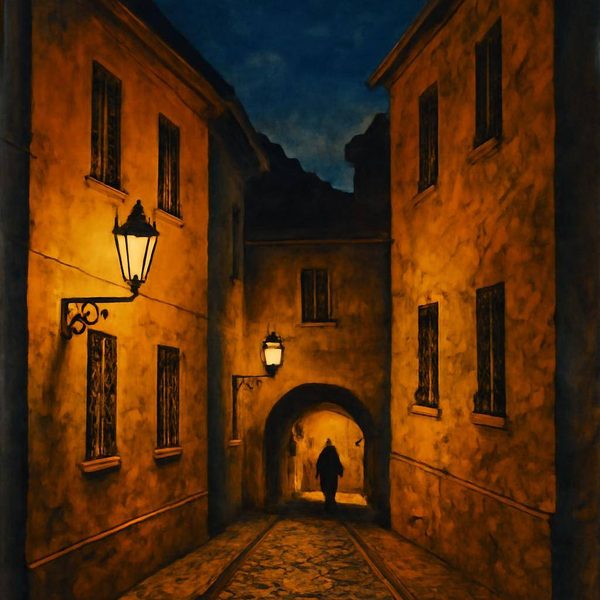
Skadarlija does not need much assistance from folklore. It is already Belgrade's stage-set street: cobbles underfoot, kafanas at the doorways, musicians moving between tables, and enough late-night confidence in the air to make almost any story sound plausible.
One modern Serbian urban-legend retelling attaches a ghostly carriage to the quarter. The story names a young woman called Jelena, a poor artist she loved, and a wealthy merchant father who refused the match. In the legend, Jelena is separated from the man she wants and later appears in Skadarlija in a spectral horse-drawn carriage, still searching the old street after dark.
That should be read as folklore, not as verified history. The useful thing about the story is not that it can be proven in an archive, but that it fits the street unusually well. Skadarlija's public identity has always depended on performance: music, drinking, argument, romance, regret, and the suspicion that everyone at the next table may be living a better story than you are.
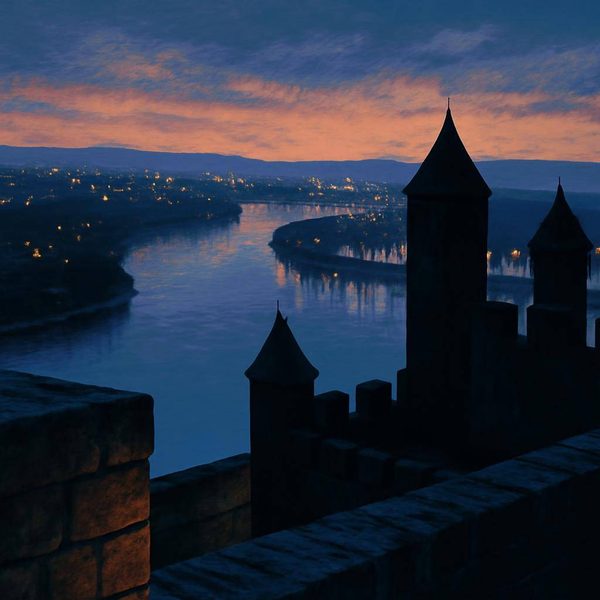
Belgrade has harder historical ghosts elsewhere. Kalemegdan carries siege and empire; Nemanjina Street still carries the visible wounds of 1999. Skadarlija's ghost is smaller and more theatrical. It belongs to a quarter where memory arrives with a violin line, a bill at the end of the night, and possibly a carriage that no one entirely admits to seeing.
The legend's weakness is also its charm. It is thin as evidence and strong as atmosphere. A city with Belgrade's record of being destroyed, rebuilt and argued over does not require supernatural proof to feel haunted; sometimes a cobbled street, a refused love story and a late table in a kafana are enough.
Frequently Asked Questions
Is the Ghostly Carriage of Skadarlija a verified historical event?
No. It is best treated as local folklore or a modern urban-legend retelling, not as a documented historical event. The page keeps that distinction explicit.
Why include the story on a Belgrade guide?
Because it captures a different part of Belgrade from the fortress, museums and war history: the bohemian quarter as a place of romance, music, exaggeration and late-night local storytelling.
This page presents a local legend as folklore. Named places are real; the supernatural claim is not treated as verified history.
Sources: List of The Scary Urban Legends of Serbia - Uncanny Perception ? Skadarlija - Wikipedia ? Culture in Belgrade - Wikipedia