The train pulled into Belgrade Main railway station on a grey October morning, the platform functional and unhurried in the way of stations that have seen too much history to make a fuss about arrivals. The city outside was already loud — Belgrade tends toward noise before most capitals have finished their coffee — and the walk toward the centre felt immediately like entering something dense and unresolved.
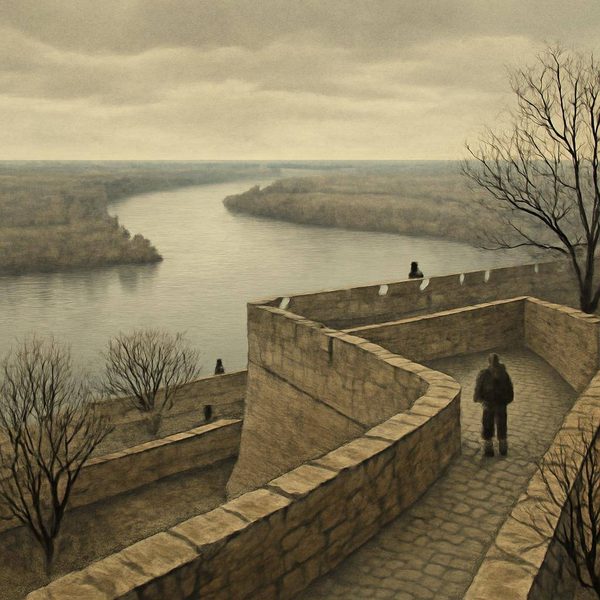
Kalemegdan was the obvious first stop. The fortress sits on a promontory above the Sava-Danube confluence and the approach through the park gives little away until suddenly the full weight of the view arrives: two enormous rivers, the point where they join, and the low Serbian plain spreading out to the horizon. The Romans chose this spot. So did the Byzantines, the Ottomans, the Habsburgs. Each left something — a wall section, a gate, a repurposed bastion — and the accumulated result is a site that refuses to belong to any single period. A family was eating sandwiches on a rampart wall. Joggers passed through the lower terraces. The park belongs to the city now, which is perhaps the most durable conquest of all.
By early afternoon the route led south, past Republic Square with its equestrian statue of Prince Michael at the centre, and then down Nemanjina Street. The damaged building was visible before any map confirmed it: a roofless government structure, windows blown out, the concrete facade scarred and open to the October sky. No sign. No fence. Just the building, standing in the middle of an otherwise functioning capital city, as it has stood since 1999. Belgrade keeps its evidence visible. Whether that is grief, defiance or simply the cost of demolition remaining unmet is not a question a visitor can answer — but the sight lodges in the mind in a way that a museum exhibit never quite manages.
Skadarlija in the early evening offered the correction that Belgrade always seems to provide to its own gravity. The cobblestoned street was full, the kafanas audible from outside, tamburica music moving through the door with the warm air. The city's appetite for staying up appeared unrelated to the weight of its past.
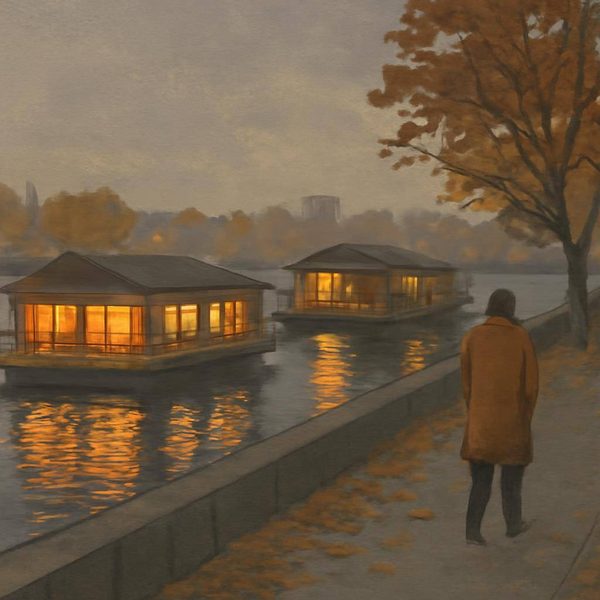
Later, down by the Sava, the splavovi — the floating clubs and bars moored along the bank — were already lit and filling. This is a Belgrade institution that has existed for decades and has no real equivalent in most European cities. In October the crowds were manageable, the chill coming off the water providing a reasonable excuse to stay near the bar. The two rivers were dark and wide and completely indifferent. The fortress was invisible from here, somewhere up in the October dark above the city, doing what it has always done: waiting for whatever comes next.
Frequently Asked Questions
What practical route does this Belgrade story follow?
It follows source-backed places and route anchors from the guide, giving orientation and atmosphere while leaving live transport and opening details to the linked sources.
Which live details should I check before using this Belgrade route?
Check current transport, access, opening and weather information from the linked official or operator sources before travelling.
What does this route help visitors understand about Belgrade?
It turns source-backed places, route anchors and local context into a readable visitor route, so the story supports the main guide rather than replacing practical planning.
This is a fictional visitor story generated from source-backed place facts, image evidence and visitor-feel signals. It is not a first-hand WorldTownGuide visit. Named places, routes and historical references are source-backed; the visitor character and narrative events are invented.
Sources: Belgrade Fortress - Wikipedia • Culture in Belgrade - Wikipedia • Remembering 1999: How the NATO Bombing Shaped Serbian National Identity - Modern Diplomacy • Belgrade Nightlife: Complete Guide to Clubs and Bars - Bosnian Voyager • Top 10 Things to do and see in Belgrade - Serbia Transfers