I arrived at Kalemegdan in October, in that narrow window after the summer crowds and before the first real cold. The fortress park was still busy — local families walking the ramparts, a couple of chess players in the open air, a school group being shepherded toward the Military Museum — but it had the ease of a place that belonged to the city rather than to tourism.
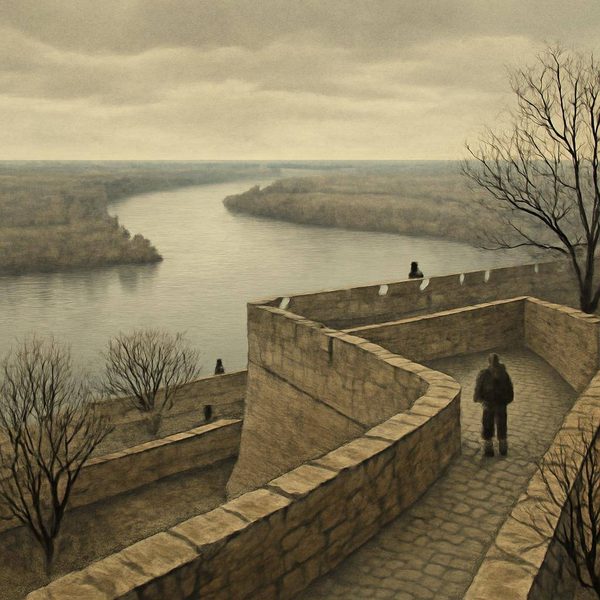
From the rampart wall, the view was the one that has oriented people here for centuries: the Sava coming in from the left, the Danube already wide and dark beyond it, and the exact line where the greener river water meets the broader flow. It is a clear boundary on a calm evening, visible as a colour change rather than a violent meeting. You can see why successive empires wanted to hold this bluff.
The Belgrade Fortress has been Roman, Byzantine, medieval Serbian, Ottoman and Austro-Hungarian in its time, and walking the walls you step across eras with no explanatory buffer. A tower here, a gate there, the Roman Well sunk improbably deep into the stone — each feature added or rebuilt by whoever held the ridge. The Military Museum, open inside the grounds, carries this history through to the twentieth century, including the period of the First World War when the city changed hands more than once in the opening campaigns.
I walked down from the fortress along Knez Mihailova Street, the pedestrian axis that runs from Kalemegdan to Republic Square. It is a direct route through the city's commercial and social core — bookshops, cafes, the odd street musician — and it deposits you at the square without difficulty. From there, Skadarlija is a short turn and a cobbled descent.
The street is short enough to walk end-to-end in a few minutes, but that is not the point. The kafanas here — traditional Serbian restaurant-taverns — have been drawing artists, musicians and writers since the late nineteenth century, when this corner of the city developed its bohemian reputation. In the evening, the restaurants fill and the live music starts: folk songs and popular Serbian standards played by small groups inside and out. The food is generous and rooted in grilled meat and seasonal produce. I ate more than was sensible and stayed longer than planned, which is probably what the street is designed to produce.
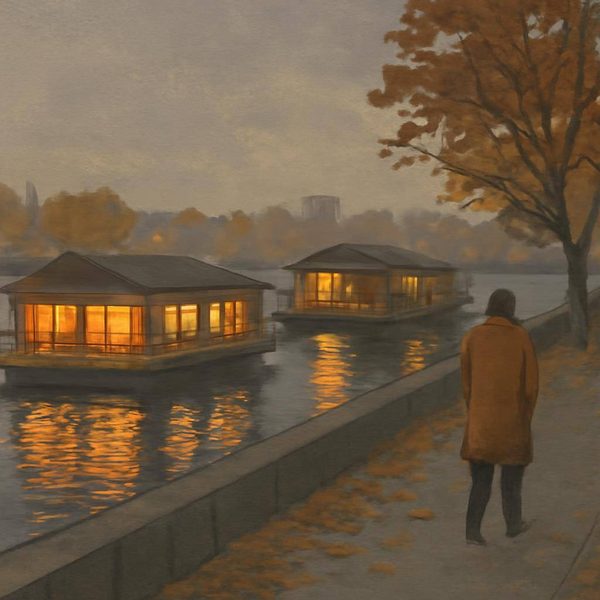
The walk to the Sava waterfront took perhaps twenty minutes from Skadarlija, passing through quieter residential streets before the riverbank came into view. The splavovi — the floating bars and restaurants moored along the Sava — were already lit and audible. These are structures unique to Belgrade: converted barges and purpose-built floating platforms that line the river bank and range from daytime cafes to full-scale nightclubs. In October the crowd was modest compared to what sources suggest in summer, but the scene was still animated, the music audible from a hundred metres, and the river reflections doing their usual work on the water below.
I stood for a while at the waterfront looking back toward the fortress bluff, invisible now in the dark but locatable by the lights along the ramparts. The confluence of the Sava and Danube was somewhere to my right, the two rivers flowing separately into the dark. It is a city that rewards this kind of evening triangulation — fortress, old quarter, river — because the three points are close enough to connect on foot in an evening, and different enough that they feel like three separate cities sharing one address.
Visitors should note that the splavovi are most active from spring through early autumn; the festival and outdoor cultural calendar, including Ethno Fest Belgrade, is similarly concentrated in the warmer months. October still works, but the evenings are cooler and some of the larger floating venues may have reduced hours. Public transport across the city has been free since January 2025, so getting back to a central area from the waterfront involves no fare negotiation — simply board the appropriate bus or tram and check current route information with GSP Belgrade before travelling.
Frequently Asked Questions
Does this evening route include Kalemegdan Fortress, and is it free to enter?
Yes — the walk starts at Kalemegdan, and the fortress park is free to enter. The Roman Well, the ramparts and the river-confluence view are all accessible without a ticket; the Military Museum within the grounds charges a separate entry fee.
Is Skadarlija a suitable stop for an evening meal, and what kind of food does it serve?
Skadarlija is well-suited to an evening meal; the kafanas on the street serve traditional Serbian food centred on grilled meats and seasonal dishes, with live folk music accompanying the meal in most of the restaurants along the strip.
Are the splavovi on the Sava open in October, and what time do they become active?
The splavovi generally remain open in October, though some larger venues may have reduced hours or programming compared to the summer peak. Evening activity typically builds after 9 pm; the scene is most animated in warmer months from spring through early autumn.
Is it easy to get back from the Sava waterfront to the city centre after an evening out?
Public transport in Belgrade has been free for all passengers since January 2025, covering buses, trams and trolleybuses. Routes connecting the Sava waterfront area to central Belgrade run into the evening; check current timetables with GSP Belgrade (bgprevoz.rs) before travelling.
This story-style guide is built from source-backed place facts, route evidence and real visitor/local sentiment patterns. Some narrative scenes may be composited or editorially shaped; factual place details should be treated as guide content, while practical details should be checked before travelling.
Sources: CITY PUBLIC TRANSPORT - Tourism Organisation of Belgrade • Culture in Belgrade - Wikipedia • 22 Things to Do in Belgrade (By a Local!) - Never Ending Footsteps • Ethno Fest Belgrade - European Association of Folklore Festivals