The jeepney dropped the visitor at the edge of Plaza Independencia on a warm October morning, the air already carrying the smell of incense from a nearby stall and the low hum of the port beyond the seawall. October is not Sinulog month — that is January, when hundreds of thousands fill these streets — so the plaza was busy but navigable, vendors moving slowly in the shade of the old walls.
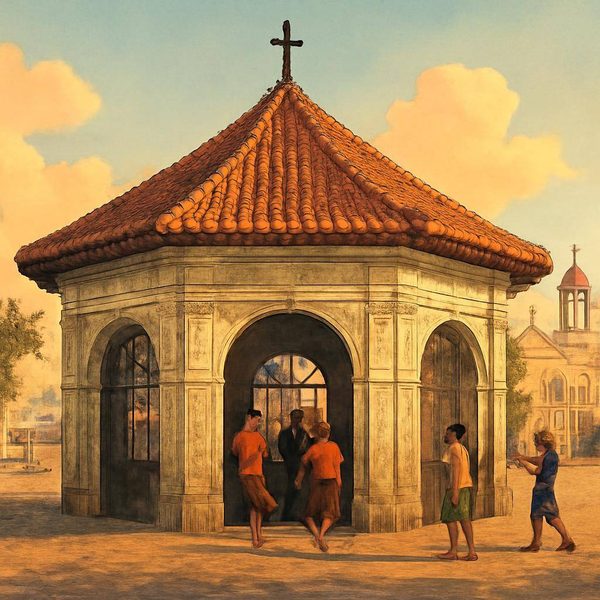
The first stop was the kiosk chapel that houses Magellan's Cross, a few minutes' walk from the plaza. The building is small enough that visitors sometimes walk past it, looking for something larger. Inside, a painted ceiling shows the scene from 1521: Magellan, Rajah Humabon, his wife Juana, the gathered court. The cross itself — or the tindalo wood shell that protects it — stands at the centre, worn smooth at the edges by five centuries of contact. A handful of people knelt quietly. The visitor read the painted panels and thought about what it meant for an island ruler to make this particular political calculation in 1521, with a Spanish fleet in the harbour and an unknown world pressing in from every direction.
From the kiosk chapel, Osmeña Boulevard runs a short distance to the Basilica Minore del Santo Niño. The Santo Niño image housed here — the Child Jesus given to Queen Juana at that 1521 baptism, lost in the years that followed, then rediscovered in 1565 when Legazpi's expedition arrived — is the oldest Christian relic in the Philippines. The basilica around it has been rebuilt and extended many times. What remains constant is the image itself, small and darkened behind glass, and the stream of people who come to see it every day of the year, not only in January.
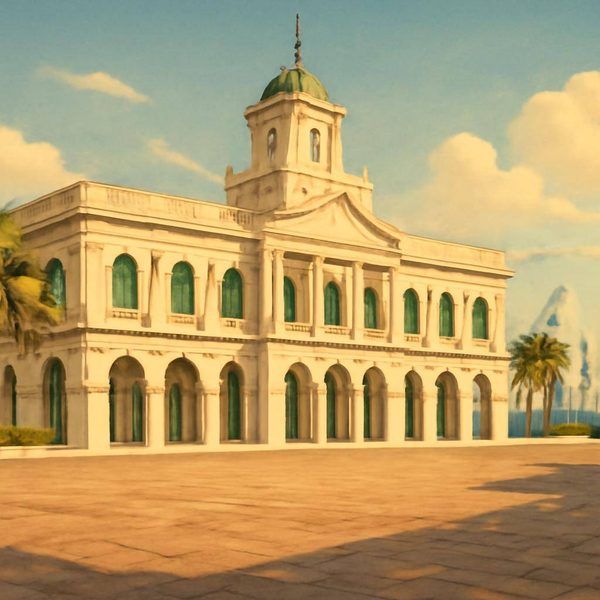
The visitor spent an hour in the basilica and then walked north along the waterfront to the Aduana. The old customs house is a different kind of history: not devotional but commercial, the machinery of colonial trade made into stone and wrought iron. The National Museum of the Philippines has restored the building and now holds regional collections here — archaeology, natural history, cultural objects — in rooms that still carry the proportions of a working government building. The restoration is careful and the collections are serious. A display case held ceramics recovered from pre-colonial trading sites, older than the cross, older than the baptism, evidence of a Cebu that was already deep in regional commerce long before 1521.
Outside, the port traffic moved beyond the seawall. Ferries were coming and going to Mindanao, to Manila, to the smaller Visayan islands. The visitor had arrived on one of those routes, stepping off the gangway into a city that has been doing exactly this — receiving people, processing goods, absorbing new arrivals — for longer than any other city in the Philippines.
By mid-afternoon the jeepney back toward Lahug was full. The driver took a route through the older downtown streets, past the shophouses and the mid-century civic buildings and the occasional glass-fronted tower going up between them. The city was layering itself again, as it always had. In the distance, the CCLEX bridge traced its arc across the strait toward Mactan island, where the airport waited for anyone who needed to leave.
The visitor made a note to come back in January, to see what Sinulog does to these same streets. But October was a good time to walk them slowly, and to understand what the city was before the crowds arrived.
Frequently Asked Questions
What practical route does this Cebu City story follow?
It follows source-backed places and route anchors from the guide, giving orientation and atmosphere while leaving live transport and opening details to the linked sources.
Which live details should I check before using this Cebu City route?
Check current transport, access, opening and weather information from the linked official or operator sources before travelling.
What does this route help visitors understand about Cebu City?
It turns source-backed places, route anchors and local context into a readable visitor route, so the story supports the main guide rather than replacing practical planning.
This is a fictional visitor story generated from source-backed place facts, image evidence and visitor-feel signals. It is not a first-hand WorldTownGuide visit. Named places, routes and historical references are source-backed; the visitor character and narrative events are invented.
Sources: Built Tradition of the Aduana Building in Cebu City - National Museum • National Museum of the Philippines - Cebu Branch • Basilica del Santo Niño - Wikipedia • Festivals of Cebu - Wikipedia • Cebu City - Wikipedia • Magellan's Cross - Basilica Minore del Sto. Niño de Cebu