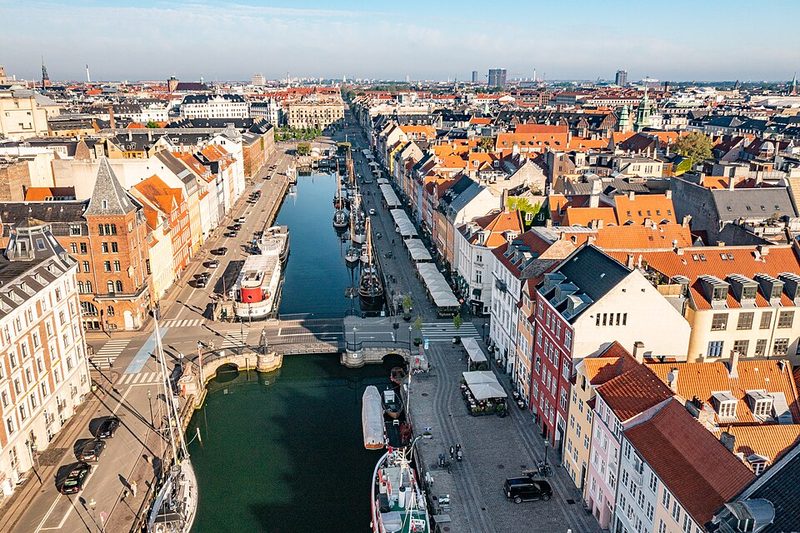
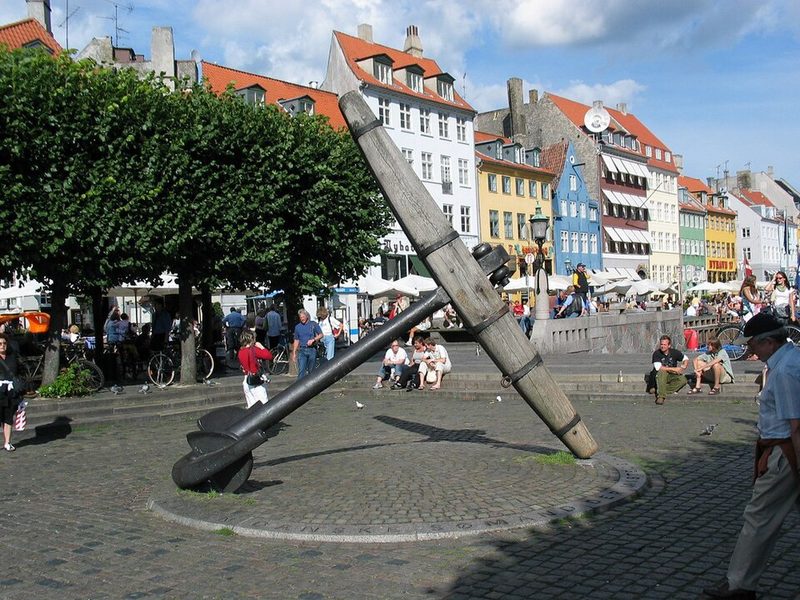
Nyhavn—meaning "New Harbour" in Danish—is a 17th-century waterfront district that has become one of Copenhagen's most recognizable images. The canal, lined with brightly coloured 17th and early 18th-century townhouses, runs from Kongens Nytorv square to the Inner Harbour just south of the Royal Playhouse. What began as a commercial port where ships unloaded goods has transformed into a district of restaurants, cafés, and bars occupying the historic harbour houses, with wooden ships moored along the quayside adding to the maritime atmosphere.
Hans Christian Andersen's Nyhavn
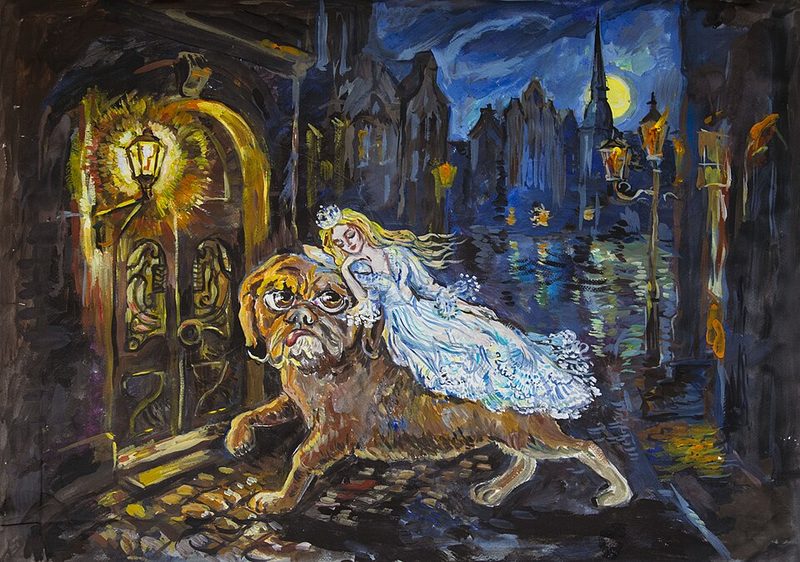
The author Hans Christian Andersen lived in three different houses in Nyhavn across his life, and the district figures prominently in his Copenhagen story. The building at Nyhavn 20, marked by a plaque, housed Andersen during a particularly productive period when he wrote "The Tinderbox" and "The Princess and the Pea." He also resided at numbers 67 and 18 at different times. The red house at number 20 remains one of the most photographed buildings along the canal, connecting the fairy tale writer to the physical fabric of the neighbourhood.
Canal Tours and Maritime Activity
Several companies operate canal tours departing from Nyhavn, offering access to Copenhagen's waterways and harbour-side landmarks from the water. These tours typically pass the Little Mermaid statue, Amalienborg Palace (the royal residence), and enter Christianshavn's canal to view Our Saviour's Church with its distinctive external spiral staircase. Stromma, one of the main operators, names its canal boats after characters from Hans Christian Andersen's fairy tales, maintaining the literary connection. Netto-BÃ¥dene offers another canal tour option from the same area.
Current Character and Visiting
Today's Nyhavn balances its role as a tourist destination with its function as a working part of the city. The cobblestone streets, historical facades, and waterfront setting create what many consider Copenhagen's cosiest district for an outdoor meal or walk along the water. The concentration of restaurants and cafés means Nyhavn can feel crowded during peak visiting hours, particularly in summer. December brings a Christmas market to the harbour area, adding seasonal stalls and Danish holiday food to the usual offerings.
The district connects to Copenhagen's broader walking and cycling network, making it easily reachable from the city centre. Visitors often combine Nyhavn with nearby Amalienborg Palace, the Marble Church, or as a starting point for harbour activities. The waterfront promenade allows for strolling the length of the canal, with views of the moored wooden boats and the colourful building facades that define Nyhavn's visual identity.
Sources: Visit Copenhagen - Nyhavn • Wikipedia - Nyhavn • Stromma - Guide to Hans Christian Andersen's Copenhagen • Havnerundfart Canal Tours