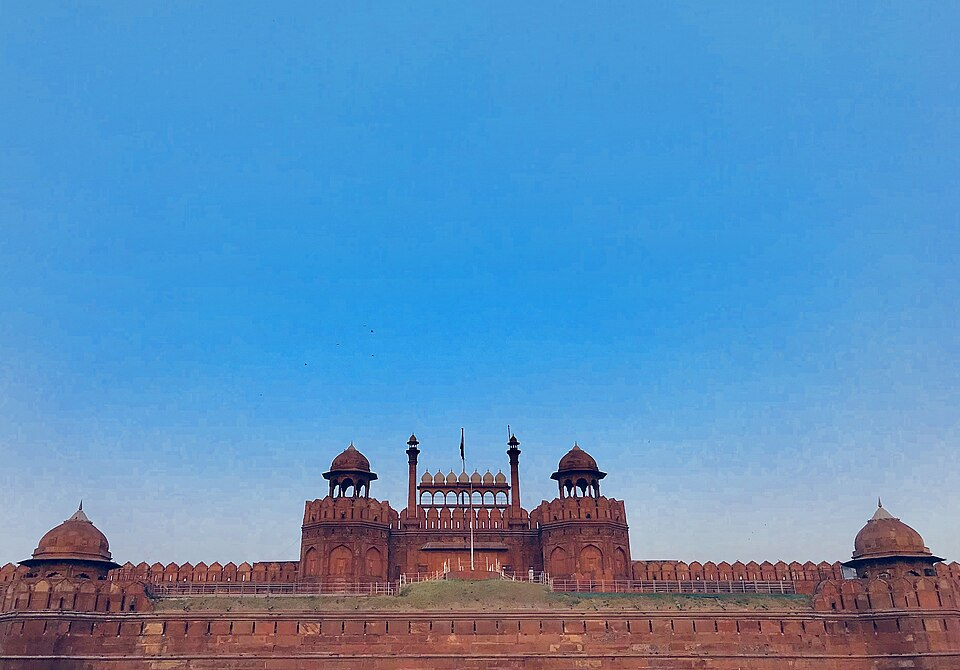
Delhi at a Glance
Delhi is one of the oldest continuously inhabited cities on the Indian subcontinent and the country's capital region. The older walled core — historically Shahjahanabad, now called Old Delhi — contains the Red Fort, Chandni Chowk and a dense commercial and residential fabric that has operated without interruption since the seventeenth century. The broader National Capital Territory sprawls across a flat Yamuna river plain at roughly 227 metres above sea level, and the administrative boundary for this part of Delhi records a population of over eleven million. The Delhi Metro connects most major zones; New Delhi Railroad Station is one of the busiest rail hubs in India; and Indira Gandhi International Airport serves both international and domestic routes. Visitors who engage seriously with the history, the street food and the markets tend to find Delhi rewarding; visitors who expect a relaxed or quiet environment should prepare for a city that is dense, loud and relentlessly active.
In This Guide
Read the guide as a story
Colours and Centuries: A Delhi Festival Story
First Impressions and Setting
Old Delhi hits you before you even step off the train. The smell of spiced meat and marigolds drifts through the air at New Delhi Railroad Station, the noise of autorickshaws and cycle rickshaws rises in overlapping waves, and somewhere ahead the red sandstone battlements of a Mughal fort catch the afternoon light. This is a city that does not ease you in gently.
Delhi sits on the flat, ancient floodplain of the Yamuna river, and its skyline is an unplanned collision of centuries. Crumbling Mughal-era gateways stand a few metres from mobile phone shops. Narrow lanes laid out for bullock carts now carry motorcycles three abreast. The city's older core, historically known as Shahjahanabad and now referred to colloquially as Old Delhi, gives the area much of its distinct character, but the broader urban fabric of modern Delhi presses in from every direction.
History and Identity
The formal story of Old Delhi begins in 1648, when the Mughal emperor Shah Jahan moved the imperial capital from Agra and established a new walled city he named Shahjahanabad. The fortified city was completed that same year and remained the seat of Mughal India for over two centuries, until 1857 when the British Empire assumed paramount power. After India's independence, the older walled settlement became known informally as Old Delhi, distinguished from the expanding modern city around it.
Salimgarh Fort, whose bastioned walls still stand on an island in the Yamuna, predates even Shah Jahan's city and represents an earlier layer of the same historical record. The surviving stretches of the old city wall — including sections visible near Darya Ganj — are protected as Archaeological Survey of India monuments. The wall's condition is a subject of ongoing attention: reporting from the area has noted that significant sections are at risk of deterioration, reflecting the challenges of preserving a working urban heritage site at this scale.
What to See
The Red Fort and Chandni Chowk
The Red Fort, built by Shah Jahan as the centrepiece of Shahjahanabad, is among the most recognisable structures in India and is classified as a UNESCO World Heritage Site. Its massive red sandstone walls rise at the eastern end of Chandni Chowk, as if the market grew up to meet them — which, historically, it did. Chandni Chowk itself, running westward from the fort, is not simply a shopping street but a condensed record of the city's commercial history: wholesale traders, textile dealers, spice merchants and street food vendors operate alongside each other in a system that has evolved continuously since the seventeenth century.
Salimgarh Fort and the City Wall
Salimgarh Fort, on an island in the Yamuna adjacent to the Red Fort, predates the Mughal city and carries a layered history of military use and later confinement. Together with the Red Fort, it forms a UNESCO World Heritage complex. The surviving sections of Shahjahanabad's city wall near Darya Ganj are protected monuments, though their current condition reflects the pressures of a densely built urban environment. The Darya Ganj neighbourhood itself retains a quieter residential and commercial character — historically associated with booksellers and older residential fabric — and offers a different pace from Chandni Chowk.
The National Museum
The National Museum, located in the broader New Delhi area rather than the old walled city, is the country's principal repository of South Asian art, archaeology and decorative arts, with collections spanning several thousand years of Indian history. It is a frequently cited destination for visitors with an interest in art, archaeology or the deeper historical context behind what they see elsewhere in Delhi. Visitors should confirm current opening arrangements directly with the museum before travelling, as these details are subject to change.
Ramlila Ground
Ramlila Ground, the large open space close to Old Delhi, has historically served as a gathering point for public events, celebrations and large-scale civic gatherings. Its role reflects how urban open space functions in a densely built neighbourhood — it has hosted performances of the Ramlila, the dramatic retelling of the Ramayana epic, as well as political and cultural events of national significance.
Getting There and Around
By Rail
New Delhi Railroad Station sits approximately 1.5 kilometres from the heart of Chandni Chowk and is one of the busiest rail hubs in India, connecting Delhi to destinations across the country. Delhi Junction railway station (also known as Old Delhi station) is a separate station closer to the old walled city and serves many long-distance routes. Visitors arriving by train should confirm which station their service uses before travelling.
By Air
Indira Gandhi International Airport serves international and domestic arrivals and is connected to the city centre by the Delhi Metro's Airport Express line, which provides a direct and predictable transfer option.
The Delhi Metro
The Delhi Metro network is the practical backbone of getting around the wider city. Operated by the Delhi Metro Rail Corporation (DMRC), it reaches most major destinations and is the most reliable way to manage the distances involved. Key interchange stations connect the Yellow and Blue lines, making much of Delhi — including Gurugram and Noida — accessible without a car. The Chandni Chowk metro station provides direct access to the old city. Route maps, fare calculators and station information are available through the DMRC official website at delhimetrorail.com.
Buses
The Delhi Transport Corporation (DTC) has operated bus routes in the city since 1948 and publishes current timetables on its official website. Route RL-77 runs from New Delhi Railway Station Gate 2 through the central area, and 37 bus services are listed as stopping at New Delhi Railway Station Gate 2. The DIMTS (Delhi Integrated Multi Modal Transit System) operates additional routes across the city. Current DTC timetables, including night bus services, are published at dtc.delhi.gov.in; visitors should use these official sources for current schedules rather than relying on third-party aggregators.
Within Old Delhi
Within Old Delhi, cycle rickshaws remain the most practical option for short journeys through the narrower lanes, as motorised vehicles cannot always pass. Autorickshaws, e-rickshaws and app-based taxis are widely available for longer distances. Access details and fare information should be confirmed locally, as these change.
When to Visit
Delhi's climate produces extreme heat in the summer months, a monsoon season that can affect outdoor plans and transport, and cool winters that occasionally bring cold conditions. The period between October and early March is generally considered more comfortable for outdoor exploration. Peak visitor periods bring significant crowds, particularly at major monuments — the Red Fort and Chandni Chowk can be extremely busy during festival seasons and public holidays. Visiting either early in the day or outside peak festival periods reduces congestion. The monsoon, roughly June to September, brings rain that can affect lane conditions in Old Delhi; the heat from April through June can make extended outdoor walking uncomfortable. Seasonal events such as Diwali and Holi draw large numbers of people to Delhi, and the city's public spaces take on a markedly different character during these periods.
Who Will Enjoy Delhi
Delhi suits visitors who want to engage with history, markets and street food at genuine depth. The layering of Mughal, colonial and modern urban fabric is not curated or managed for tourism — it is simply how the city exists — which makes it more interesting for culturally curious visitors and more challenging for those who prefer an easier pace. Families can find plenty to do, particularly around the major monuments and the National Museum, though the crowds and physical demands of Old Delhi's lanes require preparation. Visitors travelling without a car are well served by the metro and bus network. Those who dislike crowds should plan carefully around peak seasons and festival dates. The city is not a quiet or restful destination; it is, however, a genuinely distinctive one.
Practical Notes
Delhi falls within the Indian Standard Time zone (UTC+5:30) and uses the Indian rupee (INR). The UK Foreign, Commonwealth and Development Office issues regional travel advice for India; its restrictions apply specifically to areas within 10 kilometres of the India-Pakistan border, to the Union Territory of Jammu and Kashmir, and to Manipur state. Those restrictions do not apply to Delhi. Visitors should consult the official FCDO advice at gov.uk/foreign-travel-advice/india and the US State Department advisory at travel.state.gov before travel, as conditions across the broader region can shift.
Frequently Asked Questions
Is Delhi worth visiting?
Delhi is worth visiting for anyone with a serious interest in South Asian history, Mughal architecture, markets and street food culture. The Red Fort and Chandni Chowk alone represent centuries of continuous urban life, and the National Museum provides the deepest collection of South Asian art and archaeology in the country. Visitors who want a relaxed or low-stimulus trip will find the city demanding, but those who engage with what is actually here tend to find it genuinely rewarding.
Where to stay in Delhi?
Staying close to a Delhi Metro station significantly reduces the practical difficulty of getting around. The New Delhi and Connaught Place area in central New Delhi is well connected and gives access to both Old Delhi (via the Yellow Line to Chandni Chowk station) and the airport (via the Airport Express). Old Delhi itself has accommodation options for visitors who want immediate proximity to the historic core, though the area is dense and noisy. The broader New Delhi area offers a wider range of options at different price points, but specific recommendations should be verified through current booking sources before travel.
How many days do you need in Delhi?
Most visitors find that three to four days allows enough time to cover Old Delhi's major sites — the Red Fort, Chandni Chowk, Salimgarh Fort and Darya Ganj — alongside the National Museum and orientation around New Delhi. Delhi also functions well as a base for onward travel by rail or air, so some visitors spend additional days either side of trips to Agra, Rajasthan or other destinations. A single day is possible for a focused Old Delhi visit but leaves little room for the pace the city genuinely rewards.
Is Delhi safe for visitors?
Current UK FCDO and US State Department advice does not advise against travel to Delhi. Regional restrictions in India apply to specific areas including within 10 kilometres of the India-Pakistan border, the Union Territory of Jammu and Kashmir, and Manipur state, but not to Delhi. Visitors should check the latest official guidance at gov.uk/foreign-travel-advice/india and travel.state.gov before departure, as conditions can shift.
Where can I check current buses, trains or metro services from Delhi?
For Delhi Metro routes, fares and station information, the official DMRC site at delhimetrorail.com is the primary source. For DTC bus routes and current timetables, including night services, use dtc.delhi.gov.in/dtc/services. For national rail connections, the Indian Railways booking and information system is the appropriate resource. Third-party apps and route planners can supplement these but should not be treated as authoritative for current schedules or fares.
What was Old Delhi originally called?
The walled city established by the Mughal emperor Shah Jahan in 1648 was officially named Shahjahanabad. It became known colloquially as Old Delhi after New Delhi was inaugurated as India's capital following independence, to distinguish the historic walled settlement from the expanding modern city around it.