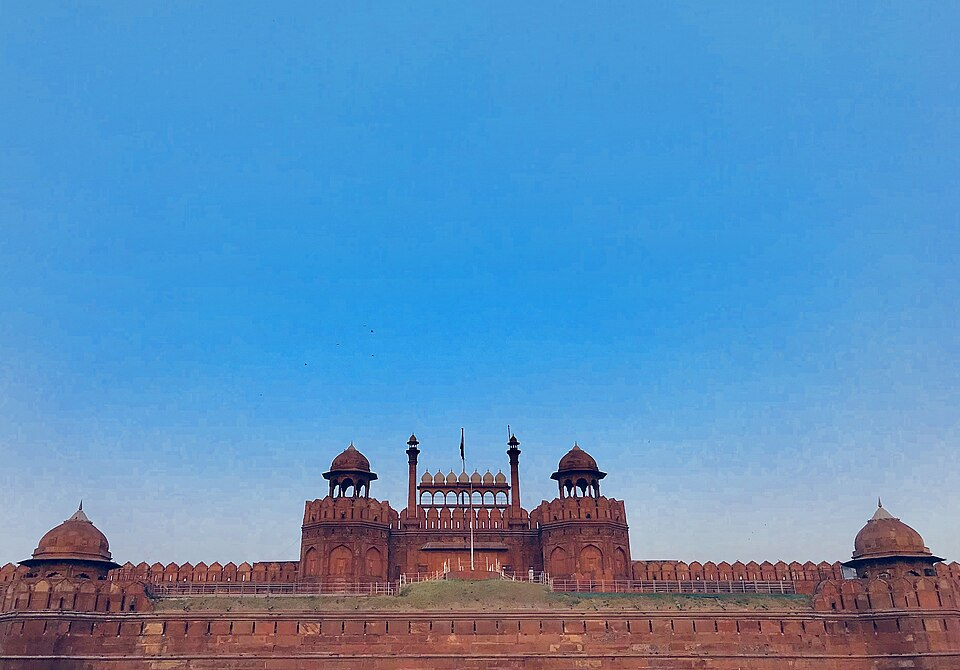
Chandni Chowk is the commercial heart of Old Delhi, a market street and surrounding neighbourhood that has operated continuously since the mid-17th century. Built as the principal thoroughfare of Shahjahanabad when Shah Jahan established his walled capital in 1648, the street originally featured a canal running down its centre, reflecting moonlight—hence the name, which translates to "Moonlight Square." The canal was filled in during the British period, but the street retains its function as one of Asia's busiest wholesale and retail markets.
Layout and Geography
Chandni Chowk runs westward from the Red Fort to the Fatehpuri Masjid, stretching approximately 1.5 kilometres through the walled city. The main artery connects to a network of smaller lanes—galis—each historically specialising in particular trades. Dariba Kalan focuses on jewellery and silver; Kinari Bazaar sells wedding trimmings, decorations, and textiles; Ballimaran trades in shoes and paper products. Paranthe Wali Gali, a narrow lane near the Gurdwara Sis Ganj, has been selling stuffed fried flatbreads since the 1870s. The spatial organisation reflects guild and community settlement patterns that predate modern zoning.
The neighbourhood sits within what locals still call Shahjahanabad, bounded by remnants of the city wall and gates. Vehicles were restricted from the main Chandni Chowk thoroughfare in 2018, and it was redeveloped as a pedestrian street in 2020–2021, easing movement for the thousands who visit daily.
Commercial Character
Chandni Chowk functions as both a wholesale hub and a retail destination. Shops open early, often by 9 or 10 a.m., and trading continues into the evening, though many businesses close on Sundays. The market handles textiles, electronics, spices, dry fruits, books, stationery, jewelry, and religious items. Prices are generally negotiable, and the atmosphere is densely commercial—crowded, loud, and transaction-focused.
Wholesale activity dominates certain lanes. Khari Baoli, at the western end near Fatehpuri Masjid, is Asia's largest spice market, operating since the 1840s. The scale is industrial: sacks of turmeric, chilli, cumin, and cardamom are traded by weight in tonnes. The air carries pungent aromas, and the visual density of goods stacked floor to ceiling can be overwhelming for casual visitors.
Religious and Civic Landmarks
Religious buildings punctuate the market street. The Jain temple of Shri Digambar Jain Lal Mandir, dating to 1656, stands opposite the Red Fort and operates a bird hospital. The Gurdwara Sis Ganj Sahib marks the site where the ninth Sikh Guru, Guru Tegh Bahadur, was executed in 1675 under Mughal emperor Aurangzeb. The Fatehpuri Masjid, built in 1650 by one of Shah Jahan's wives, anchors the western end. These structures serve active congregations and remain integral to the neighbourhood's religious life.
The Central Baptist Church, dating to 1814, represents the area's colonial-era additions. The Town Hall building, constructed in the 1860s, once served as a municipal headquarters and now houses cultural offices.
Food and Street Cuisine
Chandni Chowk is known for Delhi's street food traditions. Paranthe Wali Gali's shops fry stuffed parathas—flatbreads filled with potato, cauliflower, paneer, or dried fruit—in ghee, served with pickle and yoghurt. Businesses here operate within small inherited shopfronts, some in the same families for generations.
Karim's, near Jama Masjid at the southern edge of the neighbourhood, traces its establishment to 1913 and serves Mughlai dishes: mutton korma, nihari, and kebabs cooked in tandoors. Ghantewala, a sweet shop founded in 1790, closed in 2015 after 225 years of operation, a loss noted as symbolic of changing retail patterns. Other longstanding establishments include Shree Balaji Chaat Bhandar and Natraj Dahi Bhalle, serving chaat—spiced snack combinations of fried dough, lentils, yoghurt, and tamarind chutney.
Visitor Practicalities
The nearest Delhi Metro station is Chandni Chowk on the Yellow Line. Exiting the station, the Red Fort is visible to the east, and the market lanes spread west and south. The pedestrianised main street eases walking, but side lanes remain congested with handcarts, motorbikes, and delivery vehicles. Visitors should expect narrow passages, uneven surfaces, and limited signage in English.
The area is best visited in the morning or late afternoon; midday heat in summer months (April through June) can be intense, and the density of bodies and activity makes ventilation poor. Mondays tend to be quieter, as some shops observe weekly closures. Carrying cash is advisable, as many vendors do not accept cards. Pickpocketing and bag-snatching can occur in crowded lanes; keeping valuables secure and maintaining awareness is necessary.
Architectural and Conservation Context
Much of Chandni Chowk's built fabric dates to the late 19th and early 20th centuries, with some structures retaining Mughal-era foundations. Buildings are typically three to five storeys, with shops on the ground floor and residential or storage space above. Architectural details—carved wooden balconies, jharokhas (overhanging enclosed balconies), and decorative plasterwork—survive in varying states of repair.
Conservation efforts have been limited and uneven. The 2020–2021 pedestrianisation project aimed to restore historical character by removing overhead wiring, resurfacing the street, and installing period-style streetlights. Critics noted that some heritage façades were altered or obscured during redevelopment. The area is not a museum; it remains a working commercial district, and preservation must balance with economic function.
Sources: Chandni Chowk - Wikipedia • Shop 'til You Drop in the Heart of Delhi- Chandni Chowk | Incredible India • :: Old Delhi Shopping :: - Delhi Tourism