Merchant City occupies the grid of streets between George Square and the Trongate in central Glasgow. This district represents the city's commercial past, with architecture dating to the 18th and 19th centuries when Glasgow's merchant class accumulated wealth through Atlantic trade and manufacturing. The area has been substantially regenerated since the 1980s and now functions as a mixed-use quarter with offices, flats, retail shops, restaurants, bars, and cultural venues.
Boundaries and Layout
Merchant City is roughly defined by George Street to the north, High Street to the east, Trongate to the south, and Queen Street to the west. The district commences at George Square, Glasgow's principal civic square, and extends eastward. Ingram Street serves as the main spine through the area. The eastern fringe contains part of Glasgow's original medieval street plan, which stretches northward toward neighbouring Townhead.
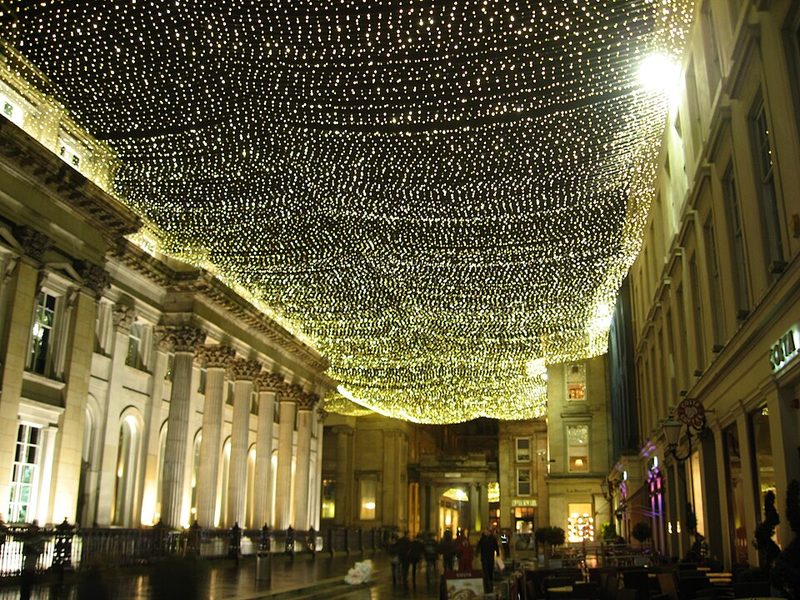
The layout follows a grid system that makes navigation straightforward. Candleriggs, Wilson Street, and other streets are aligned in a pattern that reflects planned urban development from the Georgian and Victorian periods. The architecture is predominantly mid-Victorian, with stone facades, ornamental details, and buildings scaled for commercial and warehouse use.
Historical Context
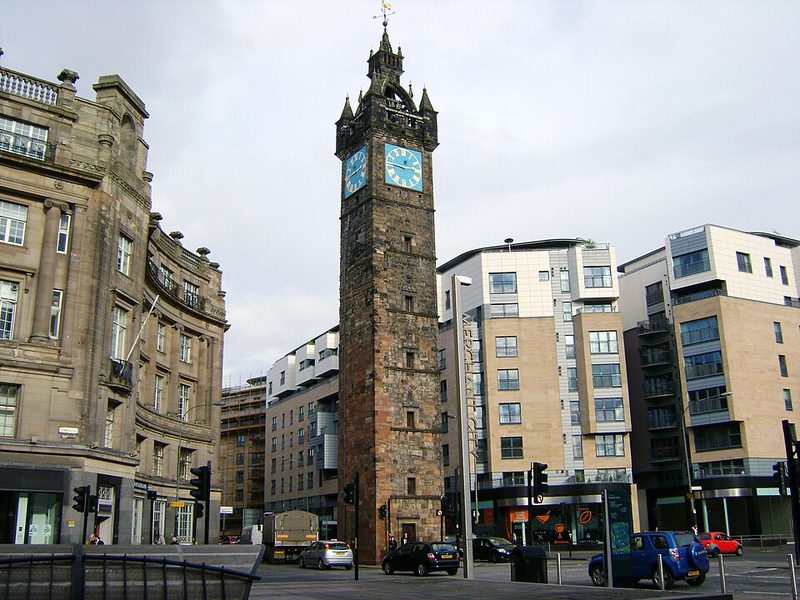
The district's name reflects its origins. Glasgow's merchant class developed this area during the 18th and 19th centuries, constructing warehouses, offices, and markets to support trade. The Trongate, which forms the southern boundary, was historically a main thoroughfare in medieval Glasgow. Glasgow Cross, at the junction of High Street, Gallowgate, Trongate, and Saltmarket, marks a point of continuity with the city's older urban fabric.
By the mid-20th century, Merchant City had declined as industrial and commercial activity shifted. Regeneration efforts beginning in the 1980s repurposed historic buildings for residential, retail, and hospitality uses. This transformation positioned Merchant City as a cultural quarter, a designation reinforced by the area's galleries, independent shops, and event hosting.
The Italian Centre and Shopping
The Italian Centre sits at the heart of Merchant City, a courtyard development filled with designer shops and places to eat. The centre reflects the district's upmarket repositioning and attracts visitors interested in fashion and dining. Retail in Merchant City ranges from boutique stores to design-focused outlets, contrasting with the high-street chains concentrated on Buchanan Street in the adjacent city centre.
Dining, Bars, and Nightlife
Merchant City has a high concentration of restaurants and bars. The area includes award-winning dining establishments, independent eateries, and LGBTQ+ venues. The density of hospitality businesses makes Merchant City a focus for evening activity, and the district's wide pavements and pedestrian-friendly streets support outdoor seating in warmer months.
Merchant Square, a historic courtyard space, has retained architectural character from the merchant era and now hosts bars, restaurants, and leisure venues. The square is a venue for some of Glasgow's annual events, including the city's Hogmanay party.
Candleriggs and Ongoing Development
Candleriggs is a street in the centre of Merchant City that has undergone recent development. New construction has created a mixed-use community with homes, offices, hotels, and local amenities on a site that lay derelict for over a decade. The development brings together residential and commercial uses in a pattern intended to support long-term activity and vitality.
Festivals and Events
Merchant City hosts the annual Merchant City Festival, a multi-day event featuring performances, art, and family activities. The district's layout, with its squares and wide streets, accommodates outdoor festivals and markets. The area's identity as a cultural quarter is reinforced by these events, which draw visitors from across Glasgow and beyond.
Access and Practical Notes
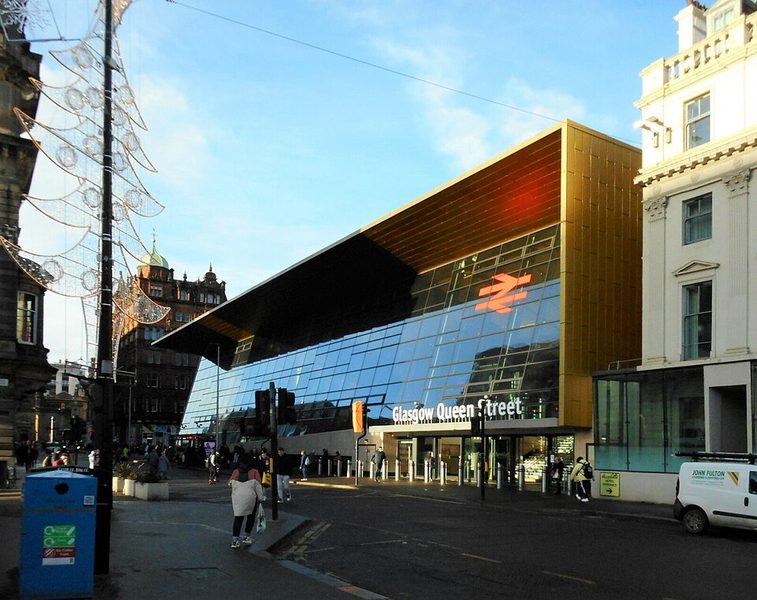
Merchant City is immediately adjacent to Glasgow's main shopping streets and is within walking distance of Central Station and Queen Street Station. The district is compact and walkable, though cobblestones and uneven surfaces are present in some areas. Visitors can approach from George Square or enter from the Trongate, depending on their starting point in the city centre.
The area rewards walking without a fixed itinerary. The architectural details—cornices, ironwork, stone carving—are best appreciated at street level, and the district's mix of uses means that the character shifts from block to block. Merchant City is busier in the evenings and at weekends, when bars and restaurants draw crowds, but during weekday afternoons the streets are quieter and easier to navigate for those interested in architecture or photography.
Sources: Merchant City - Wikipedia • Merchant City Glasgow - Visit Glasgow • History - Merchant Square • Merchant City Glasgow Guide