Glasgow's West End is a district of Victorian tenements, tree-lined streets, and cultural institutions clustered around the University of Glasgow and Kelvingrove Park. The area centres on Byres Road, a main thoroughfare lined with shops, cafés, and restaurants, and extends to include the Botanic Gardens, Ashton Lane, and the Kelvingrove Art Gallery and Museum. The West End has a distinct character shaped by its academic population, residential density, and concentration of venues for eating, drinking, and cultural activity.
Kelvingrove Art Gallery and Museum
Kelvingrove Art Gallery and Museum sits at the edge of Kelvingrove Park in a red sandstone building that opened in 1901. The museum holds 22 galleries covering art, natural history, arms and armour, and Scottish history. Collections include paintings by the Glasgow Boys and Scottish Colourists, alongside international works. Notable exhibits include Salvador DalÃ's Christ of St John of the Cross, Rembrandt's Man in Armour, Titian's Christ and the Adulteress, and Sandro Botticelli's The Annunciation. The museum also displays Sir Roger, a preserved Asian elephant, and the Avant armour.
Kelvingrove features interactive exhibits, temporary exhibition spaces, a study centre, and a library. Some temporary exhibitions may charge an entry fee, but the permanent collections are free to access. The museum operates daily: Monday to Thursday and Saturday from 10am to 5pm, Friday and Sunday from 11am to 5pm. Cafés and shops are located within the building.
The University of Glasgow Area
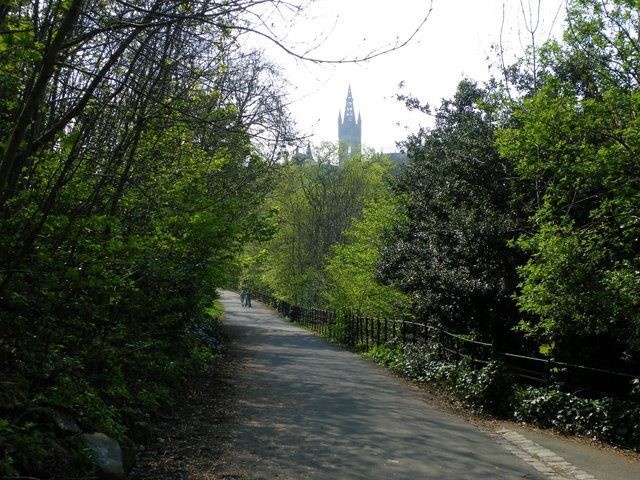
The University of Glasgow, founded in 1451, occupies a prominent site on Gilmorehill. The main building, a Gothic Revival structure designed by Sir George Gilbert Scott, is visible from multiple points in the West End. The campus includes the Hunterian Museum and Art Gallery, which holds collections related to natural history, archaeology, and art. The Mackintosh House, a careful reconstruction of Charles Rennie Mackintosh and Margaret Macdonald Mackintosh's Glasgow home, is part of the Hunterian and displays original furniture and interiors.
The university's presence shapes the West End's demographic and cultural character. The student population supports a concentration of independent shops, second-hand bookshops, and affordable eating options alongside more established venues.
Byres Road and Ashton Lane
Byres Road runs through the heart of the West End, connecting Hillhead subway station to the Botanic Gardens at its northern end. The street functions as the district's main commercial spine, with a mix of chain stores, independent retailers, cafés, and bars. The Lanes, a network of smaller streets and alleyways, branch off from Byres Road and offer additional venues and shops.
Ashton Lane is a cobbled pedestrian lane connected to Byres Road by a short linking lane beside Hillhead subway station. The lane, dating to the Victorian era and approximately 160 years old, is noted for its bars, restaurants, and the Grosvenor Cinema, a licensed cinema operating in a converted church building. Ashton Lane's character is defined by its small scale, pedestrian access, and concentration of hospitality venues. The area attracts both residents and visitors, particularly in the evenings and at weekends.
Botanic Gardens
The Glasgow Botanic Gardens sit at the top of Byres Road and provide a green space for walking and relaxation. The gardens include glasshouses, plant collections, and open lawns. The site is open to the public and functions as a neighbourhood amenity and visitor destination.
Transport and Access
The West End is served by Hillhead subway station on the Glasgow Subway, which provides a direct connection to the city centre and other districts. Byres Road and surrounding streets are accessible by bus. The area is walkable, though distances between the Botanic Gardens, Kelvingrove, and the university require time to cover on foot. Cycling is common, and the terrain is relatively flat along Byres Road, though some surrounding streets are hilly.
Practical Notes
The West End rewards extended exploration. Visitors planning to see Kelvingrove should allow at least two to three hours for the museum alone. Combining Kelvingrove with a walk through the park, a visit to the university, and time on Byres Road or Ashton Lane makes for a full day. The district has a higher concentration of independent venues than central Glasgow, and the residential character creates a different pace and atmosphere from the main shopping streets in the city centre.
Sources: Kelvingrove Art Gallery and Museum - Glasgow Life • Kelvingrove Art Gallery and Museum - Wikipedia • Ashton Lane - Wikipedia • Byres Road: Glasgow West End