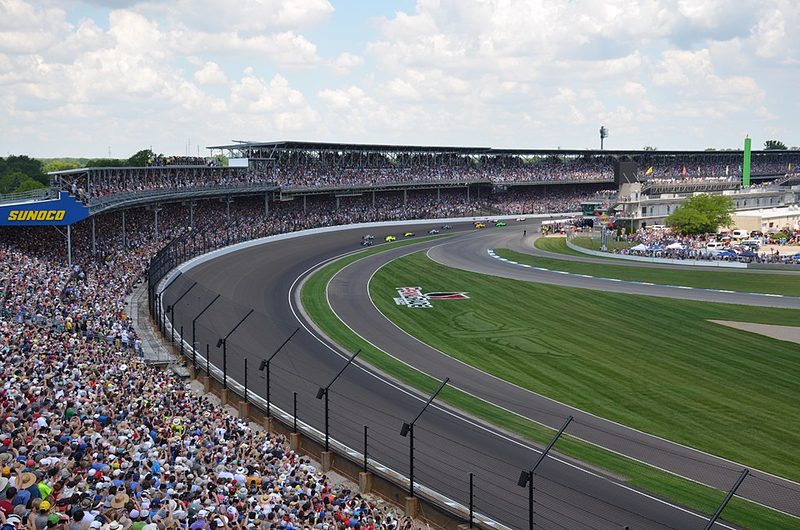

The Indianapolis Motor Speedway, home to the Indianapolis 500, represents one of the most significant motorsports venues in the world and serves as a central pillar of Indianapolis's identity. Built in 1909 by Carl G. Fisher and three colleagues, the Speedway hosted its first 500-mile race on 30 May 1911, establishing what would become an annual tradition and one of the world's most watched single-day sporting events. The track was placed on the National Register of Historic Places in 1975 and designated a National Historic Landmark in 1987, the only such site affiliated with automotive racing history.
The Track and Its Heritage
The Speedway originally occupied 320 acres but has expanded to over 559 acres in its current configuration. The track earned its nickname "the Brickyard" from its original brick surface, a 3.2-million-brick construction that replaced the original crushed stone and tar surface after early racing proved too dangerous. Today, a symbolic yard of bricks remains exposed at the start-finish line, a tradition that winners kiss after their victory. The 2.5-mile oval circuit has hosted the Indianapolis 500 annually since 1911, with exceptions only during the First and Second World Wars when racing was suspended.
The Speedway Museum, which completed a $61 million renovation and reopened with 40,000 square feet of additional immersive exhibit space, brings the motorsports experience to life for visitors throughout the year. The museum displays hundreds of pristine race cars dating back over a century and thousands of Indianapolis 500 artefacts. The Borg-Warner Trophy, originally commissioned in 1935, remains on permanent display in the museum and makes travelling appearances at other events around Indianapolis. Exhibits include the Qualifying Zone, where visitors can experience what it's like to be a driver, strategist or pit crew member.
Visitor Experience
Track tours offer visitors a lap around the circuit in a tram pulled by a pickup truck, with a stop on the front straight to see the famous yard of bricks. The museum operates year-round, making the Indianapolis 500 experience accessible even outside the race month of May. The exhibition "Setting the Pace," running through June 2026, highlights the legacy of pace cars, a tradition that started at the inaugural Indianapolis 500 in 1911 and continues today.
The Indianapolis 500 itself, held annually in May, draws international attention and transforms the city into a motorsports focal point. The race weekend encompasses qualifying events, practice sessions, and the main event, which typically attracts hundreds of thousands of spectators. The cultural significance of the 500 extends beyond racing—it represents Indianapolis's industrial heritage, its early 20th-century automotive manufacturing prowess, and the city's ongoing relationship with speed and engineering.
Practical Information
The Indianapolis Motor Speedway is located in Speedway, a town that borders Indianapolis to the west. The museum and track are accessible from downtown Indianapolis, though visitors should verify current opening hours, tour schedules and admission details through official sources. During race month, accommodation across Indianapolis fills well in advance, and traffic patterns around the Speedway change significantly. The museum's immersive exhibits and track tours provide genuine insight into American motorsports history whether visitors attend during race season or in quieter months.
Sources: Indianapolis Motor Speedway Museum • Indianapolis Motor Speedway - Wikipedia • Indianapolis Motor Speedway Museum - Visit Indy • First Auto Race at Indianapolis Motor Speedway - EBSCO Research