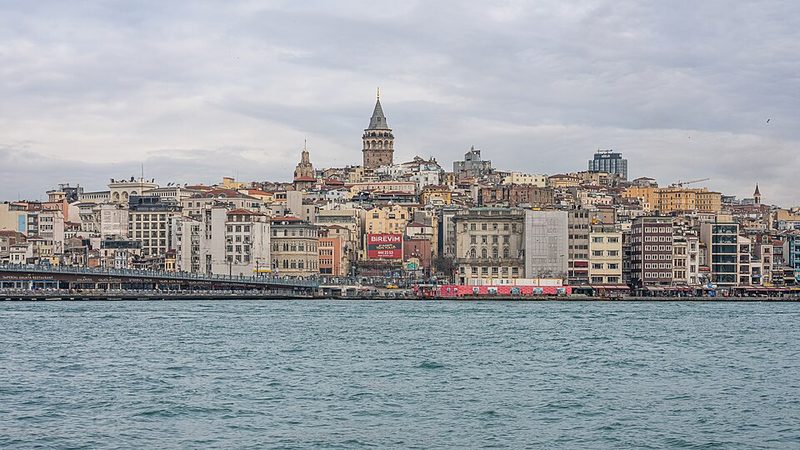
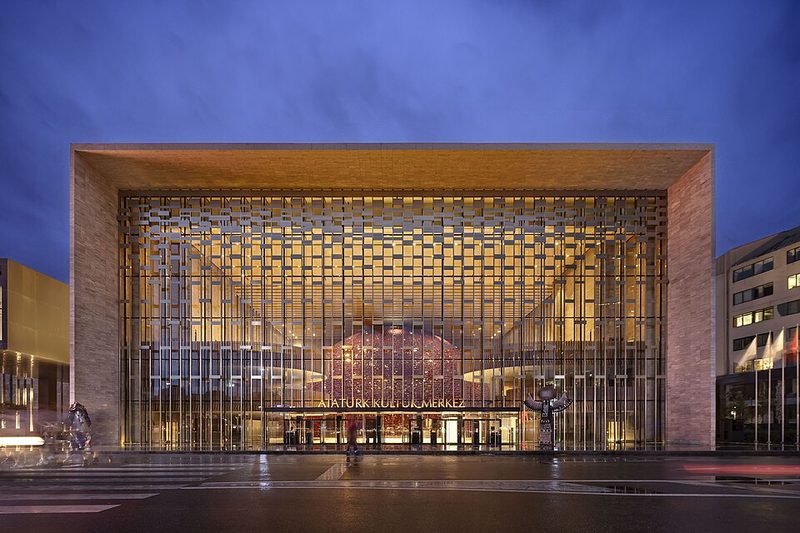
Beyoğlu occupies the northern shore of the Golden Horn on Istanbul's European side, encompassing a collection of neighborhoods that developed from the 17th century onward as the city's cosmopolitan quarter. The district stretches from the waterfront at Karaköy through the Galata area to Taksim Square, covering steep hillside terrain marked by the cylindrical stone silhouette of Galata Tower. This area concentrates much of Istanbul's contemporary cultural activity—galleries, independent shops, cafés, and nightlife—while retaining Ottoman-era architecture and street patterns that give the district its distinct character.
Galata and the Tower
Galata Tower dominates the skyline of the lower Beyoğlu area, built by Genoese colonists in 1348 during their control of this quarter. The 67-meter stone tower originally served defensive and commercial purposes, marking the highest point of the medieval Genoese settlement that operated semi-independently from Byzantine Constantinople across the Golden Horn. The tower's observation deck provides panoramic views across the Bosphorus, Golden Horn, and the historical peninsula, though visitors should expect queues during peak tourist periods.
The neighborhood surrounding the tower—often called simply Galata—developed as a district of merchants, artisans, and later, bohemian residents. By the 17th century, the area had established itself as Istanbul's primary European quarter, home to foreign embassies, trading houses, and the city's small but significant Christian and Jewish populations. This cosmopolitan character persisted through the Ottoman period and into the Turkish Republic, though the population composition has shifted dramatically since the mid-20th century.
İstiklal Avenue
İstiklal Caddesi (Independence Avenue) runs approximately 1.4 kilometers from Tünel Square near Galata to Taksim Square, forming the commercial and social spine of Beyoğlu. The avenue originated in the 17th century as the street connecting Galata Tower to the barracks of Galata Palace. By the 18th century, it had become known as the "Grande Rue de Pera," the main thoroughfare of the European quarter where embassies, churches, theaters, and fashionable shops clustered.
The avenue remains pedestrianized, served by a historic tram that runs its length. Galatasaray Square marks the midpoint, home to Galatasaray High School (Galatasaray Lisesi), founded as the Galata Palace Imperial School and now the oldest secondary school in Turkey. The avenue's architecture reflects late Ottoman and early Republican periods—multi-story buildings with European-influenced facades housing cinemas, bookshops, restaurants, and the international brands that have increasingly replaced local establishments.
Side streets radiating from İstiklal preserve more intimate neighborhood character. These narrow lanes—steeper as they climb away from the avenue—contain independent boutiques, antique shops, small galleries, and residential buildings that predate the avenue's commercial development. The density and pedestrian scale create an environment where walking remains the primary mode of exploration.
Karaköy
Karaköy occupies the waterfront at the northern end of the Galata Bridge, historically functioning as one of Istanbul's most important ports. Workshops, warehouses, and maritime commerce defined the area through the Ottoman period and well into the 20th century. The neighborhood has transformed in recent years, with the warehouses and workshops converted to cafés, galleries, design studios, and restaurants that attract a younger, style-conscious clientele.
The area retains working commercial character despite gentrification—ship chandlers, hardware stores, and wholesale merchants still operate alongside the newer establishments. This mixture creates the texture many visitors find appealing: old port infrastructure repurposed for contemporary use without entirely erasing its original function. Ferry terminals at Karaköy connect to Kadıköy and other points, making the area a natural transit hub between historical sites in Sultanahmet and the residential/cultural attractions of Beyoğlu.
Cihangir and Çukurcuma
Cihangir, uphill from Galata toward Taksim, developed as a residential neighborhood in the 19th century and maintains a reputation for bohemian residents—artists, writers, and intellectuals. The district's steep streets lined with apartment buildings from the late Ottoman and early Republican periods create a village-like atmosphere despite central location. Small cafés, bars, and restaurants cater to local residents rather than tourist traffic, though the neighborhood's reputation draws visitors seeking a less polished version of Istanbul.
Çukurcuma, between Galata and Taksim, has established itself as an antiques district where shops sell Ottoman-era furniture, vintage textiles, ceramics, and collectibles. The neighborhood's aging buildings—many still wooden structures that survived the fires that destroyed similar construction elsewhere—provide appropriate setting for this trade in old objects. The Museum of Innocence occupies a building here, both appropriate to and benefiting from the neighborhood's association with memory and accumulated material culture.
Practical Orientation
Beyoğlu is readily accessed via the Tünel funicular from Karaköy (built 1875, one of the world's oldest underground railways) or by walking across the Galata Bridge from the historical peninsula. The M2 metro line serves Taksim Square. Ferry services to Karaköy from various European and Asian shore points make the district a natural destination during Bosphorus crossings.
Accommodation in Beyoğlu and Galata provides proximity to both historical sites in Sultanahmet (a short tram ride or walk across the Galata Bridge) and the district's own attractions. The area contains more hotels and guesthouses than Sultanahmet but maintains neighborhood character rather than resort atmosphere. Evening activity—restaurants, bars, music venues—concentrates in Beyoğlu, making it practical for visitors who prefer not to return to accommodation immediately after dinner.
Sources: İstiklal Avenue - Wikipedia • The History of Istiklal Street - Pera Palace Hotel • Beyoğlu District Guide - Too Istanbul • Things to Do in Galata - Museum Pass Istanbul