The T1 at Aksaray
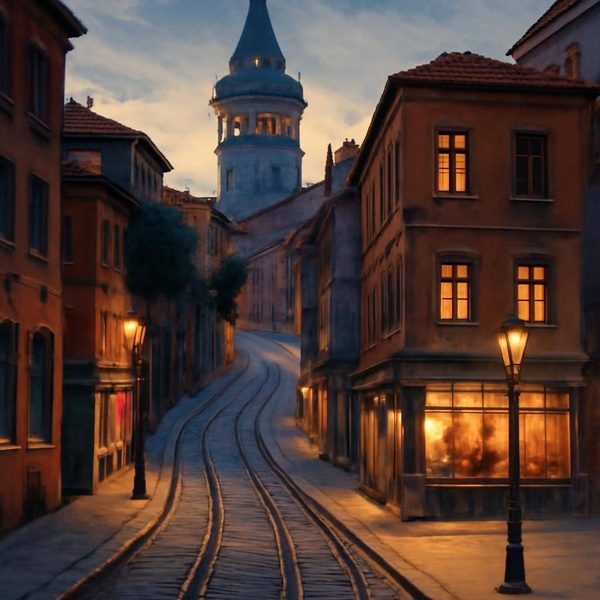
The tram arrived at Aksaray in the early morning, already carrying the particular sound of Istanbul in motion — the low percussion of wheels on track, the doors opening and closing, a few words exchanged in Turkish over the heads of other passengers. Aksaray sits on the M2 metro line and the edge of the old city, a transit node where the energy is more local than touristic. Nobody here was consulting a map.
The fictional traveller in this telling — call her an imaginary listener, someone with a notebook and an İstanbulkart and no fixed itinerary — had come from somewhere farther west on the line. She was following the T1 east toward the Bosphorus, the way the route naturally pulls you when you let the city lead.
Sultanahmet: Dome and Silence
By the time the tram reached Sultanahmet, the sky was doing something useful with the light. The domes of the historical peninsula register differently when you are moving past them at tram speed — they do not demand attention so much as simply occupy it. Byzantine foundations, Ottoman superstructure, the whole sediment of centuries arranged against a morning sky.
She got off near Hagia Irene, that early Byzantine structure sitting within the Topkapı grounds. It has been used for concerts in past decades, its acoustics turning the old stone into an instrument of a different kind. Whether it was open on any given visit, or what was scheduled — that she would have had to check. But the building itself stands, indifferent to itineraries.
Eminönü: Where the Water Starts
Back on the tram to Eminönü. The city's waterfront here is where the Golden Horn meets the Bosphorus, and where the Galata Bridge stretches across to Karaköy. She walked the bridge, which is its own form of listening: the ferries cutting diagonally across the frame below, the fishing rods along the railing clicking and swaying, the sound of the city reflected off the water.
This is one of those places where Istanbul's geography becomes physical and obvious — two bodies of water, two shores, the bridge a line between them that everyone crosses casually, constantly, as if it were just a pavement.
Ferry: The Crossing
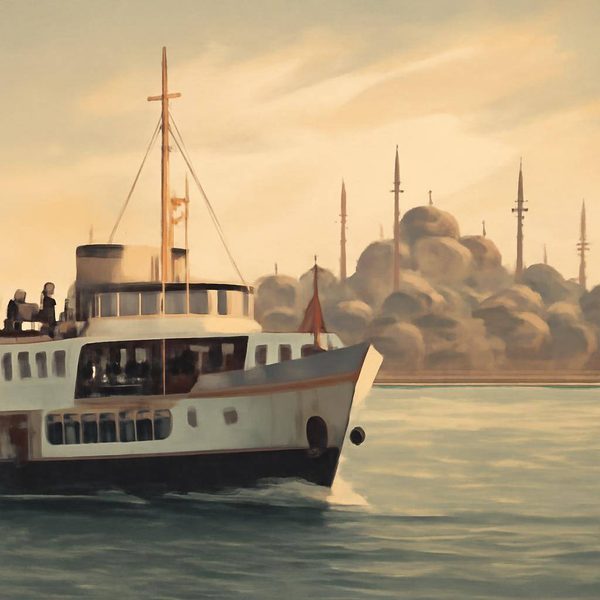
From Karaköy she caught a ferry to Kadıköy. The public ferry, the ordinary one, with the İstanbulkart beeping and other passengers buying tea from the onboard counter. The Bosphorus crossing from this angle puts the whole European skyline behind you — domes, minarets, the low ridge of the historical peninsula — while Asia appears ahead.
The city makes its best argument from the water. Not for drama or tourism, but because the geography is only fully legible from the strait. Istanbul is not one city; it is two shores and the water between them, and the ferries are how it holds itself together.
On the Asian side, Kadıköy has a tram of its own (T3, running to Moda), and a neighbourhood character distinct from the heritage-dense European core. Quieter in a relative sense — more residential, less organised around visitors. She sat at a waterside café and watched the European skyline across the water do what it does in late afternoon: become a silhouette, lose its details, become simply a shape against the light.
The Return: What the City Sounds Like
The return ferry came in the early evening. By then the light had shifted again, and the Galata Bridge was doing its low-traffic transformation — fewer cars, more people on foot, the lower deck beginning to fill. Istanbul after the working day is not quieter exactly, but it moves at a different frequency.
The imaginary listener had covered: Aksaray to Sultanahmet by T1 tram; on foot through the historical peninsula; across Galata Bridge; ferry to Kadıköy; and back by ferry before dark. A day's route that costs the price of a few İstanbulkart taps and produces more than most packaged tours manage. The city as instrument, the transit network as score, and the Bosphorus crossing as the movement that pulls everything together.
Plan your own version using the İstanbulkart and the T1 tram and Bosphorus ferry timetables — both available through Metro Istanbul and İETT official sites. Current schedules, fares and opening hours should be confirmed before travel.
This is a fictional visitor story generated from source-backed place facts, image evidence and visitor-feel signals. It is not a first-hand WorldTownGuide visit. Named places, routes and historical references are source-backed; the visitor character and narrative events are invented.
Sources: Public Transport in Istanbul: Metro, Tram, Ferry, Prices and Tips for Tourists - Istanbul • Istanbul Airports, Bus, Tram, Train, Taxi, Metro, Ferry and Ship - Turkey Travel Planner • Transportation in Istanbul - YTU International Relations Office • Bridges of Istanbul: Where Europe and Asia Meet 2026 - Istanbul Tourist Information • ULTIMATE ISTANBUL BUCKET LIST AND TRAVEL GUIDE - Travel With Pau • Bus, Metro, Tram and Ferry Fares in Istanbul, Turkey - Turkey Travel Planner