Frere Hall and Karachi's Colonial-Era Architecture
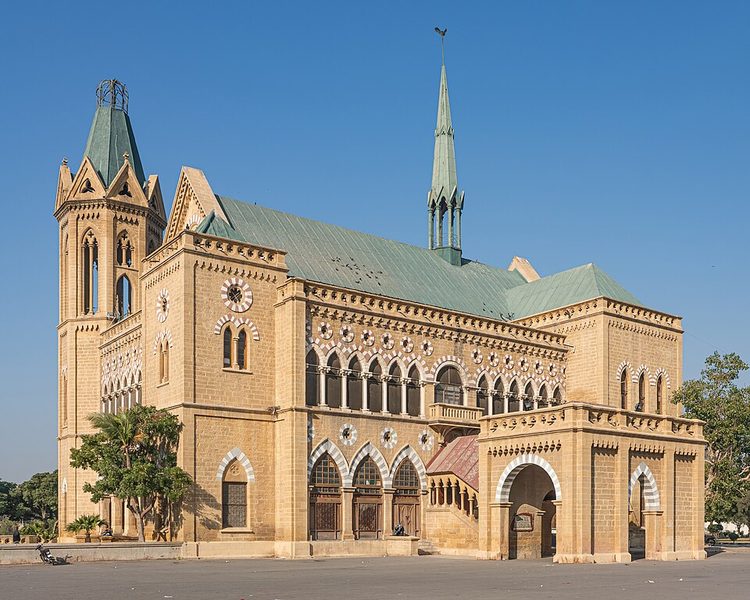
Frere Hall is one of Karachi's most recognisable colonial-era public buildings, constructed between 1863 and 1865 and named after Sir Henry Bartle Frere, the Commissioner of Sindh who oversaw much of Karachi's mid-19th-century urban development. The building is documented among Karachi's listed heritage and tourist attractions and sits within a public garden setting that has made it a continuing reference point in the city's civic life.
Architectural Character
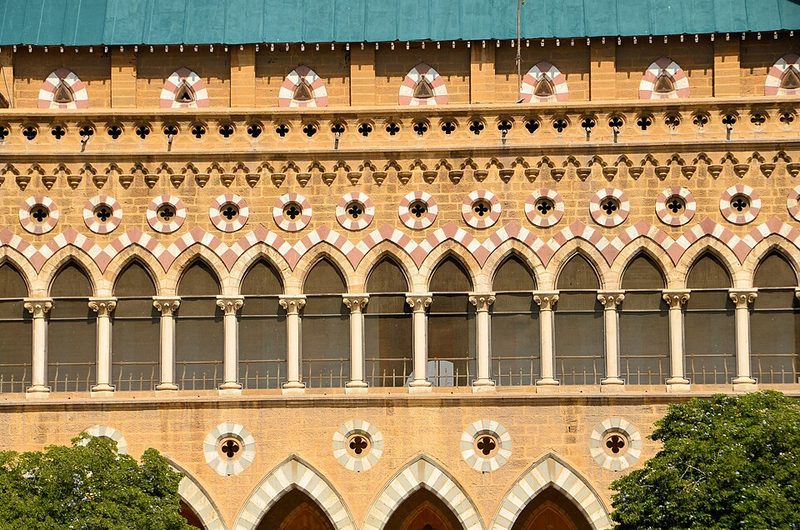
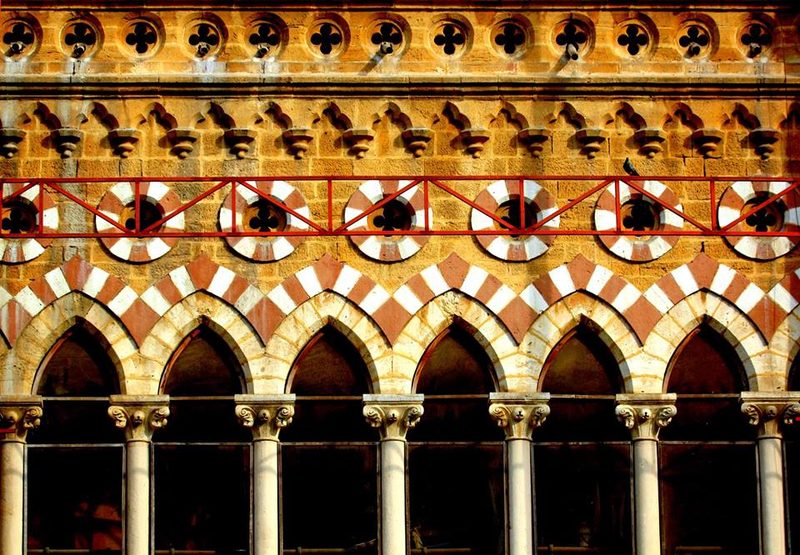
The building was designed in a Venetian Gothic style by James Strachan, using locally quarried yellow Gizri stone. Its exterior arcading and tower are among the more legible examples of the architectural vocabulary that British colonial administrators applied to civic buildings across the subcontinent in the mid-Victorian period. Sources documenting Karachi's cultural sites note its continued use and its association with the painter Sadequain, who created a large mural inside the hall — a connection that gives Frere Hall significance beyond its architectural period.
Sadequain's Mural
Sadequain painted the ceiling mural in 1970, a pointed cultural act inside a colonial British civic building and one reason Frere Hall remains more than a preserved Victorian shell.
The hall's interior contains a celebrated mural by Sadequain (Sadequain Naqqash), the Pakistani artist and calligrapher who is among the country's most documented 20th-century painters. The mural is a point of continuing cultural interest in Karachi and is referenced in sources covering the city's artistic heritage. The Sadequain-Frere Hall connection has been noted in travel and cultural sources covering Karachi's recognisable sites.
Practical Orientation
Frere Hall is located in central Karachi. Current access arrangements, garden opening conditions, and any restrictions on interior access should be confirmed locally before visiting. As with all sites in Karachi, visitors should consult current official travel advisories before travel.
Frequently Asked Questions
Why is Frere Hall famous in Karachi?
Frere Hall is famous as a major Venetian Gothic civic building from the 1860s and for its association with Sadequain, whose ceiling mural made the colonial-era hall part of Karachi's modern art story.
Is Frere Hall mainly an architecture stop or an art stop?
It is both. The exterior explains Karachi's British colonial civic architecture, while the Sadequain mural gives the building a later Pakistani cultural layer that is just as important.
What should visitors verify before going to Frere Hall?
Check current garden access, interior access and any security restrictions locally before visiting, because public access arrangements can change.
Sources: List of tourist attractions in Karachi - Wikipedia • Recognizing Karachi's Cultural Sites - Travel Begins at 40