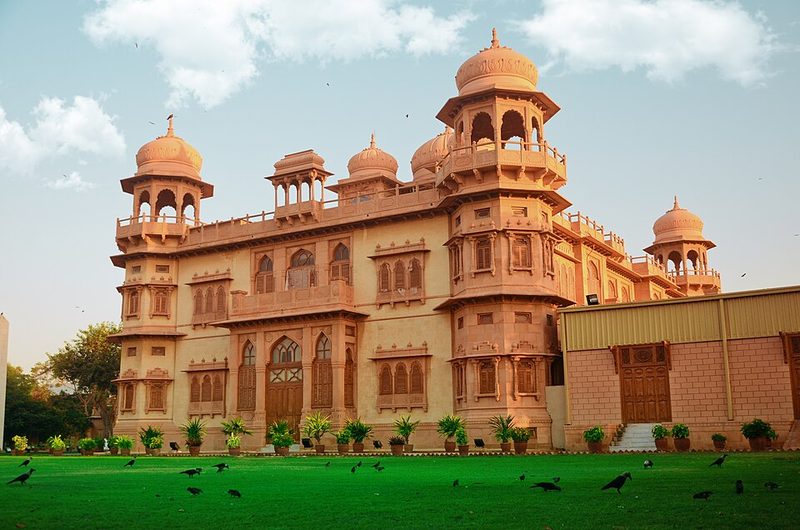
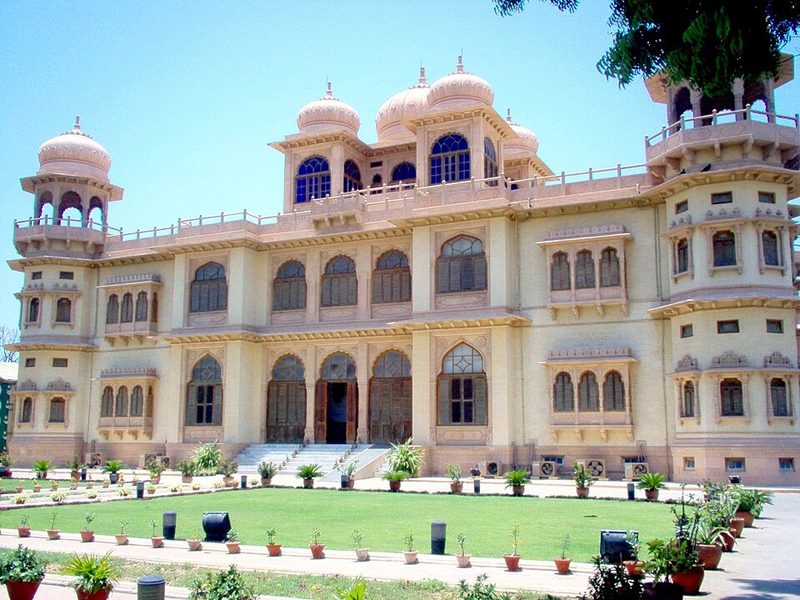
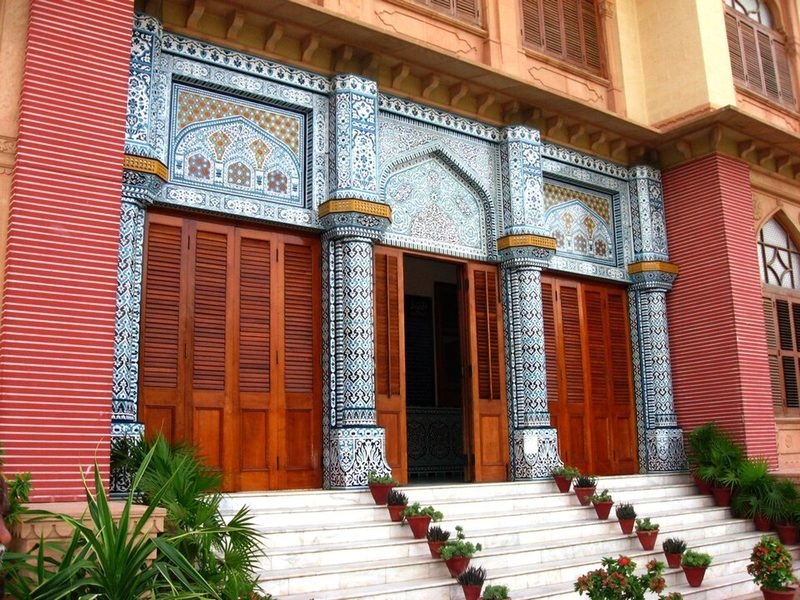
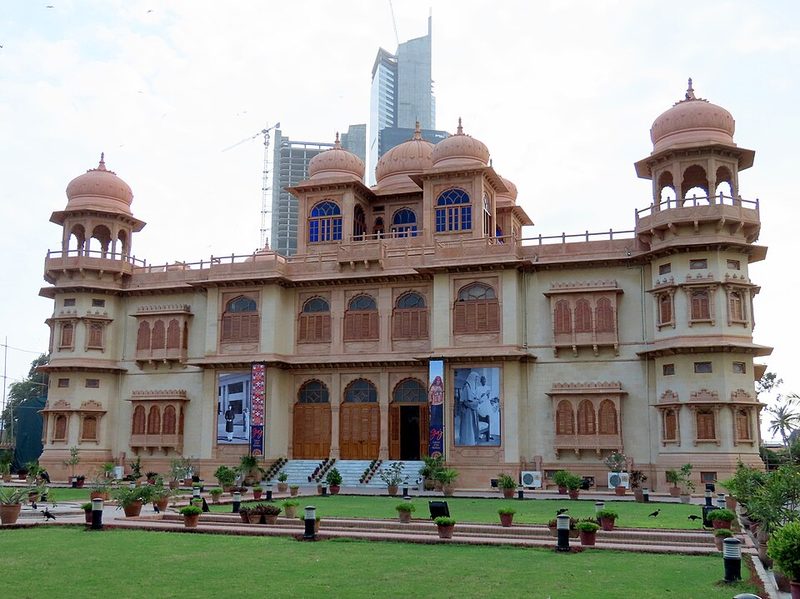
The Mohatta Palace Museum stands in Karachi's Clifton district, occupying a building completed in 1927 for Shivratan Chandraratan Mohatta, a Marwari businessman who used it as a summer residence. The structure was built in a style that draws on Rajasthani and Mughal architectural traditions, using Jodhpur pink sandstone alongside local yellow limestone — a combination that makes it visually distinctive even within Karachi's varied built environment.
From Private Residence to National Museum
Its later association with Fatima Jinnah gives the palace a sharper political memory than a simple residence-to-museum timeline. She lived here from 1964 until her death in 1967, during the period when her public standing was linked to civilian opposition to Ayub Khan's military government.
Following Partition in 1947, the building was taken over by the Government of Pakistan and used as the Ministry of Foreign Affairs. It later served as the residence of Fatima Jinnah, sister of Pakistan's founder Muhammad Ali Jinnah, until her death in 1967. The Government of Sindh acquired the property in 1995 and commissioned its conversion into a museum, which opened to the public in 1999. Since opening, the museum has hosted over 25 exhibitions covering Pakistani art, decorative arts, cultural history, and a permanent gallery dedicated to Fatima Jinnah.
Collections and Exhibitions
The museum's programme has included the exhibition Jewel in the Crown: Karachi Under the Raj, 1843-1947, documented on the museum's official site, which situated Karachi's colonial urban development within the broader history of British India. The Fatima Jinnah gallery provides biographical and archival material on one of Pakistan's most significant political figures. Google Arts and Culture has partnered with the museum to document parts of its collection online.
Practical Orientation
The museum is generally closed on Mondays. Current opening hours, admission arrangements, and any temporary exhibition schedules should be verified directly at mohattapalacemuseum.org before visiting. The Clifton district location means the museum is accessible from the city's southern residential and commercial areas, though visitors should factor current security conditions into all movement planning and consult official travel advisories before travel to Karachi.
Visitor commentary tends to praise the pink-stone exterior, lawns and quiet garden setting before turning practical: indoor photography restrictions, Karachi heat and variable cooling are the details people often wish they had known in advance.
Frequently Asked Questions
Why is Mohatta Palace important in Karachi?
Mohatta Palace matters because it combines a 1927 Clifton landmark with post-Partition state history and the later residence of Fatima Jinnah, one of Pakistan's most important public figures.
Can visitors take photos at Mohatta Palace Museum?
Exterior photography is commonly part of the visit, but indoor photography rules can be restrictive. Check the museum's current visitor policy before going, especially if the interior displays are your main reason for visiting.
How long should you allow for Mohatta Palace Museum?
Most visitors should treat it as a strong Clifton stop rather than a full-day attraction: allow time for the building, lawns, current exhibition and Fatima Jinnah gallery, then combine it with another nearby Karachi stop if conditions allow.
Sources: Mohatta Palace Museum - Official Site • Mohatta Palace Museum Exhibition - Karachi Under the Raj • Mohatta Palace Museum - Google Arts and Culture • Mohatta Palace - Wikipedia