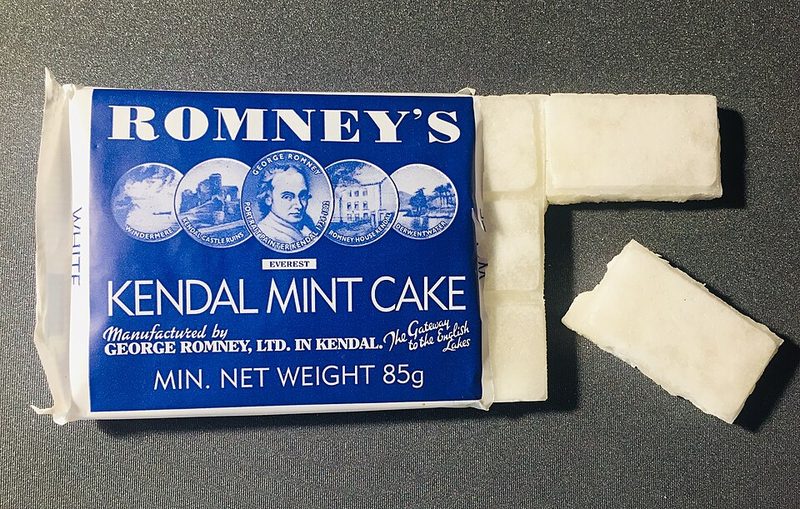
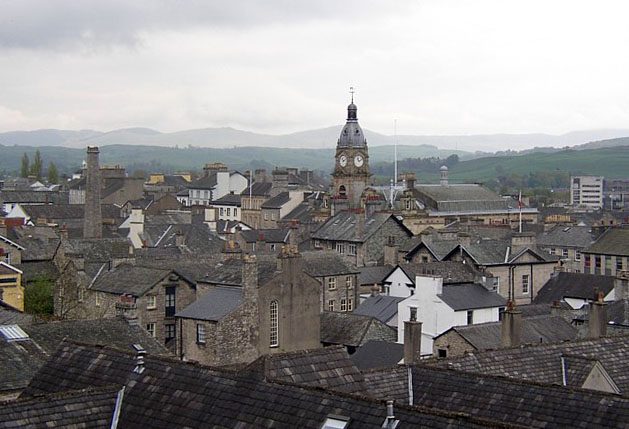
Kendal Mint Cake is neither a cake nor, strictly speaking, unique to Kendal—but the town has produced this glucose-and-peppermint confection for over 150 years, and the association between place and product remains unshakeable. Three companies still manufacture it in Kendal today: Romney's, Quiggin's, and Wilson's. The substance itself is simple—a boiled mixture of sugar, glucose, and peppermint oil, cooled and cut into blocks—but its history intertwines with mountaineering, polar exploration, and a peculiar kind of regional pride.
Origins and the Accident Story
The accepted origin story traces back to 1869, when Joseph Wiper, who had married into the Thompson family of confectioners in Kendal, allegedly left a batch of boiled glacier mint solution overnight. By morning, the mixture had turned cloudy and solidified—a mistake that became a product. The Thompson family was already established in the local confectionery trade, known for Kendal Butter Toffee, Black Bull's Eyes, and Butter Tablet. Whether the accident actually occurred as described remains uncertain, but the story has endured, and the Wiper name remains attached to the product's invention.
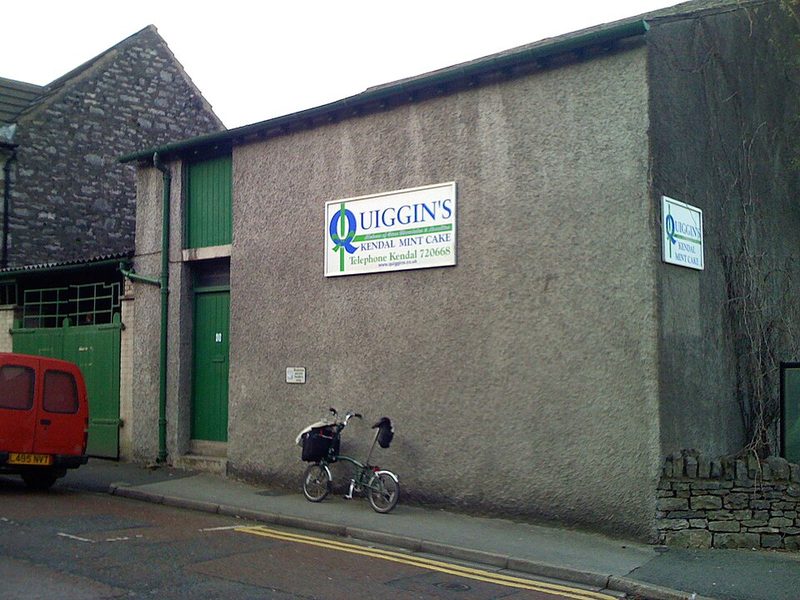
Quiggin's shop opened in Allhallows Lane in the early 1900s, later operating a toffee shop in Stricklandgate near the Public Library (since demolished for road widening). Romney's was founded in 1918 by Sam T. Clarke, the great-grandfather of the current managing director, John Barron, using an old recipe purchased at the time. A descendant of Joseph Wiper, Robert Wiper, continued making mint cake in Kendal from the original family recipe and began the tradition of supplying expeditions with the product.
Everest and Mountaineering Fame
Kendal Mint Cake achieved its greatest prominence in 1953, when Sir Edmund Hillary and Tenzing Norgay carried it to the summit of Mount Everest on 29 May, becoming the first confirmed climbers to reach the top. The British Mount Everest Expedition had requested 38 pounds of Kendal Mint Cake as part of their high-altitude rations. One expedition member later wrote that it was "easily the most popular item on our high altitude ration—our only criticism was that we did not have enough." Hillary and Norgay's remarks about the climb were subsequently printed on mint cake wrappers, cementing the product's association with mountaineering achievement.
The timing was fortuitous: the successful ascent coincided with the coronation of Queen Elizabeth II, and the story captured public imagination. Romney's packaging still carries the claim "Conquered Everest in 1953," and the connection to high-altitude endurance has remained central to the product's identity. Mint cake has been carried on numerous subsequent expeditions, both mountaineering and polar, valued for its concentrated energy and resistance to freezing.
Production and Availability Today
Romney's and Quiggin's both maintain production facilities in Kendal. Quiggin's, which claims to be the oldest manufacturer still in operation, produces the confection alongside fudges, peppermint creams, chocolate novelties, and marzipans. The BBC television programme Great British Menu featured a visit to Quiggin's factory in series 5, and Michael Portillo visited the same facility during series 7 of Great British Railway Journeys.
Visitors to Kendal can purchase mint cake directly from the manufacturers' shops in the town centre. The product is also widely available in outdoor equipment retailers, petrol stations, and tourist outlets throughout the Lake District and northern England. It comes in two main varieties: a white, crumbly version and a brown version made with glucose syrup, which has a chewier texture. Both types are intensely sweet and minty, designed for rapid energy release rather than nuanced flavour.
Cultural Significance
Kendal Mint Cake occupies an unusual position in British food culture—simultaneously a tourist novelty and a genuinely functional product. Fell walkers, climbers, and long-distance cyclists carry it for practical reasons: it provides quick-release carbohydrate energy, travels well, and remains edible in cold conditions. The product's association with exploration and endurance gives it a certain mythic quality, even as its ingredients and manufacture remain straightforward.
The town itself benefits from the association. Street signs and visitor materials reference mint cake alongside other Kendal identifiers, and the product functions as a edible souvenir—something visitors expect to find and often purchase, even if they do not particularly need portable expedition food. The continued production by three separate companies in a single small town is unusual, reflecting both historical momentum and the product's enduring market appeal.
Sources: Kendal Mint Cake - Wikipedia • The Story of Kendal Mint Cake - Stricklandgate House • Romney's Kendal Mint Cake - First Ascent of Mount Everest • Quiggin's Kendal Mint Cake