Kokura Castle anchors the central district of KitakyÅ«shÅ« as both a historical landmark and the focal point of a broader cultural precinct. The castle was built in 1602 by Tadaoki Hosokawa, a feudal lord who chose this site for its strategic position. The original structure was intentionally burnt down in 1866 by retreating Kokura troops during conflict with the ChÅshÅ« clan in the Second ChÅshÅ« expedition. The current keep was reconstructed in 1959, replicating the distinctive Karazukuri style—an unusual architectural form in which the top floor extends beyond the floor below.
The Castle Keep and Exhibits
The reconstructed tower retains the original three-tiered, two-storey wooden structure with a three-storey turret, covering approximately 330 square metres. The interior serves as a museum introducing local history through displays, an interactive zone, and a small theatre where visitors experience aspects of past castle life. From the top floor, panoramic views extend across Kitakyūshū. The castle is particularly noted as a destination for cherry blossoms in spring and autumn foliage later in the year, with seasonal events marking both periods.
Kokura Castle Garden
Adjacent to the keep, Kokura Castle Garden offers a traditional Japanese garden space. The garden operates as a separate attraction, though combination tickets are available covering both castle and garden. Visitors can participate in tea ceremony experiences within the garden grounds, connecting the space to cultural practice rather than purely visual tourism.
Matsumoto Seicho Memorial Museum
Within walking distance of the castle, the Matsumoto Seicho Memorial Museum commemorates the writer Matsumoto Seicho, who was born in Kitakyūshū. The museum presents a comprehensive overview of his literary career spanning four decades, with a 22-metre chronological timeline, video documentary on his non-fiction works, and exhibits covering his broad creative output. Matsumoto Seicho is recognised as a significant figure in Japanese mystery and social realist fiction. The museum provides context for how Kitakyūshū shaped his early life and influenced his later work. Combination tickets are available covering the castle, garden, and memorial museum.
Surrounding Attractions
The area around Kokura Castle includes Katsuyama Park, which encompasses the castle grounds, and Riverwalk Kitakyushu, a complex attached to the Kitakyushu Performing Arts Center and a branch of the Kitakyushu Municipal Museum of Art. Historic shopping streets—Uomachi and Kyomachi—date to the Edo period and retain some early modern character despite subsequent development. These streets run through the central Kokura district and connect the castle area to the broader commercial centre.
Practical Information
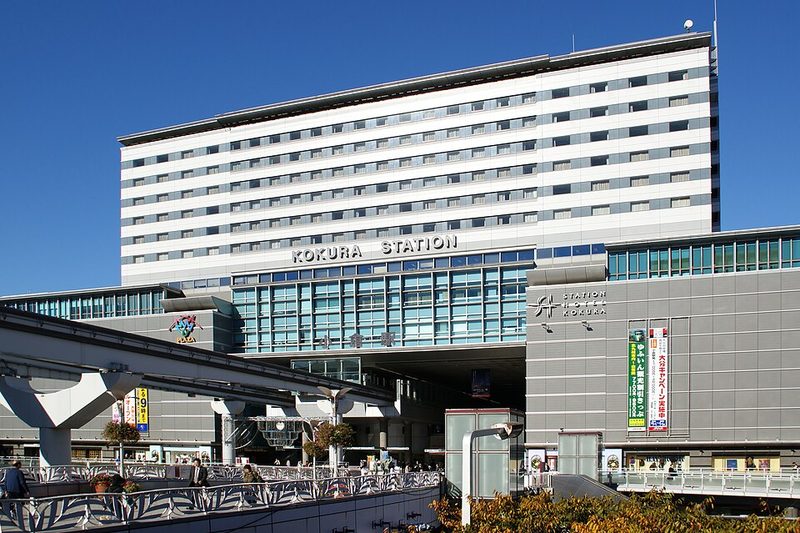
Kokura Castle is approximately 15 to 20 minutes on foot southwest of Kokura Station. Admission is 350 yen for the castle only, 350 yen for the garden only, 560 yen for both castle and garden, and 700 yen for a combined ticket including the castle, garden, and Matsumoto Seicho Memorial Museum. These prices were current as of 2024; visitors should confirm locally. The castle and its surrounding precinct function as a concentrated cultural zone where historical architecture, museum exhibits, traditional gardens, and literary heritage converge within a compact walking area.
Sources: Kokura Castle Official Website • Kokura Castle (Kokurajo) - Japan Guide • Kokura Castle - Wikipedia • Matsumoto Seicho Memorial Museum - Official Kitakyushu Guide