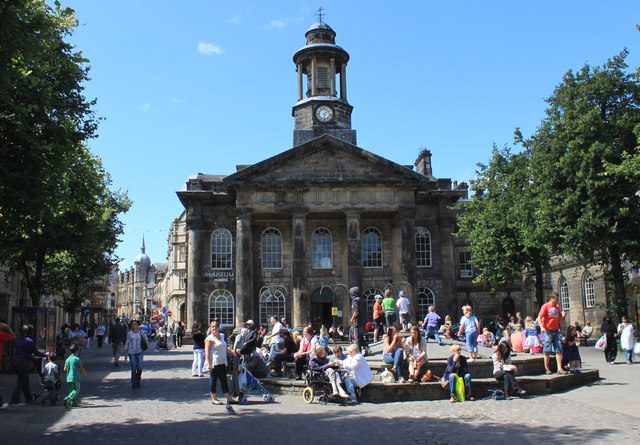
Lancaster's 18th-century prosperity rests on foundations that the city now confronts directly. The Georgian terraces and merchant wealth that define the historic centre grew from a port economy deeply entangled with the transatlantic slave trade and colonial exploitation. The Maritime Museum on St George's Quay—housed in the former Customs House where slave-produced goods were taxed and stored—presents this history without evasion.
The Port and the Triangular Trade
Lancaster functioned as a working harbour from the medieval period, but the 18th century brought transformative growth. Ships sailed from St George's Quay carrying manufactured goods to West Africa, where they were traded for enslaved people transported to the Caribbean and North America. Return voyages brought sugar, tobacco, rum and mahogany—commodities produced by enslaved labour on colonial plantations. The Customs House, built to process and tax these imports, stood at the centre of this trade.
By the mid-1700s Lancaster ranked as one of England's busiest ports. Local merchants invested in slaving voyages and profited from the wider colonial economy. The scale was substantial: records document dozens of Lancaster-registered vessels engaged in the slave trade, though the city's involvement extended far beyond direct slaving voyages to encompass the entire system of colonial extraction and trade in slave-produced goods.
Gillow and the Mahogany Trade
Robert Gillow founded his furniture-making business in Lancaster in the 1730s, completing his apprenticeship in 1728. His commercial success derived directly from understanding the triangular trade. Gillow struck deals with Caribbean plantation owners, who supplied the mahogany—cut and transported by enslaved labour—that became the signature material of Gillow furniture. By 1741 he was exporting furniture overseas, particularly to the West Indies, where plantation wealth created demand for luxury goods.
The Gillow firm became internationally renowned for quality cabinet-making, but that reputation rested on access to materials made available through slavery. The exotic hardwoods that distinguished Gillow furniture came at a human cost rarely acknowledged in accounts of British craftsmanship. The Judges' Lodgings museum in Lancaster now explores this connection through exhibitions examining the city's role in the slave trade and its profit from West Indies colonial trade.
Decline and Displacement
Navigation difficulties on the River Lune—shallow waters and a rock bar below St George's Quay—limited the size of vessels that could reach Lancaster. In 1779 the Lancaster Port Commission decided to build a dock at Glasson, three miles downstream near the river mouth. The enclosed dock with its north quay and gates was completed by early 1787, and shipping operations gradually moved to Glasson Dock. Lancaster's role as a working port diminished, though the wealth accumulated during the maritime era shaped the city's physical development and social structure for generations.
Confronting the Legacy
Lancaster has undertaken a more forthright engagement with this history than many English cities. In 2005 the Slave Trade Art Memorial Project (STAMP) commissioned an anti-slavery memorial designed by Kevin Dalton-Johnson, which was placed on St George's Quay near the Maritime Museum. The museum itself presents exhibitions that explicitly examine Lancaster's involvement in the transatlantic slave trade and the exploitation of enslaved labour that underpinned Georgian prosperity.
The Maritime Museum occupies the former Customs House and adjacent warehouse—buildings that functioned as instruments of the colonial trade system. Visitors encounter displays that connect the elegant Georgian architecture of the city centre to the brutal realities that financed it. This approach represents a significant shift from earlier heritage narratives that celebrated maritime trade without acknowledging its human cost.
Visiting the Sites
The Maritime Museum on St George's Quay serves as the primary site for understanding this history. The former Customs House itself—a Georgian building purpose-built to administer the trade—provides tangible evidence of how deeply slavery was integrated into Lancaster's economic and administrative structures. The museum's location by the quay where ships loaded and unloaded cargo allows visitors to grasp the physical scale of the port operations.
The anti-slavery memorial on St George's Quay offers a place for reflection on the human cost of Lancaster's maritime wealth. The Judges' Lodgings museum provides additional context through exhibitions on Gillow furniture and the broader colonial trade. Walking through Lancaster's Georgian streets—particularly the merchant townhouses near the quay—reveals how thoroughly the architecture of prosperity was built on exploitation.
Visitors should note that this history remains contested and uncomfortable. Lancaster's willingness to present it openly distinguishes the city from locations that have been slower to acknowledge similar pasts. The museums and memorials represent an ongoing process of historical reckoning rather than a completed narrative.
Sources: Maritime Museum - Facing the Past • Gillows and the Triangular Trade - Lakeland Arts • Judges' Lodgings Museum slavery exhibition • Glasson Dock - Wikipedia