London After Dark: A Walk Through the City's Ghost Stories
She arrived at Charing Cross on a Tuesday evening in October, when the light had already gone and the station concourse had the specific London quality of being enormously busy while everyone simultaneously pretended to be alone. She had come, she told herself, for the museums. The ghost stories were an afterthought — something she had read on the train down, a list of disturbances at famous addresses that had made her laugh but also made her note the names on her phone.
Charing Cross puts you out almost exactly at the point where London's oldest layers and its present-day surface overlap most visibly. The Eleanor Cross in the station forecourt is a Victorian replica of a medieval monument — the original stood nearby and marked one of the twelve resting places of Queen Eleanor of Castile's funeral cortège in 1290. Even the replica, she thought, was haunted in its way: a copy of a grief made in stone, in a spot where the grief itself is long dissolved into tarmac and bus routes.
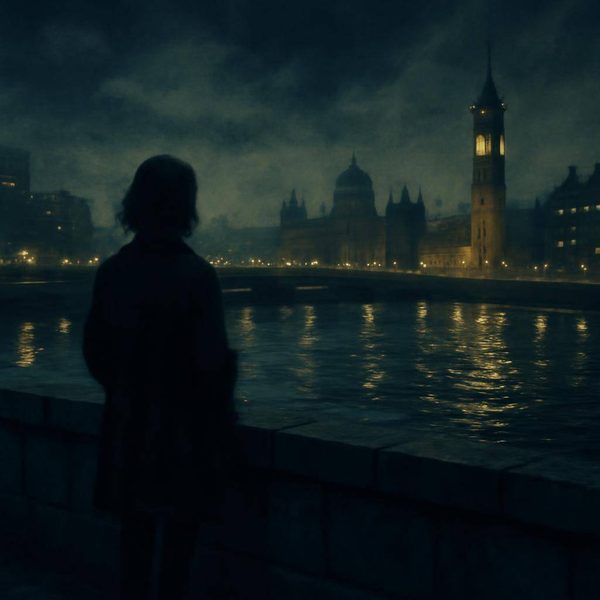
She walked down toward the Embankment and then east along the river. The Thames at night is a different thing from the Thames in daylight. The water was black and fast-moving, with the lights of the South Bank doubled in it, and the sound of the current against the stone was the kind of sound that makes you understand why people have always told stories about rivers.
Her list had several addresses. She had read about the ghost at the Adelphi Theatre on the Strand — an actor, Frederick Terry, said to have been seen in the building after his death in 1933. She had noted that the White Tower at the Tower of London had its own persistent legend: a figure, described consistently as female and dressed in white, who waves at children from one of the upper windows. The sources she had found were specific about one detail that she found genuinely odd: the figure apparently waves only at children, and only children appear to see her. Whether or not this was true, she could not say, but she appreciated that someone had thought to include that precision.
The accounts she had read placed the Tower's ghost population among the most crowded in London, which was not surprising for a building that served for centuries as both royal palace and political prison. The names of those who passed through Traitors' Gate — the water entrance to the Tower, still visible from the Thames path — include enough of English history's most dramatic exits that the question is not why the place is supposed to be haunted but why anyone would be surprised that it is.
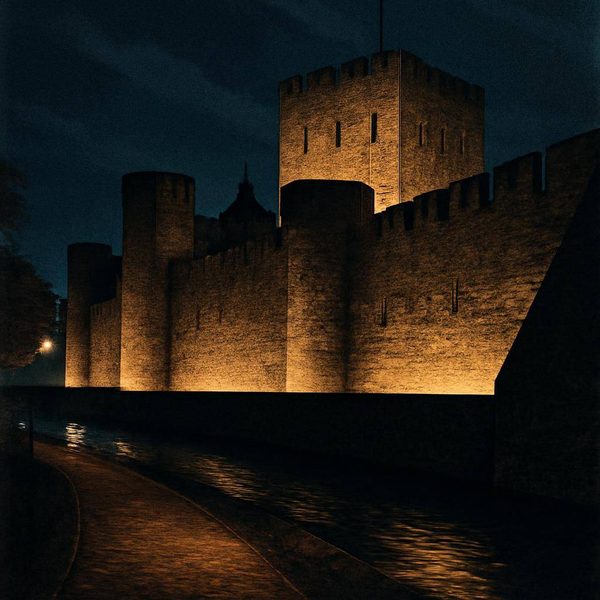
She reached the Tower of London after forty minutes' walking. After dark and outside visiting hours, the building is visible from the river but closed to the public. She stood on the path and looked at the outer walls, which are lit from below and look, in that light, exactly as dramatic as they are supposed to look. The White Tower, the square Norman keep at the centre, was visible above the outer walls. She looked at the upper windows for longer than she had intended to.
Nothing waved back. Or at least, nothing that she could see.
She walked back west along the South Bank rather than retracing her route on the north bank, partly because the walking was easier and partly because she wanted to think about what made ghost stories useful to a city. London's ghost-story tradition, she thought, served a function that was at least partly practical: it was a way of marking places where the past had pressed too hard, of noting addresses where the distance between what happened and the present day had collapsed into something uncomfortable. The Tower needed no supernatural overlay to make its history feel immediate. The stories were just the city's way of labelling the pressure points.
By the time she reached the South Bank arts complex, the evening crowd had thinned. She stopped at the river wall and looked back east toward the Tower, which was just visible as a lit shape in the distance. October in London, she noted, was exactly the right time for this kind of walk: dark early enough to make the riverside theatrical, cool enough to keep the crowds manageable, and close enough to the end of the tourist season that the city had begun to remember it was also a place where people actually lived.
She put her phone away and walked back toward Waterloo, which was the practical route home. The ghost stories, she decided, were not really about ghosts. They were about how much had happened in a small area of ground, and how little of it had been forgotten.
Practical Notes for This Walk
This route works best as an evening riverside walk from Charing Cross or Embankment east toward the Tower of London, then back via the South Bank. Tower Hill station on the District and Circle lines is the practical Underground stop for the Tower; Waterloo has Underground, rail and bus links for the return. The full loop is a substantial walk, so check Transport for London before setting out and shorten it by using Tower Hill or Waterloo if needed.
If the museum thread in the opening is what brought you to London, see the London museums and galleries guide for the daytime version of the trip.
Frequently Asked Questions
Is there a ghost at the Tower of London?
The story uses a documented London ghost tradition about a female figure in white seen at the White Tower, said in some accounts to wave only at children. WorldTownGuide treats this as folklore attached to a real historic site, not as a verified event.
Who was Frederick Terry at the Adelphi Theatre?
Frederick Terry was an actor associated with the Adelphi Theatre who died in 1933. The story includes him because London ghost lore places his presence among the Strand theatre legends.
What is the Eleanor Cross at Charing Cross?
The cross outside Charing Cross station is a Victorian replica, erected in 1865, recalling one of the medieval Eleanor Crosses that marked the resting places of Queen Eleanor of Castile's funeral procession after her death in 1290.
When is the best time to do this London ghost walk?
Autumn evenings suit the route best: it gets dark early, the riverside feels atmospheric and the main summer crowds have eased. Check weather, opening hours and TfL services before setting out, especially if you plan to finish late.
This is a fictional visitor story generated from source-backed place facts, image evidence and visitor-feel signals. It is not a first-hand WorldTownGuide visit. Named places, routes and historical references are source-backed; the visitor character and narrative events are invented.
Sources: Charing Cross - Transport for London • Charing Cross railway station - Wikipedia • Haunted London - The A to Z of London's Ghosts and Legends • London's Five Spookiest Ghost Stories - Strawberry Tours • Haunting London Ghost Stories Revealed - SpiritShack