

What Louisville is known for
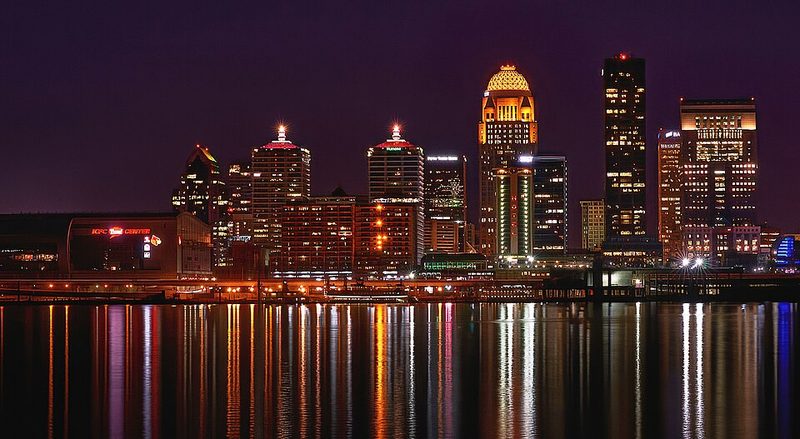
Louisville sits on the Ohio River at the Indiana border, roughly 143 metres above sea level. Kentucky's largest city by population—624,444 residents—it spreads across substantial land area, making neighbourhoods feel distinct rather than compressed. The city functions as a working industrial and cultural centre rather than a preserved historic site, with roots in bourbon production, shipping, and manufacturing that remain economically relevant today.
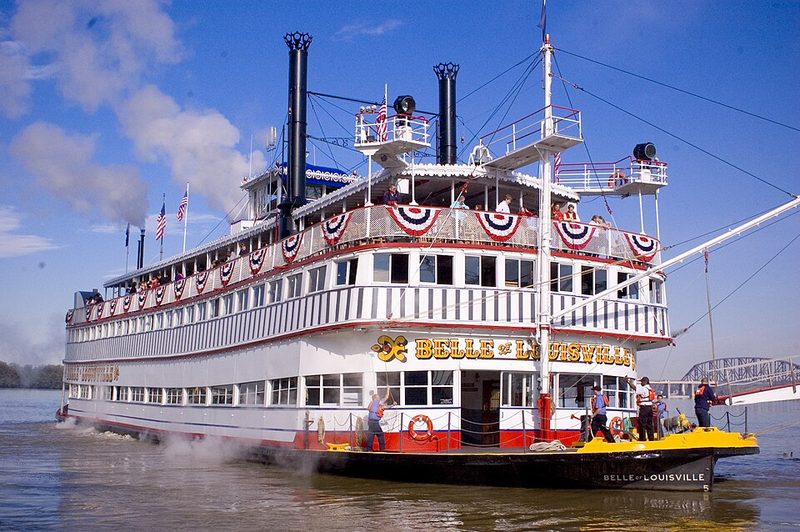
Founded in 1778 by George Rogers Clark and named for King Louis XVI in recognition of French support during the American Revolution, Louisville grew from a frontier military post into a major river port. The arrival of steamboat technology in the early 1800s transformed the Ohio River from barrier to commercial highway, establishing Louisville as a regional transportation hub. That accessibility brought prosperity alongside profound moral contradiction: the city became a significant slave-trading centre, and the phrase "sold down the river" echoes that legacy.
The Bourbon Industry
Louisville and the surrounding region produce roughly one-third of all bourbon whiskey manufactured in the United States. This concentration defines local culture and economy more than visitors typically expect. The "Urban Bourbon Trail"—a collection of distillery experiences and bourbon-focused establishments in the downtown area—reflects how deeply the industry permeates daily life. Main Street historically served as the bourbon district due to its proximity to the Ohio River; before Prohibition, it functioned as the industry's centre. Seven distillery experiences now operate downtown, including the Evan Williams Bourbon Experience on West Main Street and Rabbit Hole in the NuLu neighbourhood.
The Kentucky Bourbon Trail extends beyond Louisville to distilleries across the state, though the concentration of urban bourbon tourism in Louisville itself makes the city a practical base for visitors interested in whiskey production.
Churchill Downs and the Kentucky Derby
Churchill Downs has hosted the Kentucky Derby since opening in 1875. The race—formally the first leg of the Triple Crown—takes place annually in early May and is frequently described as "The Run for the Roses" or "The Most Exciting Two Minutes in Sports." The 2026 running marks the 152nd Kentucky Derby. The tradition of awarding a blanket of 554 red roses to the winner dates to 1883, and the playing of "My Old Kentucky Home" before the race began in 1921. The venue also hosts the Kentucky Oaks and has accommodated the Breeders' Cup on nine occasions.
The event draws spectators from a wide area, with hundreds of private aircraft arriving at Louisville Muhammad Ali International Airport during Derby week. Sunday racing at Churchill Downs returned in 2026 for the first time since 2010, extending the racing schedule.
Muhammad Ali and the Ali Centre
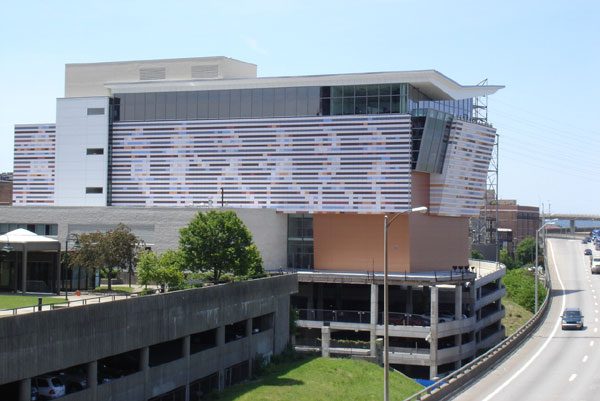
The Muhammad Ali Centre, located on Museum Row in downtown Louisville, documents the life and work of the boxer and activist who was born in the city. The museum spans multiple floors and includes interactive exhibits, historic civil rights-era footage, fight films, memorabilia, a five-screen orientation theatre, and displays organised around Ali's core principles. The exhibits trace Ali's path from his Louisville childhood through his three world heavyweight titles and later humanitarian efforts. The centre operates as a significant cultural institution and ranks among the top museums in the city.
Old Louisville
Old Louisville, located south of downtown, contains the largest contiguous collection of Victorian-era mansions in the United States. The district encompasses approximately 1,200 acres divided into 48 blocks, with around 260 mansions built during the late 19th and early 20th centuries. Architectural styles include Victorian Gothic, Queen Anne, Châteauesque, Beaux-Arts, and Neo-Renaissance. The neighbourhood was developed during Louisville's industrial prosperity and housed bourbon and tobacco barons. It narrowly avoided demolition during urban renewal efforts in the 1950s and now functions as the third-largest historic preservation district in the United States. Central Park, designed by the Olmsted firm, sits within the neighbourhood.
Neighbourhoods and Daily Life
The city's neighbourhood structure reflects decades of growth shaped by different industries, immigrant communities, and economic periods. The Highlands, NuLu, Old Louisville, Butchertown, Germantown, Schnitzelburg, Clifton, Crescent Hill, downtown, East Louisville, Portland, Shelby Park, Smoketown, South Louisville, and West Louisville each carry distinct identities. This fragmentation gives Louisville the feel of interconnected villages rather than a unified downtown core.
The economy depends on several sectors: bourbon and whiskey production, shipping and logistics, automotive manufacturing, home appliance manufacturing, healthcare, medical sciences, and an expanding high-tech sector. The city has weathered earlier industrial decline through deliberate revitalisation, particularly in downtown and the NuLu district.
Other Museums and Cultural Sites
At least ten history museums operate in Louisville. Documented institutions include the Kentucky Derby Museum at Churchill Downs, the Louisville Slugger Museum and bat factory, the Frazier History Museum, the Speed Art Museum, the Kentucky Museum of Art and Craft (KMAC), the Falls of the Ohio Interpretive Centre (in Indiana), the Howard Steamboat Museum, and smaller institutions such as the Vintage Fire Museum and the Museum of the American Printing House for the Blind. Cave Hill Cemetery contains graves of notable figures, and Waverly Hills Sanatorium offers guided tours focused on the site's history as a tuberculosis hospital.
Getting There and Around
Louisville Muhammad Ali International Airport serves the city. The airport is home to the 123rd Special Tactics Squadron of the Kentucky Air National Guard, one of only two such units in the Air National Guard. For current flight services, ground transport options, and connections, travellers should consult the airport authority directly.
The city's layout makes some districts walkable and others car-dependent, typical of American cities that developed before modern urban planning but lack the extreme sprawl of entirely car-centric regions. Public transport details, including bus services and any rail connections, should be verified with local transport authorities for current routes and schedules.
Practical Information
The UK Foreign, Commonwealth and Development Office advises normal precautions for travel to the United States. No specific warnings or restrictions apply to Louisville or Kentucky. Travellers should review current US entry requirements and standard travel safety practices.
The 2026 FIFA World Cup, co-hosted by the United States from 11 June to 19 July, may affect travel logistics and accommodation availability during that period, though Louisville is not a host city.
For current details on attractions, dining, accommodation, events, and local transport, visit GoToLouisville.com or consult the 2026 Visitor Guide. Recent visitor reports and local forums often provide the most current information about neighbourhood character, restaurant quality, and daily practicalities.
Louisville Bourbon Trail and Distilleries
Louisville's downtown Whiskey Row along Main Street concentrates multiple operating bourbon distilleries within walking distance, reflecting the city's role as a historic centre of American whiskey production. Evan Williams, Old Forester, Angel's Envy, and Michter's Fort Nelson offer tours showcasing the bourbon-making process from mashing through ageing and bottling, with most experiences lasting about one hour and including tastings for visitors aged 21 and over.
The Urban Bourbon Trail programme encompasses not just distilleries but 46 participating bars and restaurants throughout the city, allowing visitors to explore bourbon culture beyond production facilities. Main Street earned the nickname "Wall Street of Whiskey" in the nineteenth century when distillers and wholesalers concentrated their operations near the Ohio River for efficient barrel transport. After decades of decline following Prohibition, the district revived beginning in the 1990s as distilleries returned to renovated historic buildings.
Visitors should book distillery tours in advance, particularly during spring and autumn when weather is most comfortable and during Derby week when demand peaks. The downtown distillery district remains compact and walkable, whilst outlying distilleries require transport or participation in organised tour programmes.
Sources: Evan Williams Bourbon - Plan Your Trip • Whiskey Row - Historic Louisville • Kentucky Bourbon Trail - Louisville Region • Bourbonism - Urban Bourbon Trail Map
Louisville Slugger Museum
The Louisville Slugger Museum & Factory at 800 West Main Street combines a working bat manufacturing facility with exhibits tracing the history of Hillerich & Bradsby Company since the 1880s. The story began in 1884 when J.A. "Bud" Hillerich made a replacement bat for Louisville Eclipse player Pete Browning, who then collected three hits the next day—creating demand for custom Hillerich bats amongst his teammates. The company moved to its current downtown location in 1996, where visitors can observe the actual production process on factory tours.
Guided tours show the crafting process from wood selection through turning on computer-guided lathes to finishing and branding, with each tour participant receiving a miniature souvenir bat. Interactive exhibits allow visitors to hold bats used by famous players including Babe Ruth and Derek Jeter, whilst museum displays trace baseball history alongside the company's evolution. The facility is marked by a 37-metre steel baseball bat leaning against the building—reportedly the world's largest bat and a recognisable downtown landmark.
The museum sits in Louisville's Museum Row district alongside the Muhammad Ali Center and other cultural institutions. Visitors should book tours in advance during peak periods, and combination tickets with Big Bat Bourbon appeal to those exploring both baseball and bourbon heritage.
Read the full Louisville Slugger Museum guide
Sources: Louisville Slugger Museum & Factory • Louisville Slugger Museum - Wikipedia • Our History - Louisville Slugger Museum • First Louisville Slugger Bat - Explore KY History
Kentucky Derby at Churchill Downs
Churchill Downs has hosted the Kentucky Derby continuously since 1875, with the 152nd running scheduled for 2026. The race occurs on the first Saturday in May, drawing more than 150,000 spectators to watch three-year-old thoroughbreds compete over 1.25 miles for a blanket of 554 red roses—the origin of the "Run for the Roses" nickname. The rose tradition dates formally to 1896, though its roots trace to an 1883 party where socialite Berry Wall presented roses to ladies, inspiring track founder Colonel Meriwether Lewis Clark Jr. to adopt the rose as the race's official flower.
The Kentucky Derby Museum operates year-round on the Churchill Downs grounds, offering exhibits across two floors including historic race footage, interactive timelines, and guided van tours of the backside training facilities where 1,400 horses are housed during racing seasons. The track's signature twin spires serve as the visual symbol of the Derby and appear throughout promotional materials and broadcasts. Churchill Downs functions as an active racetrack beyond Derby week, hosting spring and autumn racing meets and offering simulcast wagering year-round.
Derby week requires advance planning, with hotel rooms booking months ahead and ticket prices varying dramatically by seating location. Behind-the-scenes tours during non-Derby periods provide access to training facilities and closer views of backside operations unavailable during race days. For approximately two weeks before the Derby, special tour offerings become available, though advance booking is essential.
Sources: Churchill Downs • About - Kentucky Derby • Kentucky Derby - Wikipedia • Kentucky Derby Museum • Churchill Downs History - Kentucky Derby Guide
Old Louisville Victorian District
Old Louisville represents the largest preservation district in the United States featuring predominantly Victorian architecture, developed in the 1870s as Louisville's first suburb originally called the "Southern Extension." Historian Young E. Allison documented construction of 260 homes valued at $1.6 million from 1883 to 1886 alone, with the building boom fuelled by the Southern Exposition of Art, Industry, and Agriculture that operated on 40 acres where St James Court, Fountain Court, and Belgravia Court now stand. The exposition showcased 4,500 Thomas Edison incandescent bulbs each night, attracting visitors and encouraging residential development.
The neighbourhood encompasses more than 40 city blocks featuring Victorian Gothic, Queen Anne, Richardsonian Romanesque, Château, Beaux Arts, and Neo-Renaissance styles. Bourbon and tobacco barons built mansion-scale residences in the area, creating an architectural showcase of late nineteenth-century American design. Central Park, originally known as DuPont Square, was developed in the 1870s and now houses the Historic Old Louisville Neighbourhood and Visitors Center in a white building with red terra-cotta roof.
Louisville Historic Tours operates guided walking tours at 11am, 1pm, and 7:30pm daily from March through November, departing from the Visitors Center. The neighbourhood narrowly escaped demolition during 1950s Urban Renewal programmes, with preservation efforts beginning in the 1960s establishing protections that maintain the Victorian character today.
Read the full Old Louisville Victorian District guide
Sources: Old Louisville - Wikipedia • Historic Old Louisville - OLNC • Old Louisville Guided Tours • Louisville Historic Tours • St James-Belgravia Historic District
Muhammad Ali Centre
The Muhammad Ali Center occupies a six-storey building on Museum Row in downtown Louisville, dedicated to the world heavyweight boxing champion and humanitarian born and raised in the city. Ali chose Louisville as the only acceptable location for the centre despite offers from other cities. Exhibits span two and a half levels, structured around six core principles—Confidence, Conviction, Dedication, Giving, Respect, and Spirituality—that guided Ali's life from his Louisville childhood in the 1940s through three world heavyweight titles and his humanitarian work.
A five-screen orientation theatre film introduces visitors, followed by interactive pavilions featuring fight footage, photographs, rare documents, memorabilia, a boxing ring, audio clips, and Ali quotes. Historic Civil Rights era media footage connects Ali's career to broader American social movements, including his name change from Cassius Clay, his refusal of military induction during the Vietnam War, and his stripped titles and subsequent legal battles. The centre serves as the only institution worldwide dedicated entirely to Ali's legacy, operating as both museum and active educational organisation.
Located among other cultural institutions on Museum Row including the Frazier History Museum and Louisville Slugger Museum, the centre operates year-round with most visits lasting 1.5 to 2.5 hours. The facility includes retail space, a café, and two art galleries with rotating exhibits, spanning approximately 24,000 square feet total.
Sources: Muhammad Ali Center • Visit The Muhammad Ali Center • Muhammad Ali Center Exhibits and Events • Muhammad Ali Center - US Civil Rights Trail • Muhammad Ali Center - Wikipedia