The National Museum Complex occupies several buildings on and adjacent to Rizal Park in the Ermita district, housing the principal collections of fine art, anthropology, and natural history for the Philippines. The complex functions as the primary institution for documenting, preserving, and exhibiting works representing Philippine cultural heritage and natural history. All National Museum constituent museums maintain free admission, a policy that makes the collections accessible to both residents and visitors. The museums are open Monday through Sunday from 9:00 AM to 6:00 PM, except on religious holidays.
National Museum of Fine Arts
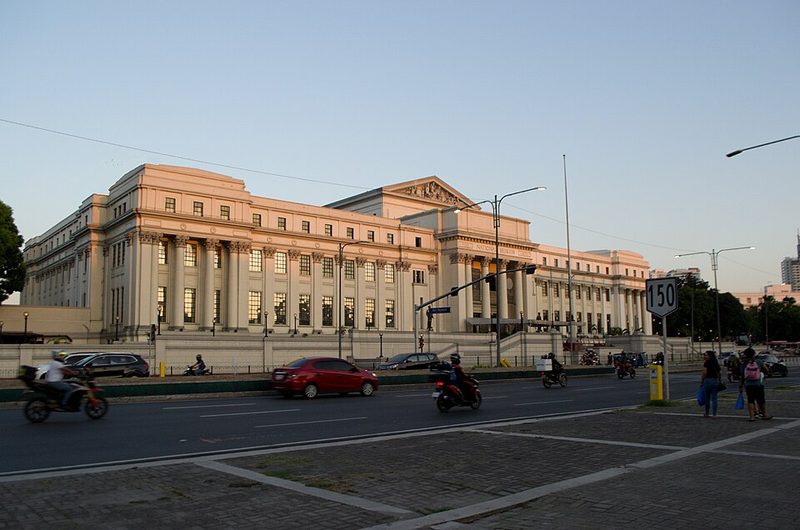
The National Museum of Fine Arts houses the country's most significant collection of visual art, including monumental works and pieces by National Artists and renowned Filipino masters. The museum's centrepiece is the Spoliarium Hall, dedicated to Juan Luna's massive painting Spoliarium, completed in 1884. The painting depicts the aftermath of gladiatorial combat in ancient Rome, with fallen fighters being dragged from the arena. Luna executed the work while studying in Europe, and it won a gold medal at the 1884 Madrid Exposition. The painting measures over four metres high and seven metres wide, occupying a dedicated hall designed to accommodate its scale.
The Spoliarium's significance extends beyond its artistic merit; during the late Spanish colonial period and the struggle for independence, Filipino intellectuals and revolutionaries interpreted the painting as an allegory for colonial oppression. José Rizal and other members of the Propaganda Movement saw in the fallen gladiators a metaphor for the Filipino people under Spanish rule. This reading elevated the painting from European academic art to a symbol of Philippine resistance and national identity.
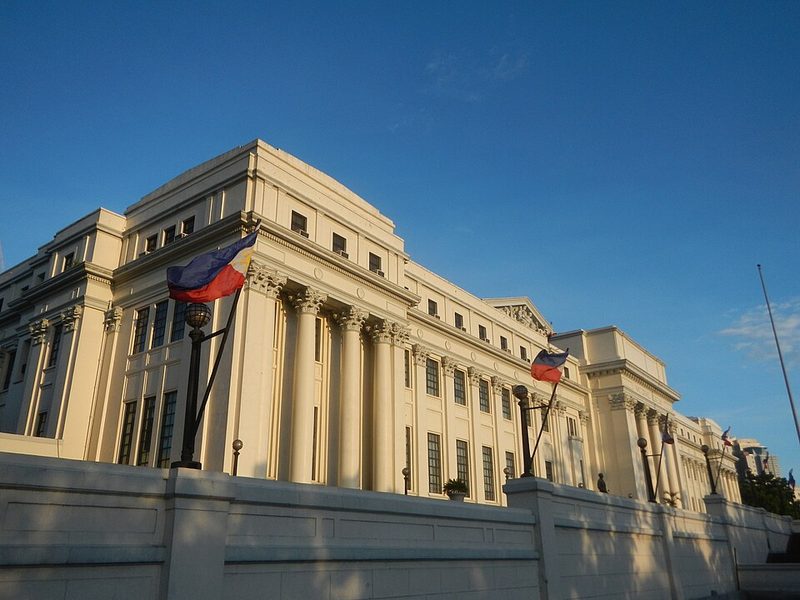
Beyond the Spoliarium, the museum displays works by Fernando Amorsolo and other National Artists, along with rotating exhibitions. The building itself—a neoclassical structure—contributes to the visitor experience, with its grand staircases, high ceilings, and gallery spaces designed for both permanent collections and temporary shows. Photography is permitted in most areas, allowing visitors to document their encounter with the collections.
National Museum of Anthropology
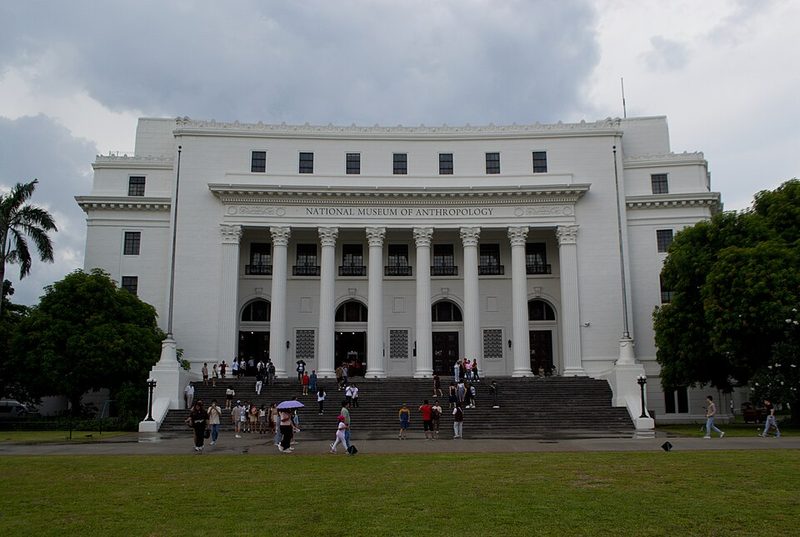
Formerly known as the Museum of the Filipino People, the National Museum of Anthropology focuses on ethnological and archaeological exhibitions that trace the cultural and historical development of the Philippine archipelago. The museum is located adjacent to the Fine Arts building within the Agrifina Circle area of Rizal Park. Collections cover pre-colonial societies, indigenous cultural traditions, maritime history, and the archaeological evidence of early settlement and trade networks that connected the Philippines to wider Southeast Asian and Pacific civilisations.
The anthropology collections provide essential context for understanding the diversity of Philippine cultures before and during the colonial period. Exhibits include artefacts from various ethnolinguistic groups, traditional textiles, tools, and ceremonial objects. The museum also addresses the Philippines' maritime heritage, reflecting the archipelagic nature of the nation and the historical importance of seafaring and trade.
National Museum of Natural History
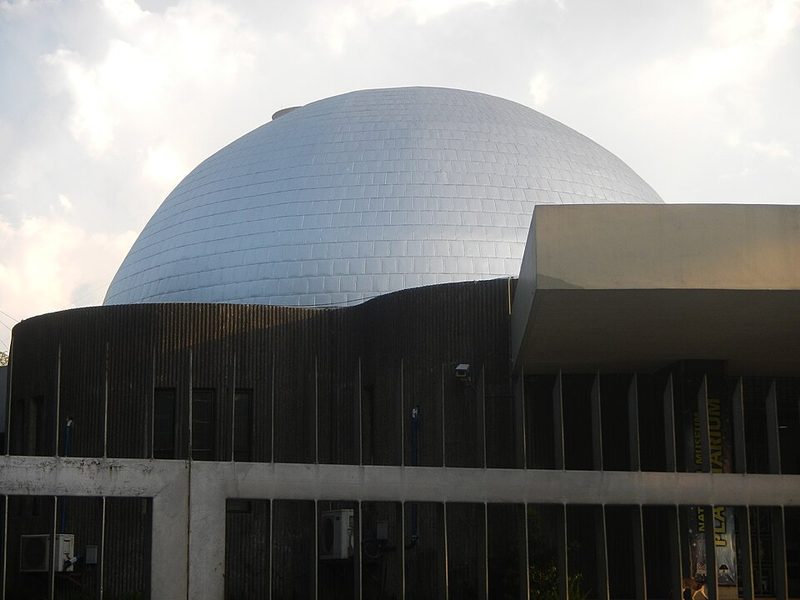
The National Museum of Natural History documents the biological and geological diversity of the Philippines. The building and its exhibitions present the country's ecosystems, endemic species, and natural history through specimens, dioramas, and interpretive displays. The Philippines' status as an archipelago with significant endemic biodiversity makes the natural history collections particularly rich, showcasing species found nowhere else on Earth alongside the geological processes that shaped the islands.
The Natural History Museum operates under the same free admission policy as the other constituent museums, allowing visitors to explore the full range of the National Museum Complex without financial barriers. Recent exhibitions have highlighted specific aspects of Philippine ecology and conservation challenges, though specific current exhibits should be confirmed via the museum's official channels.
Practical Visiting Information
The National Museum Complex is located at Padre Burgos Avenue, Rizal Park, Ermita, Manila. The museums are open Monday through Sunday from 9:00 AM to 6:00 PM, with closures only on religious holidays. This represents a recent expansion of hours; previously the complex was closed on Mondays. Free admission applies to all visitors—no tickets or advance reservations are required for general entry, though special exhibitions or events may have different arrangements.
Visitors are asked to deposit bulky belongings at the baggage counter before entering exhibition spaces. Photography is generally permitted, making the museums accessible for both casual visitors and those conducting research or documentation. The complex's location adjacent to Rizal Park allows visitors to combine museum visits with time in the park's green spaces and other nearby attractions including the Rizal Monument.
A comprehensive visit to all three constituent museums can easily occupy several hours. Many visitors prioritise the Fine Arts museum to see the Spoliarium and other major paintings, then allocate time to the Anthropology and Natural History museums based on interest. The free admission policy removes financial pressure to rush, allowing visitors to move at their own pace or return on multiple days if staying in Manila for an extended period.
The National Museum also operates regional site museums throughout the Philippines, many of which are also free and open seven days per week. The central Manila complex, however, represents the core collections and the most comprehensive exhibitions available within the national system.
Sources: National Museum Complex Guide • National Museum of Anthropology • National Museum of the Philippines Guide • Spoliarium - Wikipedia • National Museum Official Site