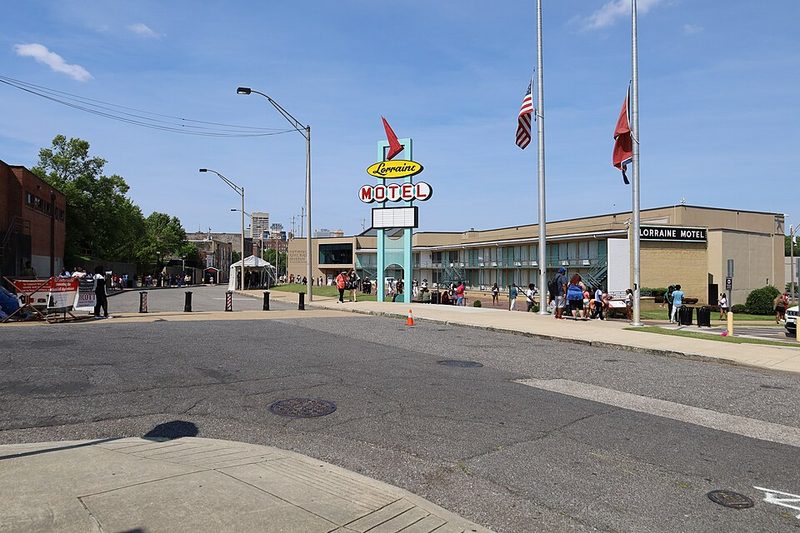

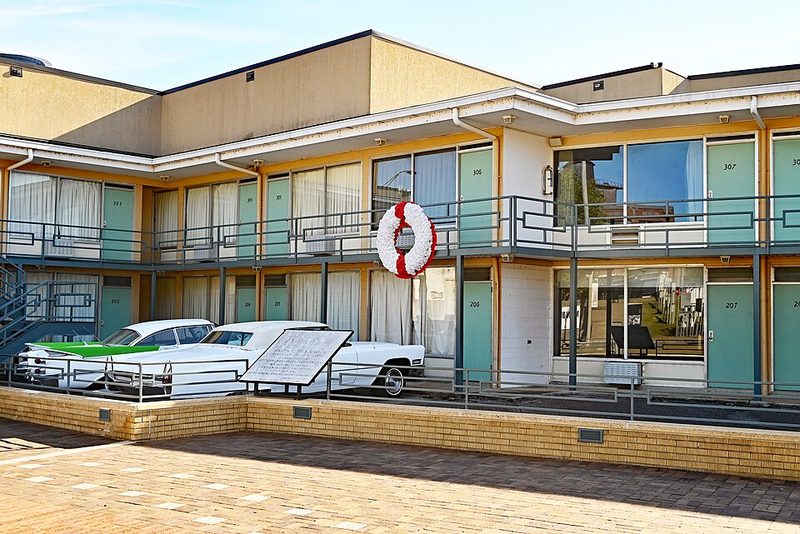
The National Civil Rights Museum occupies the former Lorraine Motel at 450 Mulberry Street, six blocks east of the Mississippi River in what is now the South Main Arts District of downtown Memphis. This is the site where Dr. Martin Luther King Jr. was assassinated on 4 April 1968, shot on the balcony outside his room. The 4.14-acre complex traces the history of the civil rights movement in the United States across more than four centuries, from 1619 to the present.
The Lorraine Motel and the Assassination Site
The Lorraine Motel opened in the 1920s and became a significant establishment for African-American travellers during the Jim Crow era, when segregation laws restricted lodging options. The motel's owner, Walter Bailey, expanded the property in the mid-20th century, adding a second floor, extra rooms, a swimming pool, and a drive-up parking courtyard. The motel's signature turquoise-framed sign welcomed Black visitors to Memphis at a time when few hotels would.
Dr. King stayed in Room 306 during his final visit to Memphis in support of striking sanitation workers. The museum preserves this room as it was in April 1968, and exhibits document the events surrounding King's assassination and the subsequent investigation. The balcony where he was shot remains intact and visible as part of the museum experience.
Exhibits and Historical Scope
The museum's exhibits span from the transatlantic slave trade and the colonial period through the abolitionist movement, Reconstruction, Jim Crow segregation, and the modern civil rights movement of the 1950s and 1960s. Displays include the Montgomery Bus Boycott, the Freedom Rides, the March on Washington, and the Selma to Montgomery marches. The museum extends the narrative to contemporary civil rights initiatives and global human rights movements, positioning the American civil rights struggle within a broader international context.
The museum is owned by the state of Tennessee and operated by the Lorraine Civil Rights Museum Foundation under a long-term lease. The complex includes multiple properties, with all buildings except the Lorraine Motel itself owned by the foundation. In 2026, the museum reopened an updated exhibition called the Legacy Experience, marking its 35th anniversary.
Visiting Practicalities
The museum is open daily, though hours vary seasonally and visitors should check the museum's website for current times before travelling. Admission is charged for adults, students, and children, with group tours available. The museum is fully accessible for visitors with disabilities. The location in the South Main Arts District places it within walking distance of Beale Street and other downtown Memphis attractions, and the Main Street trolley system provides public transport access.
Context and Significance
The National Civil Rights Museum serves dual functions: as a memorial to Dr. King and as a comprehensive educational institution documenting centuries of struggle for racial justice in America. The decision to preserve the Lorraine Motel as the museum's core was not without controversy—some advocates for the poor argued the building should serve social housing needs rather than become a museum—but the site now attracts visitors from around the world and anchors Memphis's role in civil rights history.
The museum is part of the U.S. Civil Rights Trail, a collection of sites across the American South that document the movement. For visitors to Memphis, the museum provides essential historical context for understanding the city's racial history, its role in the civil rights movement, and the broader national struggle for equality that continues today.
Sources: National Civil Rights Museum - Wikipedia • National Civil Rights Museum at the Lorraine Motel – US Civil Rights Trail • Lorraine Motel | National Civil Rights Museum • Visit | National Civil Rights Museum