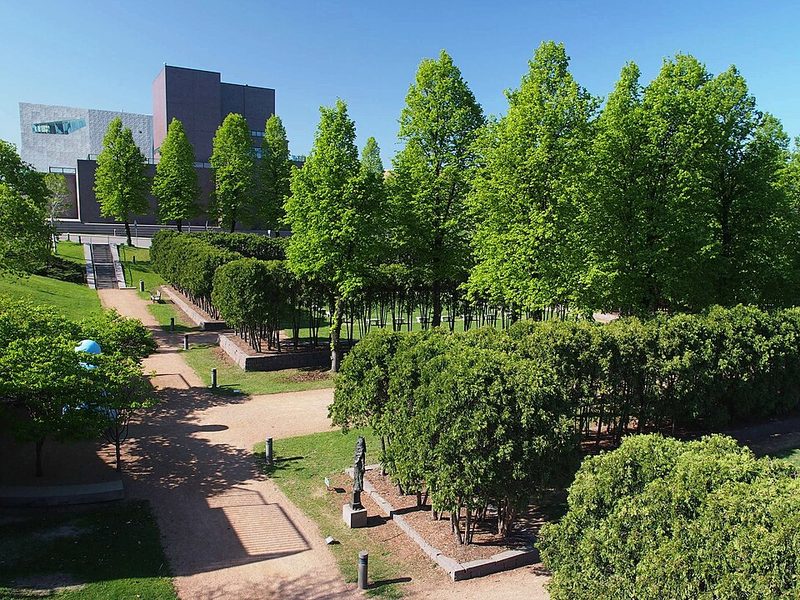
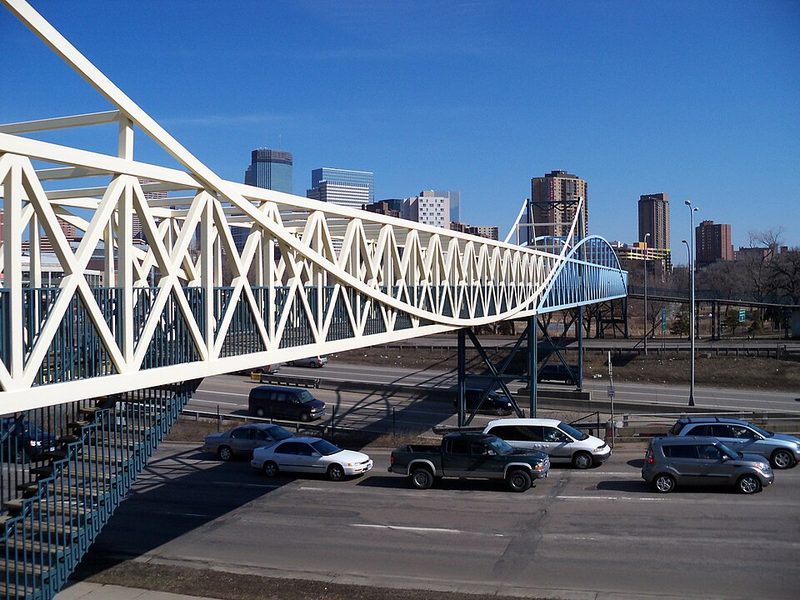
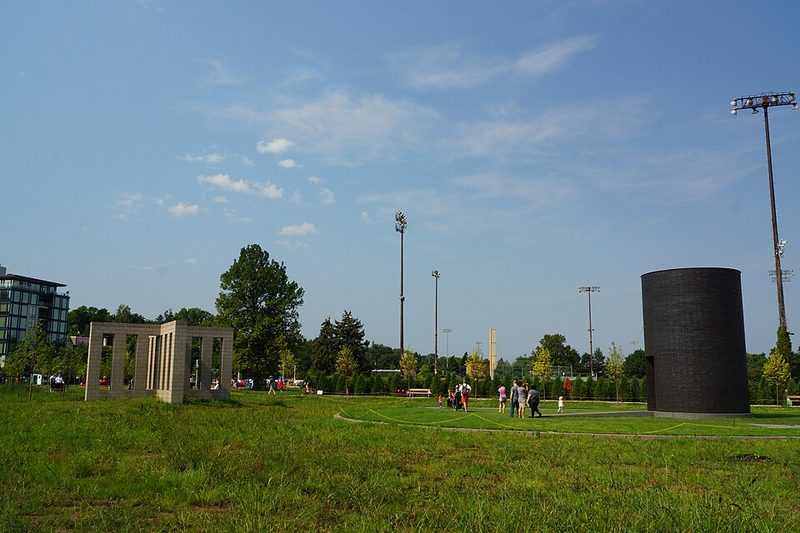

The Minneapolis Sculpture Garden and the Walker Art Center together form one of the most visited arts destinations in the American Midwest. The two are adjacent, occupying a prominent position on the western edge of downtown Minneapolis, and they function as a pair: the Walker provides the institutional collection and programming indoors, while the 11-acre garden extends that programme into a free, publicly accessible outdoor space operated in partnership between the Walker and the Minneapolis Park and Recreation Board.
The Sculpture Garden
The Minneapolis Sculpture Garden opened in 1988 and has since become one of the city's most recognisable public spaces. It features more than 60 works by artists including Theaster Gates, Alexander Calder and Angela Two Stars, displayed across the landscaped grounds. The garden is free to enter and open year-round, making it accessible to visitors regardless of whether they plan to enter the Walker itself. The most photographed work in the garden is Spoonbridge and Cherry, a large sculptural fountain designed by Claes Oldenburg and Coosje van Bruggen and installed in 1988 following a donation from art collector Frederick R. Weisman. The piece — a giant spoon balanced over a reflecting pool, with a cherry perched at its tip — functions as both a sculpture and a working fountain. It has become something close to an unofficial civic symbol. Visitors should check current operating notices for the fountain, as seasonal maintenance affects its water feature.
Walker Art Center
The Walker Art Center's origins lie in the private collection of Thomas Barlow Walker, a Minnesota lumber baron who began assembling art in the 1870s and opened a gallery in his home in 1879. Walker later opened the Walker Art Galleries on the current site in 1927, a year before his death, after which he established a private foundation to maintain the institution. The Walker reoriented from traditional European and American painting towards modern and contemporary art during the twentieth century and is now regarded as one of the most-visited modern and contemporary art museums in the United States.
The permanent collection holds over 13,000 works across paintings, drawings, photography, prints, media works, costumes and sculpture. Programming extends well beyond gallery exhibitions: the Walker regularly hosts film screenings, live performances, lectures, classes and workshops. Together with the sculpture garden and the adjacent Cowles Conservatory, the institution draws around 700,000 visitors annually. Admission to the Walker's galleries is not free for all visitors; readers should check the current admission structure on the Walker's official website before visiting, as pricing and membership options change. Entry to the Sculpture Garden itself is free.
Practical Visitor Information
The Walker is located at Vineland Place in Minneapolis, a short walk or cycle from downtown. The Minneapolis Sculpture Garden sits directly alongside it. Both are accessible by public transit. Visitors planning to spend time in the gallery alongside the garden should allow at least two to three hours; those visiting only the garden can do so at their own pace. The Walker's website carries current exhibition listings, event schedules and admission information, and it is worth checking ahead, particularly for performances and ticketed events, which sell out. The garden is open daily, though visitors should confirm current hours with the Walker or the Minneapolis Park and Recreation Board.
Sources: Walker Art Center - Wikipedia • Spoonbridge and Cherry - Wikipedia • Walker Art Center - Mission and History • Walker Art Center - Minneapolis Sculpture Garden